Get Full Government Meeting Transcripts, Videos, & Alerts Forever!
Get email alerts on the Broadband topic
No spam. Unsubscribe anytime.
Pine County officials, providers outline broadband build plans and remaining gaps
Summary
County and multiple internet providers said major fiber projects and federal grants have pushed coverage forward; officials asked providers for clearer maps and the county plans refreshed outreach and GIS cleanup to show remaining unserved locations.
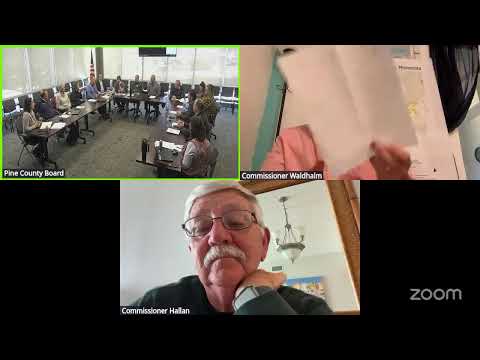
Pine County officials and internet providers on Tuesday reviewed four years of broadband work, described specific funded projects that will add fiber to thousands of homes, and asked providers for clearer maps showing what remains unserved.
"This has been on our radar the whole time," said Pine County Board Chair Josh Moore, Pine County commissioner for District 2, opening the meeting. He asked providers to explain "what it would take to get it done" in the county's hardest‑to‑serve places.
County economic development coordinator Lehi Sautter reviewed the county's work since 2021, saying Pine County used a mix of federal and state grants, county ARPA funds and a private donation to target low‑service areas. She noted a 2021 speed‑test and survey effort that showed many residents reporting no service, and that the county used mapping and grant awards to focus limited ARPA dollars where service was poorest.
Providers at the meeting described recent and planned buildouts. Scott Savage, vice president of business development for SCI Broadband (Savage Communications), said his company has built more than 300 miles of underground distribution fiber in the county and committed to roughly 400 more miles of builds over the next two years, targeting 2‑gigabit symmetrical fiber‑to‑the‑home service. Savage said SCI typically plans for a long‑term 50% take rate for new build areas and expects to finish the current committed work by the end of 2027.
East Central Energy representatives said their rollout has been rapid: the co‑op reported roughly 2,000 miles of fiber built statewide in 2023–24 and that its Pine County connections grew from zero members active Dec. 15, 2023, to just over 4,000 connected members. ECE representatives said construction season length, permitting and locating utilities are recurring limits on how quickly crews can complete underground work.
Midco government relations manager Ellie Burrows said Midco will start construction on RDOF‑committed areas in Pine County in 2026 and plans preregistration for customers. Todd Cruz of Frontier and other providers said permitting, environmental reviews (including SHPO/archaeological reviews), equipment and workforce constraints are common statewide hurdles.
Sautter identified several funded programs that together have financed much of the recent expansion: Rural Digital Opportunity Fund (RDOF) awards, the U.S. Department of Agriculture Reconnect congressional directed spending award, multiple Minnesota Border‑to‑Border grants, a CDBG‑Coronavirus grant used with Savage Communications and county ARPA investments. She said the county also received a small private grant (reported at about $75,000) to support targeted connections.
Commissioners and providers discussed remaining unserved or "start/stop" areas where fiber lines run nearby but drops to individual homes have not been completed. Provider speakers said those gaps often result from phased construction driven by differing funding sources, environmental reviews, township permitting rules, and the practical limit of construction seasons in Minnesota. Commissioners asked the providers to supply map overlays the county can present publicly so officials and residents can see which townships will be served and when.
County staff said Pine County already maintains GIS layers showing funded awards and provider lines and will clean and consolidate those layers so they are easier to read. Sautter said she will seek updated shape files from providers and remove outdated layers where appropriate.
Several people at the meeting questioned the value of repeating a large public speed‑test/survey done in 2021, since many providers said their grant‑funded builds already map to cover most unserved addresses and the county's limited outreach budget is better used on targeted preregistration and maps. Blandon Foundation advisors previously recommended aiming for a 10% participation rate on surveys; Sautter and others said the county's 2021 public participation was about 7% and the foundation considered that acceptable for that stage.
No formal votes or ordinance actions were taken at the meeting. Commissioners directed staff to pursue cleaned GIS maps, to collect providers' build timelines and overlays, and to consider targeted outreach or preregistration campaigns that would give providers firm customer interest numbers for remaining build phases.
Providers and county officials repeatedly emphasized that construction timing remains contingent on state and federal permitting processes, the short Minnesota construction season and access to crews and locating services. Several providers said they are tracking the federal BEAD (Broadband Equity, Access, and Deployment) program and may apply; Frontier noted the company is being acquired by Verizon but said existing grant obligations transfer to the acquiring company if the acquisition closes.
Commissioners and provider representatives also discussed affordability and take rates. Speakers acknowledged existing low‑cost legacy offers from incumbents and federal programs such as ACP (Affordable Connectivity Program) affect subscribers' decisions. Providers said competitive pricing and local marketing, including door‑to‑door outreach, are critical to reach subscription targets.
The meeting closed with county leaders thanking providers for the rapid build progress and reiterating a request that providers provide updated public maps and clear timelines so commissioners can show residents how coverage will change in coming construction seasons.