Get Full Government Meeting Transcripts, Videos, & Alerts Forever!
Get email alerts on the Voting Rights topic
No spam. Unsubscribe anytime.
Subcommittee changes default: courts must find lack of voting capacity before stripping voting rights from people under guardianship
Summary
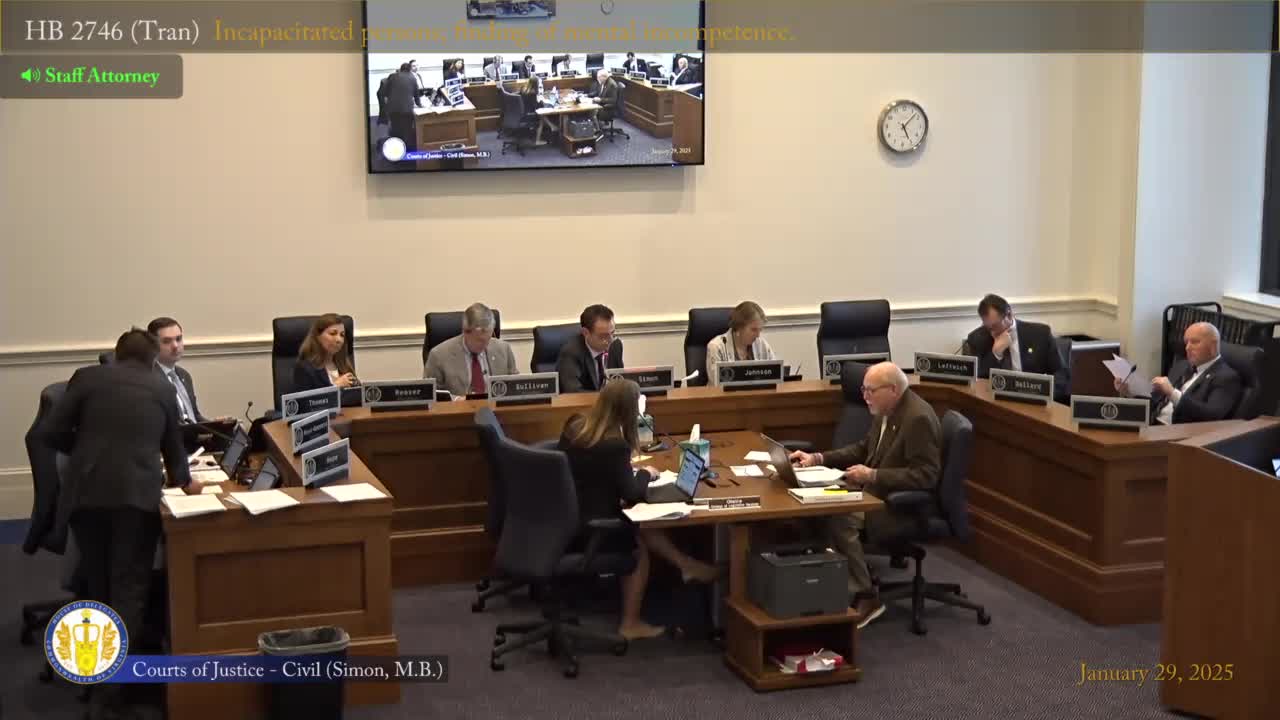
The Civil Law Subcommittee reported a substitute to require courts to find, by clear and convincing evidence, that an individual lacks capacity to vote before removing voting rights in guardianship or conservatorship proceedings; reported 5-2.
A substitute reported by the Civil Law Subcommittee would prevent automatic disenfranchisement of individuals placed under guardianship or conservatorship by requiring a court finding, by clear and convincing evidence, that the person lacks the capacity to understand the act of voting before disqualifying them. The subcommittee reported the substitute 5-2.
Sponsor counsel explained the substitute changes the default presumption: an individual under guardianship or conservatorship would retain the right to vote unless the court separately finds the person lacks capacity to understand voting. Delegate Trent (patron) said the standard remains “clear and convincing” but the change aligns capacity language to existing guardianship provisions in code section 64.2.
Supporters included John Sweeney of the Disability Law Center of Virginia, Ashley Wright of the Arc of Virginia, Emily Hardy of the Virginia Poverty Law Center, Chris Kaiser of the ACLU of Virginia and other disability and advocacy organizations. John Sweeney told the committee the law already allows courts to preserve voting rights in some guardianship orders and that the substitute “flip[s] the presumption” so that voting rights are retained unless the court specifically finds otherwise.
Some members expressed concern that the change adds an extra finding to proceedings already addressing incapacity and that it could be abused; one member said the proposal gave them pause and indicated they would not support it at that time. The substitute passed the subcommittee by a vote of 5 to 2 and will move to the full committee for further consideration.
Ending: The change would require courts to make an explicit finding about voting capacity in guardianship and conservatorship cases; supporters called it a due-process protection for a civil right, while some members warned of added procedural burdens and potential for misuse.