Get Full Government Meeting Transcripts, Videos, & Alerts Forever!
Get email alerts on the Collective Bargaining topic
No spam. Unsubscribe anytime.
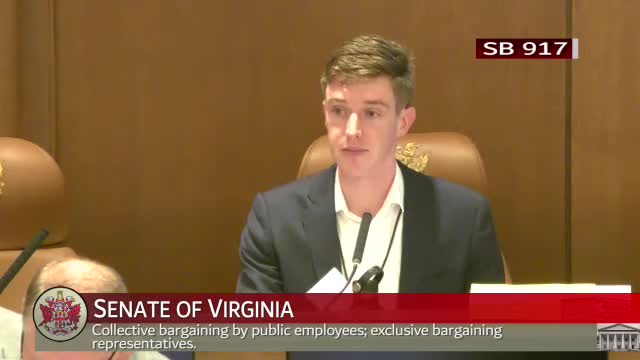
Senate committee advances collective bargaining bill after heated debate over including law enforcement
Summary
The committee adopted a substitute for SB 917 and reported the measure to the floor after extended debate about whether law enforcement (including state police) should be included among bargaining units.
The Senate committee on Feb. 14 adopted a committee substitute and reported SB 917, a measure to expand collective bargaining rights for public employees, after an extended floor-level debate over whether law enforcement personnel should be included.
The bill and the substitute matter because they define which public employees may bargain collectively and how the state will phase in related processes; supporters said the substitute delays implementation to the next biennium and preserves law enforcement as a bargaining unit in the reported text. Opponents said including law enforcement raises special public-safety and operational concerns.
Senator Serravel, speaking for the bill’s supporters, said the substitute ‘‘effectively delay[s] this until the next biennium’’ and moved adoption. Senator Stewart pressed to remove law enforcement from the bill, arguing that allowing police bargaining could place frontline officers in untenable positions if strike or labor-action questions arose. ‘‘We cannot put our frontline law enforcement in that position,’’ Stewart said.
Senator Serwer responded that the bill explicitly prohibits strikes and lockouts and that including law enforcement would not deny them grievance or bargaining rights. Judge Scruggel (appearing to speak from the record) urged clarity on what rights inclusion would afford, saying officers seek ‘‘pay and fair wages and grievances and everything else like everybody else.’’
A motion to report SB 917 with the substitute passed on a recorded vote: Ayes 10, Noes 4. The transcript records the committee’s result as "the bill reports with the substitute." The committee noted that several bargaining units, administrative details and strike prohibitions are governed by existing code provisions referenced in debate.
Members asked staff to prepare the reported substitute for the floor, and several senators said they expected further debate on the Senate floor and possible conference with the House about the treatment of specific bargaining units.
Ending: SB 917 will move to the Senate calendar in its reported, substituted form; committee staff will prepare the text as adopted and make it available for floor filings.