State Investment Council says understaffing costs New Mexico hundreds of millions; asks for $1.2M budget shift
Loading...
Summary
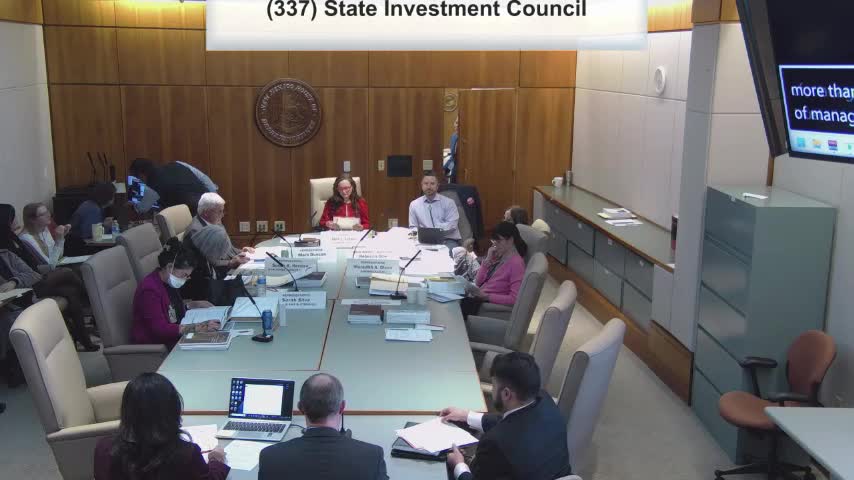
John Wagner, representing the State Investment Council, told a legislative appropriations subcommittee that rapid growth in the council’s assets and changes to state law have increased the council’s importance to New Mexico’s budget and created a staffing shortfall that the council says is costing the state more than $300 million a year.
John Wagner, representing the State Investment Council, told a legislative appropriations subcommittee that rapid growth in the council’s assets and changes to state law have increased the council’s importance to New Mexico’s budget and created a staffing shortfall that the council says is costing the state more than $300 million a year.
Wagner said the council now manages roughly $58 billion across 12 funds — up from about $22 billion and five funds in 2014 — and that fiscal 2025 will be the first year the council expects to distribute more than $2 billion back to the state’s general and other funds. He asked the committee to move $1.2 million from one budget category into another for FY26 to hire additional investment staff sooner rather than later.
Why it matters: Wagner said council distributions are already responsible for more than a quarter of K‑12 public education funding in New Mexico and more than half of early childhood program funding. He warned the state faces a long‑term shift in revenue: oil and gas receipts — currently a large share of the general fund — are projected to decline, while permanent fund distributions governed by recent legislation will grow. Wagner described Senate Bill 26 (2023) as a turning point that shifts more windfall revenue into permanent funds and into the council’s management, increasing both long‑term revenue and the need to invest it well.
Wagner cited an external staffing study by a consulting team led by Dr. Ash Monk of Ascension, which recommended a 57‑person investment staff for the current asset base. The council currently employs about 28 in‑house staff and relies heavily on outside advisory and legal support. Wagner said the staffing shortfall has reduced the council’s ability to deploy cash quickly into private markets and to negotiate or monitor fund manager contracts, which the Ascension team estimated is costing the state more than $300 million annually.
"If we could get that money out just a slight bit sooner, if we could make investment decisions that were a slight bit better, then we easily make back multiples of that cost of investing in our staff," Wagner said.
Lawmakers asked for clarifications. Representative Dixon praised the presentation and asked why the severance tax permanent fund underperforms the land grant permanent fund. Wagner explained several causes: legally required economically targeted investments (which carry different return objectives), a 2% statutory set‑aside for the Small Business Investment Corporation (SBIC) that aims for low single‑digit returns, and a COVID emergency loan program administered through the New Mexico Finance Authority that was established with borrower‑friendly terms and is expected to generate losses for some years.
Wagner described a prior New Mexico venture program that invested about $200 million with poor outcomes and said the council has since shifted to select national venture managers and more disciplined structures for local commitments; some recent New Mexico commitments total about $770 million but remain in early, uncalled stages.
On staffing and cost: Ascension estimated that bringing the council to the consultant’s recommended staffing level and paying market salaries would cost an additional roughly $9.5 million annually; the firm calculated a break‑even performance improvement of about 1.6 basis points (0.016%) to recover that cost. Wagner told the committee he was asking for a smaller, immediate adjustment — specifically, a request to "move 1,200,000.0 from the 300th up to 200" in the FY26 recommendation — and to include further FTE requests in future budgets.
Committee action: After the presentation and questions, the committee moved to accept the Legislative Finance Committee (LFC) budget recommendation for the council. Vice Chair Sanders moved the recommendation and Representative Herrera seconded; the motion passed with no recorded opposition.
Context and limits: Wagner stressed that while permanent fund distributions are expected to grow and to reduce revenue volatility for the general fund, the council’s ability to deliver those investment returns depends on timely staffing and contracting capacity. Several lawmakers commended the council’s long‑term outlook but noted the request to move funds was modest and asked analysts to review the new information when finalizing recommendations.
Ending note: The committee accepted the LFC’s budget recommendation while asking staff to consider the council’s new staffing analysis and the potential fiscal impact of delayed private market deployments.