Get Full Government Meeting Transcripts, Videos, & Alerts Forever!
Get email alerts on the Infrastructure Energy topic
No spam. Unsubscribe anytime.
Council approves National Grid easement at Copacut/Quinnapaug after mitigation assurances; residents raised environmental, safety concerns
Summary
After public comment and a public-works committee review, the council voted to grant New England Power (National Grid) permission for a transmission-line crossing at Copacut/Quinnapaug Road; committee members and a resident speaker sought and recorded written mitigation commitments including cameras, gates and erosion controls.
The Fall River City Council voted Jan. 28 to grant permission for New England Power Company (National Grid) to install transmission lines across city rights-of-way at Copacut and Quinnapaug roads after the public-works committee reviewed mitigation commitments and public testimony.
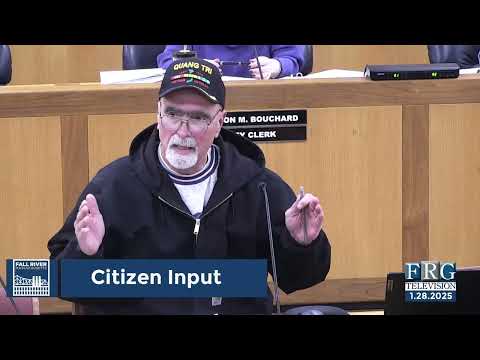
Resident Sarah Riley urged the council not to approve the easement without enforceable mitigation, saying city departments lack the capacity to address ongoing impacts and asking that National Grid be held responsible for road damage, water-quality testing, vandalism and public safety. “I speak for the 105,000 people who expect their drinking water to be safe,” Riley said during public comment.
At the committee meeting earlier in the week, councilors and city staff cataloged mitigation National Grid has proposed or agreed to provide, including permanent gates or natural barriers at key access points, deployment of temporary steel plates across a culvert during construction, installation of license-plate-reading cameras to detect illegal dumping and loitering, and coordination with the water department and conservation authorities. Committee members noted National Grid must still obtain broader approvals from state energy siting authorities before parts of the larger project can proceed.
Council members said the mitigation commitments have been documented and coordinated with police, engineering and conservation staff. The committee chair said the commitments are “in writing” with city departments; that written record and the pending state-level approvals were cited in committee discussions recommending adoption of the easement order. The motion to adopt the order granting New England Power Company the requested permission passed on a council vote.
Councilors and residents said they will monitor the project’s construction and enforcement of mitigation; city officials noted the city does not own some infrastructure (for example, the culvert was described as the city’s responsibility to maintain) and that the easement primarily covers airspace across two roadways. The council’s committee work flagged additional required state and federal permits — Clean Water Act (Section 404), MassDEP approvals and conservation commission reviews — before construction could begin in some segments.
The measure before council was an order authorizing the company to cross city road rights-of-way; the broader project remains subject to other permits and state review.