Get Full Government Meeting Transcripts, Videos, & Alerts Forever!
Get email alerts on the Private Prisons Contracts topic
No spam. Unsubscribe anytime.
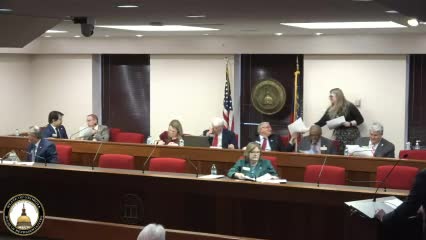
CoreCivic officials ask Georgia lawmakers to cover rising operating costs and seek pay parity
Summary
CoreCivic told the public‑safety committee that its three Georgia facilities are operating largely at contract rates established long ago, and it requested amended‑year and FY‑2026 contract increases and pay parity to keep facilities staffed and maintained.
CoreCivic officials told the House Public Safety Committee that rising personnel and maintenance costs make their existing contracts unsustainable without adjustments and asked lawmakers to consider amended‑year and fiscal‑2026 increases.
Jerry Langford, representing CoreCivic, said the company operates three Georgia facilities (Coffee, Jenkins and Wheeler counties) and manages roughly 6,000 beds nationwide; the three Georgia plants account for slightly more than 10% of the Department of Corrections’ bed capacity, he said. Langford said private providers have not received true contractual increases in many years, even while operating costs have risen, and that CoreCivic has used its own capital to keep facilities in good repair — citing nearly $15 million in capital projects at those facilities over the prior five years.
CoreCivic presented a three‑part ask: (1) funding in the amended FY25 that reflects 446 beds the department asked to place; (2) a contractual increase sufficient to cover rising operating costs (the company proposed phased recovery); and (3) a pay‑parity bucket to narrow gaps between private‑facility pay and state corrections pay where those gaps exist. Company representatives said pay gaps and vacancies force private operators to hire at higher rates or risk losing staff to the state; they requested that the legislature consider parity if it wants private providers to remain a long‑term partner for bed capacity.
Langford emphasized that private operators invest in capital upkeep and that contractor financial stability matters if the state needs those beds to manage population or to dry‑dock state facilities for repairs.
Ending: Committee members asked questions about classifications of inmates at private facilities and about the state’s responsibility if a private operator were to close; CoreCivic said those decisions would be made in partnership with the department and that the department determines placement and classification.