
Department of Corrections details multi‑million plan to reduce contraband, hire staff and harden aging prisons
Get AI-powered insights, summaries, and transcripts
Sign Up Free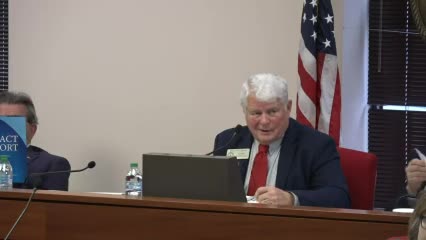
Summary
The Georgia Department of Corrections presented a package of amended FY2025 requests to the House Public Safety Appropriations Committee focused on three goals: reduce contraband and violent incidents inside prisons, repair aging infrastructure, and increase correctional officer staffing.
The Georgia Department of Corrections presented a package of amended FY2025 requests to the House Public Safety Appropriations Committee focused on three goals: reduce contraband and violent incidents inside prisons, repair aging infrastructure, and increase correctional officer staffing.
Why it matters: the agency told the panel that cellphones, drone deliveries and throwovers have enabled organized violence and that many facilities have locking and control systems that are failing. The department said the problems have made staffing and retention harder and forced use of surge solutions such as private contract beds.
What the department asked for and why - Planning, project management and facility maintenance support (tracking item 19.1.0.1): $906,000 to continue technical assistance and planning to sequence repairs and hardening projects. The department said the funds will support a multi‑year staffing and facilities plan. - Ten‑year staffing and facility plan (tracking discussion): the department described a $5 million planning allocation to build a long‑term capital and personnel roadmap so repairs and future facilities align with security needs. - Recruitment marketing and onboarding initiative (tracking item 19.1.0.3): about $2.8 million to build a targeted recruitment and onboarding program and to streamline hiring and background processes that the department says are slowing hires. - Training updates: $900,000 to standardize and expand scenario‑based training for cadets; the department told members improved training should aid retention and safety. - Safety, security and technology: the department proposed investments in drone‑detection and managed‑access systems, expanded monitoring and managed access to reduce unauthorized deliveries and cellphone use, and a multi‑prison electronic upgrades effort it described as essential to curbing contraband‑related violence. - Modular housing and lock upgrades: the proposal includes funding for high‑security modular housing units (presented as one option to speed bed availability and create hardened housing) and major lock/control upgrades for multiple prisons so facilities can be taken offline for repairs without crippling bed capacity. - Medical and behavioral health contracts: the department detailed higher costs tied to pharmacy, dental and mental‑health contracts and proposed a risk‑share and an electronic health record solution to improve care continuity between vendors and state records. - Staffing ratios: the department proposed raising the correctional officer ratio toward 1:11 from the current 1:14 on a phased schedule; it said 882 additional officer positions are needed systemwide with an initial phase of roughly half that added across FY2025–26.
Commissioner (Georgia Department of Corrections) told the committee, “cell phones are... a deadly weapon inside state prisons,” arguing that improved locking controls, detection systems and staffing are needed together to reduce violence and restore order.
Context and tradeoffs Committee members pressed the department on timeframes and vendor lead times for locks and modules. The department said some detention‑grade locking systems and components carry lead times of several months and that modular units can shorten the calendar to add hardened bed capacity, but are not a permanent substitute for long‑term capital planning.
What’s next The department asked the committee to prioritize the mix of one‑time repairs, ongoing contract increases for health and treatment services, and staged staff hires. Members signaled urgency on locking‑control work and drone detection but also raised questions about procurement timelines and the costs of modular versus brick‑and‑mortar options.
Ending note The department framed the request as triage and stabilization: a combination of technology, improved training and modest near‑term capacity to permit longer‑term renovations and new construction.