Get Full Government Meeting Transcripts, Videos, & Alerts Forever!
Get email alerts on the Tenant Rights Payments topic
No spam. Unsubscribe anytime.
Bill would require landlords to apply partial tenant payments to rent first, supporters say it would prevent evictions
Summary
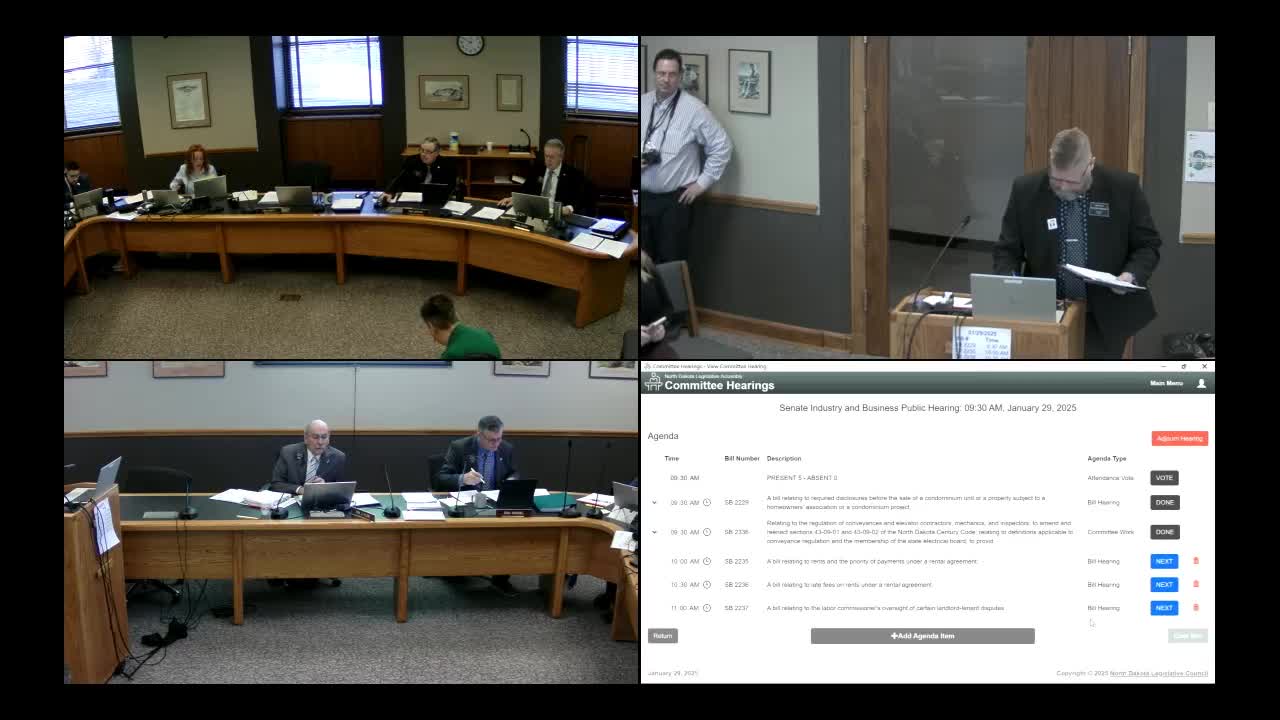
Senate Bill 2235 would require landlords to apply a tenant's partial payment to outstanding rent first unless the tenant specifies otherwise, sponsor Ryan Brownberger told the Senate Industry and Business Committee.
Senator Ryan Brownberger (District 10) told the committee Senate Bill 2235 proposes a straightforward change to North Dakota Century Code section 47-16-20: when a tenant's payment is insufficient to cover all outstanding charges, the payment must be applied to rent first unless the tenant specifies otherwise.
"It focuses on improving clarity and fairness in rental agreements, particularly addressing the application payments under such contracts," Brownberger said. He framed the bill as consumer-protection aimed at preventing inadvertent evictions and said it responds to constituent concerns in a district with many renters.
Cody Schuler of the American Civil Liberties Union of North Dakota testified in support, citing an intake case from a housing provider: a tenant who paid what he believed to be sufficient rent later received a three-day eviction notice because his payments had been applied to late fees instead of to rent. Schuler told the committee that in 2022, eviction proceedings in North Dakota showed nearly all landlords had legal representation while tenants rarely did, leaving tenants without an affordable avenue to challenge accounting practices in court.
A High Plains Fair Housing Center specialist (testifying online) told the committee their audits show payments sometimes are applied first to fees rather than rent, producing a cycle of compounding late fees that disproportionately affects seniors, people with disabilities and households on public assistance.
The North Dakota Apartment Association opposed SB 2235, saying landlords need flexibility to apply payments toward security deposits, repair charges or utility bills that can revert to the owner; its lobbyist argued that priority-of-payment language is typically in the lease and that landlords rely on those accounting rules to recover nonrent charges.
Committee members asked about the bill's interaction with existing leases and whether older agreements would be grandfathered; witnesses and the sponsor said that requires legal review and might be addressed by amendment. Multiple witnesses said the bill is one piece of a larger housing policy conversation that also includes late-fee caps and supportive services.
No committee vote was recorded on SB 2235 during the hearing; the committee closed the hearing after testimony and questions.