Get Full Government Meeting Transcripts, Videos, & Alerts Forever!
Get email alerts on the Government Structure topic
No spam. Unsubscribe anytime.
Committee hears bill to merge North Dakota Securities Department into Insurance Department
Summary
The Senate Industry and Business Committee held a hearing on Senate Bill 2214, which would fold the North Dakota Securities Department into the elected Insurance Department. Supporters said the merger would streamline licensing, investigations and consumer education; opponents were not recorded. No formal action was taken at the hearing.
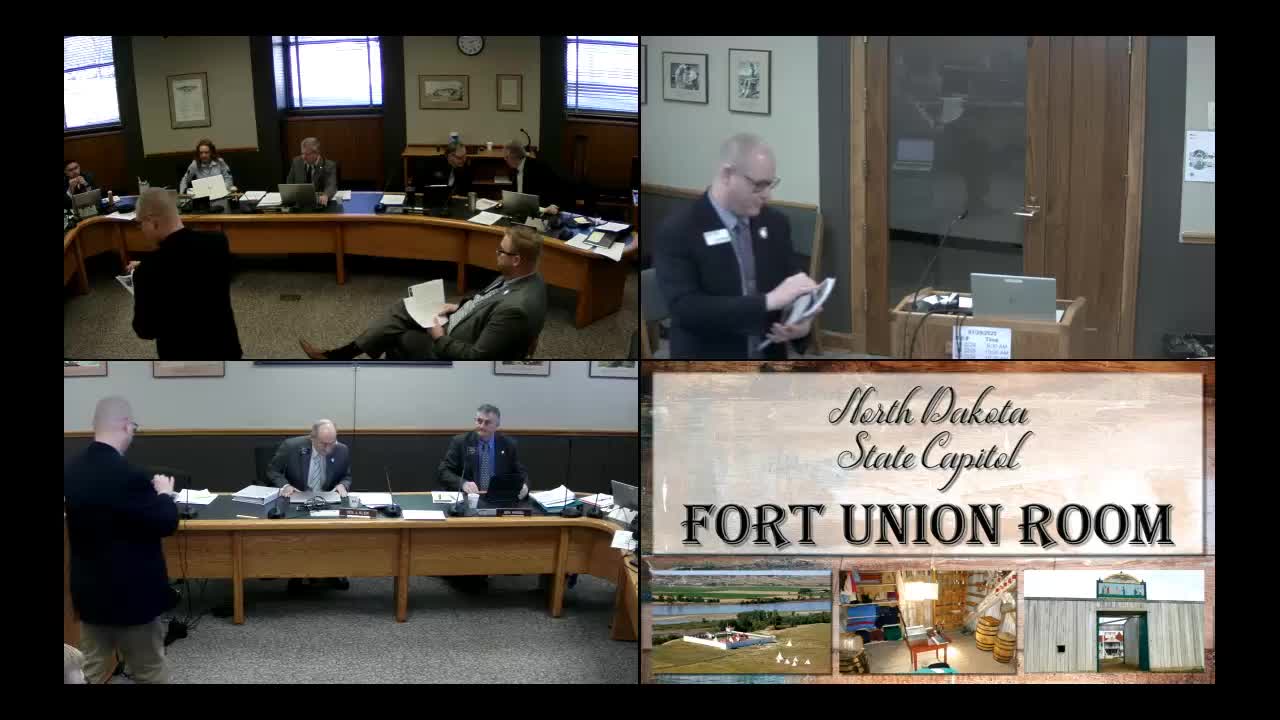
Senate Bill 2214, which would merge the North Dakota Securities Department into the North Dakota Insurance Department, received testimony at a hearing of the Senate Committee on Industry and Business.
The bill, introduced for hearing by Senator Dale Patton, would consolidate oversight of insurance and securities under the elected insurance commissioner and include an appropriation. Supporters told the committee the change is meant to reduce duplication where insurance and securities intersect — for example, in annuities and private placements — and to give the smaller securities office access to the Insurance Department’s legal, administrative and public-information resources.
Why it matters: Backers argued the merger would strengthen consumer protection and regulatory responsiveness when products cross the line between insurance and securities. North Dakota’s securities office currently has about 10 staffers, while the Insurance Department has about 47, supporters said; consolidation would, they said, allow investigators, examiners and licensing personnel to be deployed across overlapping investigations.
Testimony and questions Mr. Knapp (testimony recorded in committee minutes) told the panel the consolidation would “enhance consumer protection, streamline operations, and increase responsiveness to evolving market dynamics” and cited South Dakota’s 2017 merger as a model. The committee was also told Governor Doug Burgum and Governor-elect Armstrong (testimony noted support from the Governor’s office) back the change.
Tim Carskey, the North Dakota Securities Commissioner, said he supported the bill and highlighted plans to expand education on securities fraud, focusing on vulnerable adults and the elderly. Carskey also said he would rely on the Insurance Department’s existing legal staff and administrative infrastructure rather than expecting immediate cost savings. He described the securities office as “under resourced” and said the merger would provide access to the Insurance Department’s resources rather than primarily being a cost‑cutting move.
Insurance Commissioner Ross (recorded as Commissioner Godfried in the hearing) said the department already has a fraud division and peace officers who could assist with securities investigations under the consolidated structure. He and other supporters noted that shared consumer‑education programs, coordinated investigations and cross‑training were cited as benefits in South Dakota’s experience.
Questions from senators focused on whether the consolidation would generate measurable savings and on potential impacts to agency independence and confirmation procedures for the securities commissioner. Officials told the committee they did not expect near‑term staffing reductions and that some administrative confirmation processes would change with the securities office no longer being a separate cabinet appointment if the merger proceeds.
Outcome and next steps The hearing record shows testimony in support from agency leaders and the Governor’s office and no recorded public opposition during the session. Committee members asked follow-up questions but did not vote on the bill during the hearing.
The bill remains under committee consideration; committee leaders did not record a formal vote at the hearing.
Ending: The bill’s supporters asked the committee to give the measure “a due pass.” Committee members indicated they would consider the testimony and follow up as needed.