Get Full Government Meeting Transcripts, Videos, & Alerts Forever!
Get email alerts on the Family Law topic
No spam. Unsubscribe anytime.
Senate Bill 2264 would modernize marriage language in North Dakota statutes; supporters and faith groups clash in committee
Summary
Senate Bill 2264 updates statutory language to use gender-neutral terms and to align state law with recent federal protections; supporters framed the change as inclusive modernization, while religious and conservative groups opposed redefining marriage's statutory language.
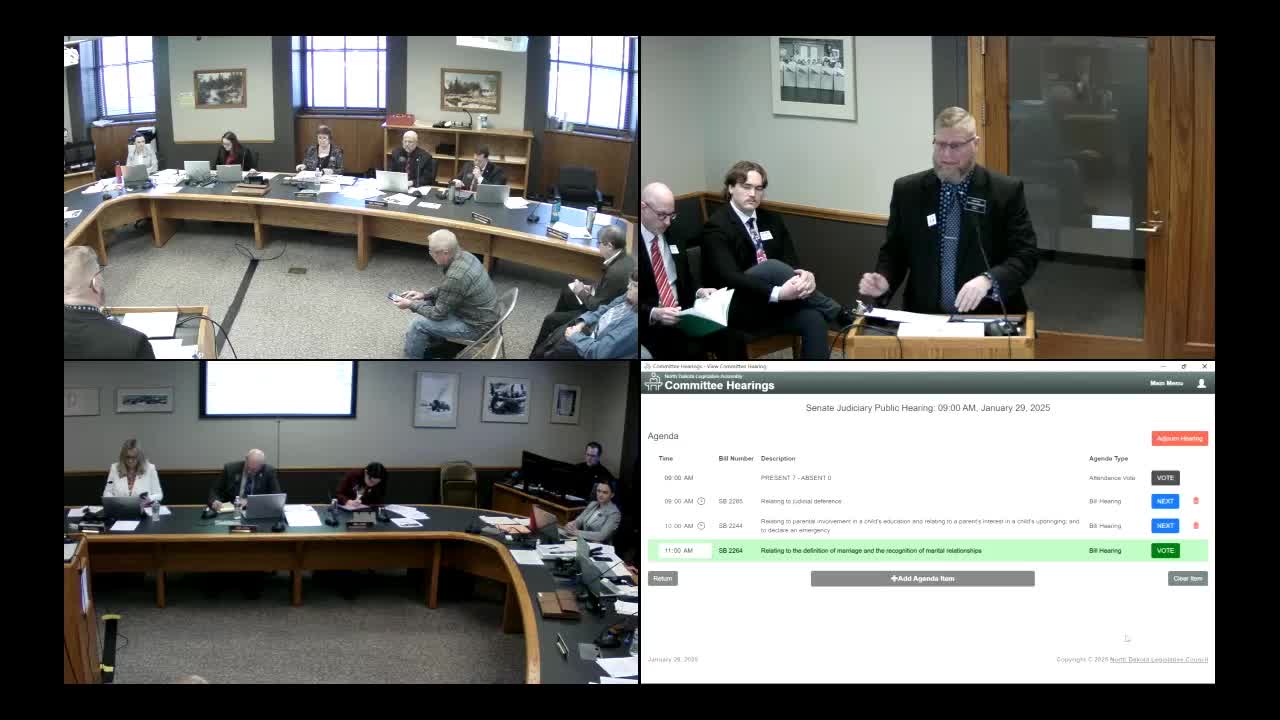
Senate Bill 2264, which would modernize North Dakota statutes to use gender-neutral terms for marriage and recognize unions between two consenting adults regardless of gender, drew a short hearing in the Senate Judiciary Committee with clear lines between supporters and opponents.
Sen. Ryan Brownberger, sponsor of SB 2264, told the committee the bill replaces gendered terms such as "husband" and "wife" with inclusive language such as "spouses" or "two individuals married to each other," and updates references across codes from family law to property, adoption and spousal privilege. He said the changes reflect the Respect for Marriage Act (2022) and seek consistency with modern legal practice.
Mark Georgezman of the North Dakota Family Alliance Legislative Action opposed the bill on religious and cultural grounds, urging the committee to reject language that, in his view, undermines a traditional, biblically based definition of marriage. Linda Thorson of Concerned Women for America and other faith-based speakers made similar arguments, asserting that government policy should continue to reflect a male-female marital norm.
Supporters at the hearing were limited; the sponsor emphasized statutory clarity and alignment with federal law and modern family forms. Opponents pointed to cultural and religious concerns and warned of perceived societal harms from redefining marriage in statute, though no legal analysis demonstrating immediate practical impacts was offered at the hearing.
Ending: The committee closed the hearing with no vote. The bill drew predictable support from advocates of inclusive statutory language and organized opposition from faith-based organizations and conservative groups. No committee action was recorded at the session.