Get Full Government Meeting Transcripts, Videos, & Alerts Forever!
Get email alerts on the Medical Marijuana Regulation topic
No spam. Unsubscribe anytime.
Medical marijuana program seeks small rule changes: caregivers, concentrate package size, residency documentation (SB 2293)
Summary
The Senate Human Services Committee opened a hearing on Senate Bill 2293, which would add a 1‑gram cap for concentrates, reinstate a 21‑year minimum age for designated caregivers and allow limited alternative residency documents for qualifying patients.
The Senate Human Services Committee opened a public hearing on Senate Bill 2293, which proposes three targeted changes to the state medical marijuana program: a maximum 1‑gram package size for concentrates, restoration of a 21‑year minimum age for designated caregivers, and expanded options for verifying a qualifying patient’s residency.
Jason Wall of the Medical Marijuana Program told the committee ‘‘the department supports adding a maximum 1 gram package size for concentrates’’ and said the bill also restores the 21‑year minimum caregiver age that was removed inadvertently in a 2019 language change. Wall added the bill would permit the department, in limited circumstances, to accept alternative documentation to verify residency for qualifying‑patient applications when obtaining or updating a state ID is impracticable for medical reasons.
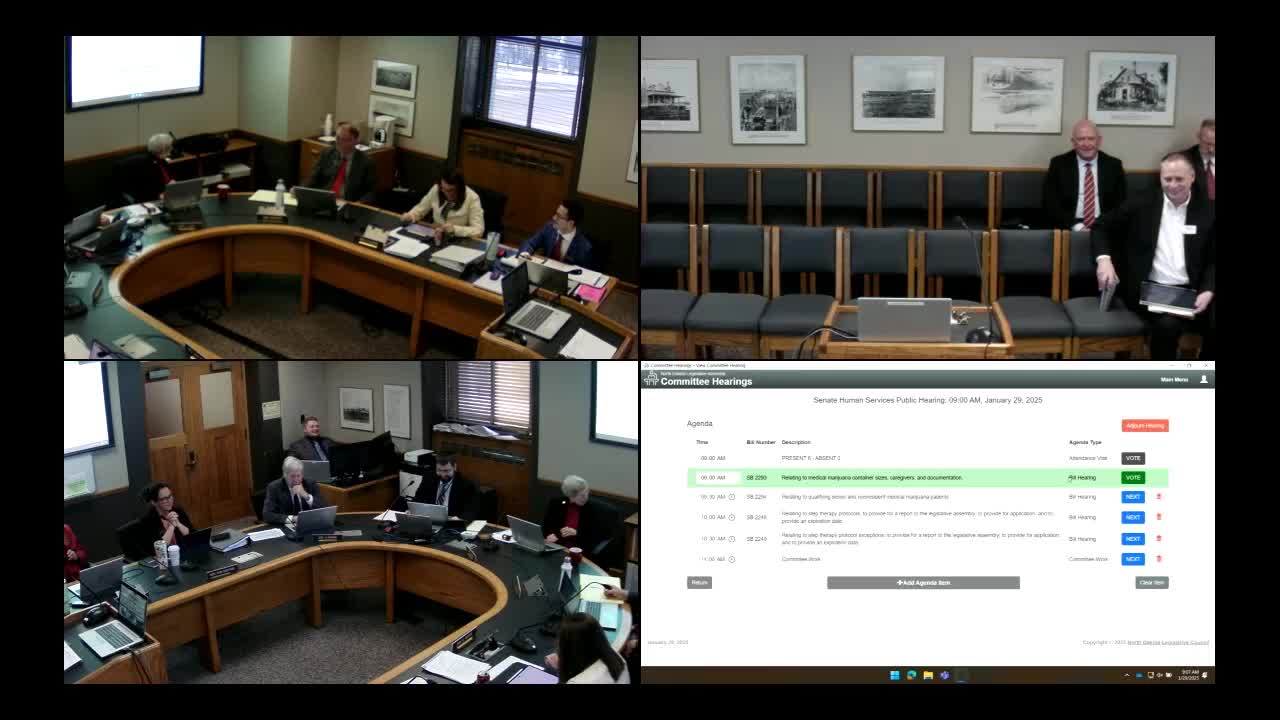
Committee process and testimony: The sponsor, Senator Christian Rohrs, said the bill grew from the Medical Marijuana Advisory Board’s recommendations and noted this is the first session since a change in ballot status removed the previous two‑thirds rule for edits. No public witnesses testified in favor or opposition at the committee hearing; the chair closed the hearing after no members of the public indicated they wished to speak.
Why it matters: Supporters told the committee the changes are technical fixes to address program gaps and patient access challenges. Restoring a statutory caregiver age addresses what department staff described as an inadvertent removal, and allowing other forms of residency documentation intends to reduce barriers for seriously ill patients who cannot easily update identification. A 1‑gram concentrate limit would put concentrates under the statutory product‑limit framework that already covers other medical product types.
Outcome: The committee held the public hearing and closed testimony; no committee vote on SB 2293 was recorded in the hearing transcript.