Get Full Government Meeting Transcripts, Videos, & Alerts Forever!
Get email alerts on the School Facilities topic
No spam. Unsubscribe anytime.
Committee hears bill to require statewide assessments of public school buildings
Summary
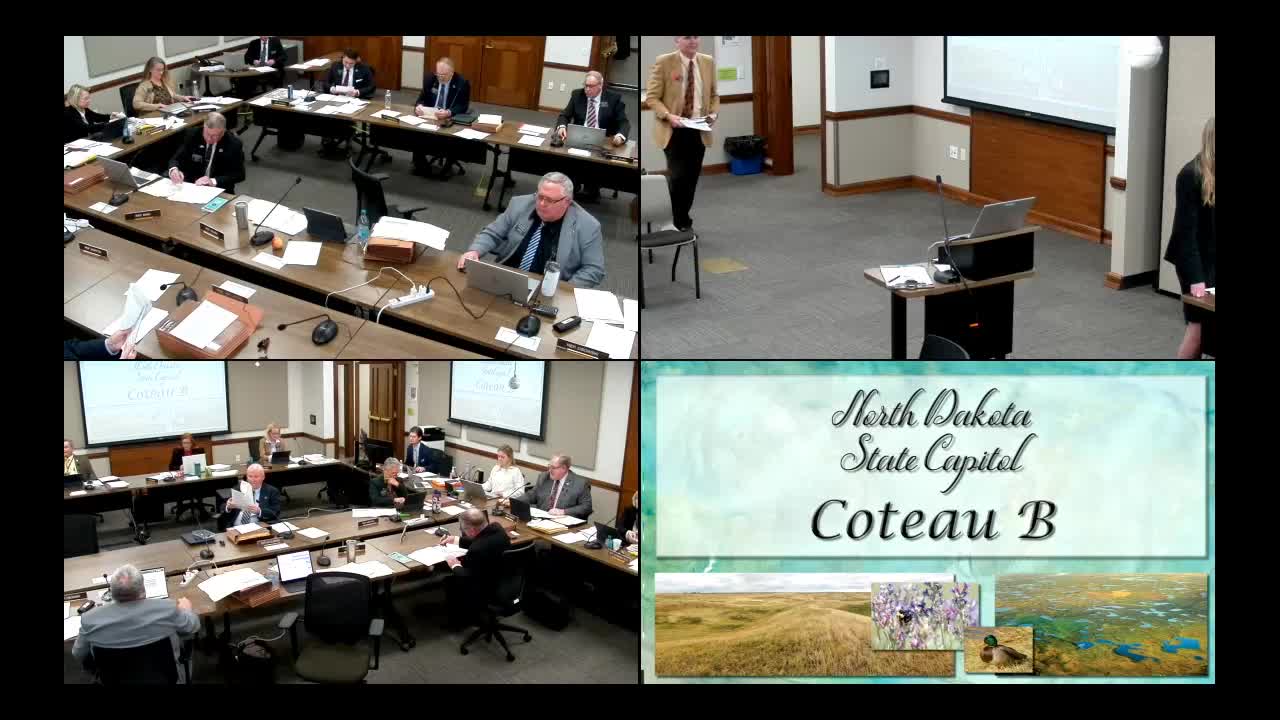
The House Education Committee heard testimony on House Bill 1476, which would require an assessment of all public school buildings in North Dakota and a study of appropriate standards, Representative Anna Novak said.
The House Education Committee heard testimony on House Bill 1476, which would require an assessment of all public school buildings in North Dakota and a study of appropriate criteria and standards for those facilities, Representative Anna Novak said.
Novak, the bill sponsor, told the committee that the measure is intended to provide a baseline inventory so lawmakers and local districts can understand deferred maintenance, safety and equity gaps across urban and rural districts. “There is a lot of inequity across the state when it comes to education,” Novak said, describing how smaller districts have fewer course options but sometimes more individualized teacher attention.
Supporters repeatedly told the committee they found widespread deferred maintenance. Josh Johnson, superintendent of Valley City Public Schools and a representative of the School Construction Coalition, said the coalition surveyed districts and found that fewer than half of responding districts reported a recent facility condition assessment. Johnson said Valley City’s first facility assessment in 2018 cost about $10,000, and that re‑estimates of identified projects rose sharply: from about $12 million in the district’s 2018 estimate to about $26 million in 2021 and then to about $37 million in a 2023 architectural re‑estimate, figures he attributed to inflation and rising construction costs.
Johnson told the committee the coalition had surveyed “111” responding districts and found only 46 had completed an assessment in the last five years; the coalition recommends a statewide baseline so policymakers can compare needs across districts and set common standards. He said states such as Kansas and Wyoming use condition assessments to prioritize funding and to improve equity.
Officials described two practical questions the committee must resolve: which state entity should oversee the assessments, and how the state will pay for them. Adam Tesher, school finance officer for the Department of Public Instruction (DPI), described the fiscal‑note process and said DPI does not have an in‑house facilities assessment expert; the department supported assessments but agreed another agency might be better suited to direct them. Tesher estimated the number of distinct school buildings at roughly 375 (he noted differences in how buildings are counted) and said districts that have purchased assessments reported a range of per‑square‑foot costs. He said the department had five days to prepare its fiscal note after the bill was introduced and that some cost assumptions were necessarily approximate.
Brandon Solberg, facilities management division director at the Office of Management and Budget (OMB), said OMB supports the idea of facility condition assessments but warned the office is not currently structured to oversee assessments of local, non‑state school buildings at scale. “I just don't feel that OMB is necessarily the right fit for this role as it's described in the current draft,” Solberg said, while offering to help draft procurement language and serve on vendor selection processes so the state gets appropriate contract management. He noted OMB already manages deferred‑maintenance funds and helps state agencies with procurement and project prioritization, but said expanding OMB responsibility to hundreds of locally owned school buildings would be a significant change.
SiteLogic, a vendor that conducts assessments for school districts, described its approach. Colin Lennon, chief technology officer at SiteLogic, said assessments combine on‑site reviews, photographs and measurements, then produce prioritized five‑ and ten‑year facility plans that stakeholders—administrators, board members, teachers and community members—can use to decide projects and voter‑facing funding plans. “When you have teamwork and transparency then trust starts to build,” Lennon said, arguing that standardized assessments can help communities prioritize projects and bond proposals.
The State Fire Marshal, Doug Nelson, urged the committee to include comprehensive fire‑protection systems in any assessment scope, noting the agency inspects schools on a three‑year rotation under Century Code and that fire protection includes alarms, kitchen suppression and extinguishers as well as sprinklers.
No formal vote or committee directive was taken during the hearing; supporters and multiple agency witnesses asked for time to refine language on oversight and procurement and for a clearer fiscal estimate. The committee closed the hearing on House Bill 1476 after receiving testimony and supporting documents.
Notes: testimony included photos and coalition reports distributed to committee members; several witnesses emphasized that assessments alone would not fund repairs but are a first step toward prioritizing investments and equity across districts.