Get Full Government Meeting Transcripts, Videos, & Alerts Forever!
Get email alerts on the Tribal Land Taxation topic
No spam. Unsubscribe anytime.
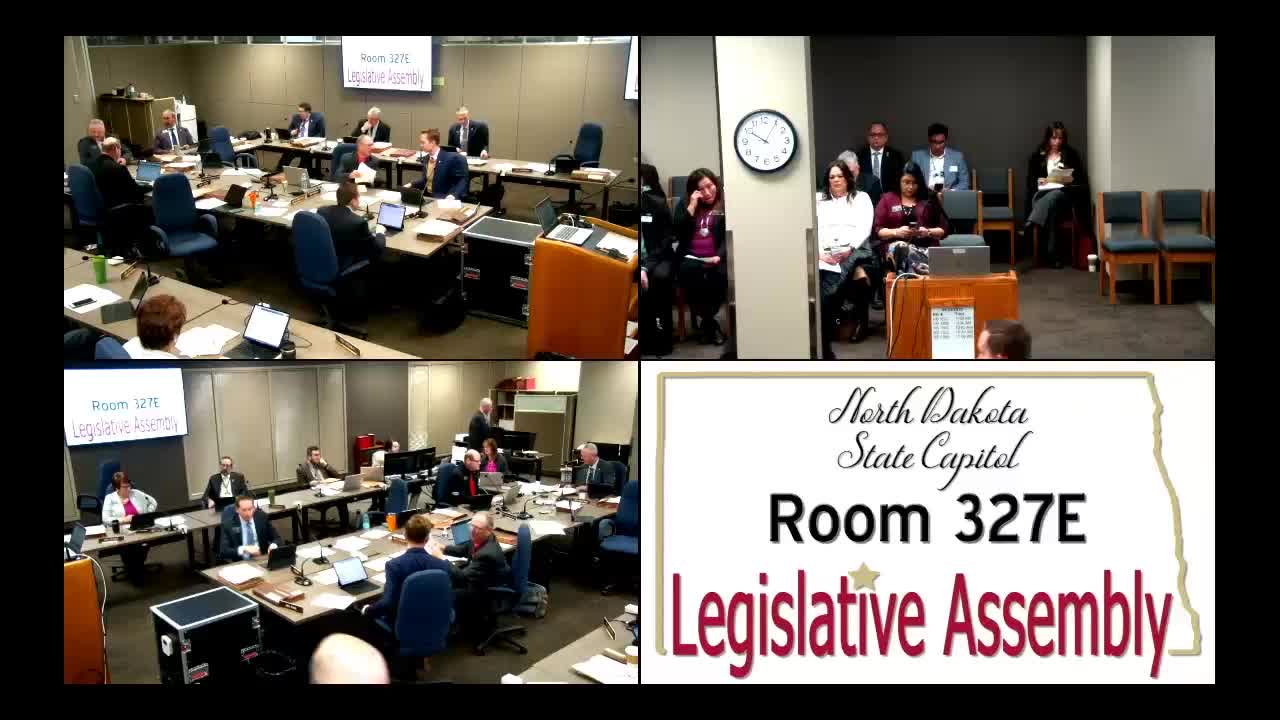
Lawmakers hear bill to study taxation of tribal land after residents report paying county property taxes without county services
Summary
Representative Jamie Davis introduced House Bill 1563 to direct a legislative management study of tribal land taxation; reservation residents testified they receive county tax statements and feel they do not receive equivalent county services.
Representative Jamie Davis told the House Finance and Taxation Committee House Bill 1563 would create a legislative-management interim study of tribal land taxation to examine how federal trust status, tribal sovereignty, state law and local practice intersect and whether statutory clarifications are needed.
The bill’s sponsor described constituent reports that enrolled tribal members living within reservation boundaries sometimes receive and pay county property tax statements yet may not receive corresponding county services. Several residents told the committee their land is deeded and surveyed through county offices but they do not perceive county-provided services such as roads and ambulance inside reservation boundaries.
Terry Martin Pershing, who identified himself as a resident of the Turner Mountain area, said he and family members receive annual property-tax statements from Roullette County and questioned what county services those taxes pay for. Pershing told the committee that on his reservation the tribal road department maintains routes and that county routes agreed to be traded in a past arrangement “hadn’t held up their end of the deal,” leaving residents to pay taxes for services they said they do not receive.
Supporters told the committee the study should gather federal, state and tribal legal opinions, examine trust and fee-land “checkerboard” patterns and quantify how many tribal members living on reservations receive county tax notices and payments. Representative Lisa Findley DeVille and others representing tribal areas supported the study as necessary to avoid unilateral legislative changes and to ensure tax policy respects tribal sovereignty while addressing practical fairness concerns.
Representative Davis and other backers said the study would identify statutory clarifications and, if warranted, propose bills to the next legislative session. The committee heard testimony from multiple residents and tribal-area representatives and closed the hearing with no vote recorded.
Details: Testimony emphasized complexity from mixed land ownership (fee land, trust land), local variability in what services are provided, and cases where land is individually deeded and recorded in county records yet residents question whether county services are delivered on the reservation.
The committee did not take action on the bill at the hearing.