Get Full Government Meeting Transcripts, Videos, & Alerts Forever!
Get email alerts on the Capital Improvement Plan topic
No spam. Unsubscribe anytime.
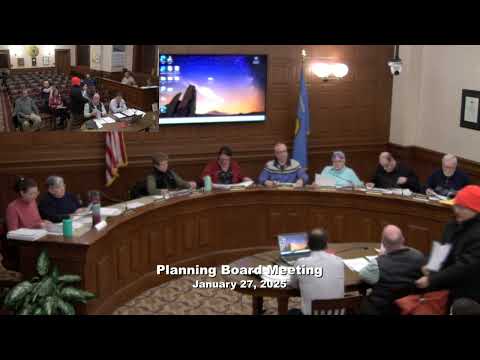
Lewiston Planning Board narrows capital improvement priorities, eyes Feb. 15 recommendation to council
Summary
At a Jan. 22 meeting, the Lewiston Planning Board continued review of the city—apital Improvement Plan, discussed an 80% cap set by the City Council in 2011, and signaled priorities for the council including a municipal fleet wash facility and reconsideration of funding for Franklin Pasture tennis courts.
The Lewiston Planning Board on Jan. 22 continued its review of the city—apital Improvement Plan, discussing the council-approved 80% cap on capital requests, a Feb. 15 deadline for board recommendations to the City Council and potential priority cuts.
Board Chair Shanna Cox called the meeting to order and opened the continued LCIP review, saying the packet and supporting memos were available to members and the public. Jonathan O'Malley, interim acting deputy city administrator, told the board that the 80% limitation was approved by the City Council in 2011 and that going above the cap would require a supermajority of five council votes: "Back in 2011, that was when that 80 percent limitation was approved by the city council. ... In order to go above that 80%, they need a super majority, which is 5 votes."
Why it matters: the 80% cap and the short timeline mean the Planning Board must prioritize projects or ask the City Council to accept a higher bonding level. O'Malley said staff reduced the total LCIP request to bring it closer to the cap while retaining items that staff considered life-safety or infrastructure priorities.
Board members and staff discussed process and next steps. The board set a target to deliver recommendations to City Council on Feb. 15 and agreed to refine priorities at the next Planning Board meeting. Chair Cox proposed that each board member prepare a short document listing three high-priority items to keep and three items to cut if necessary, to help reach consensus at the follow-up meeting.
Members repeatedly flagged two areas that will shape the board's recommendation: the municipal fleet wash facility (which board members described as having a clear return on investment for vehicle life and maintenance costs) and Franklin Pasture tennis courts (a large discretionary item that several members suggested is lower priority than life-safety or envelope repairs).
Board members debated whether to recommend operational funding instead of bonding for certain projects, and O'Malley said staff had already pared the requests but left in items viewed as life safety or infrastructure critical. "I wanted to get it as close to the 80% that I could," O'Malley said, adding that final funding decisions are for the City Council.
The board closed the LCIP discussion by asking members to submit written follow-up questions to staff so answers could be provided before the next meeting. The board also retained minutes voting and routine procedural business for the end of the agenda.
The board will reconvene to finalize its recommendation to the City Council before the Feb. 15 deadline; staff asked members to send technical questions to Shelley Norton so departments could provide written replies in time.
Ending: The board scheduled final LCIP deliberations for its next meeting and asked members to return with written priorities to guide a concise recommendation to the City Council.