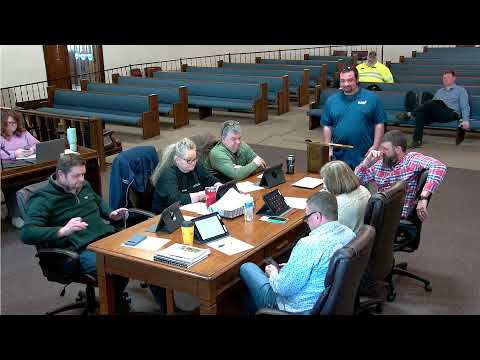
Area development district outlines $20 million regional "Anchor Project" for mental health and recovery services
Loading...
Summary
A 10-county effort led by the area development district will use a $20 million legislative allocation to pilot a three-part regional response to opioid and mental-health crises, including a mental-health crisis intake center to be built in Bowling Green and operated by Life Skills.
The area development district announced a regional plan to use $20 million from the Kentucky General Assembly to pilot the "Anchor Project," a three-part program focused on crisis intake, residential recovery and a regional drug-control office.
The district director, Eric Sexton, said the allocation will fund construction of a mental-health crisis intake center in Bowling Green and counseled Logan County officials on the program’s scope. "A lot of the $20,000,000 that we received will be spent to construct the mental health crisis center, which will be operated by Life Skills," Sexton said.
Sexton described three phases: a short-term mental-health crisis intake center aimed at diverting people from arrest and incarceration, a Life Learning Center modeled on an existing Northern Kentucky program to provide 12-week evidence-based reentry and workforce services, and a regional Office of Drug Control Policy to coordinate longer-term strategy and best practices. He said the allocation came after regional planning and that Life Skills has committed to operate the intake center after it is built. "If we can just build it, they're saying we'll take it and run it," Sexton said.
Bowling Green Mayor Todd Alcott, who joined the presentation, told the court that mental-health emergencies have become the city’s top public-safety issue. "Our number one issue is mental health," Alcott said, linking the need for services to local law enforcement workload and recent overdose deaths in the region.
Sexton said the state legislature also awarded $12 million separately to develop a Life Learning Center, and that Life Skills had donated six acres on Lovers Lane for the crisis intake facility. He described an advisory structure that will include local elected officials and public-safety leaders; the district has formed a 22-member opioid advisory committee with representatives from each county in the 10-county region.
On coverage for Logan County residents, Sexton said the project is intended to be regional and that no one in the 10-county footprint will be denied access: "No one from our 10 county region will be denied services from this. And that's a commitment that all the founders, the stakeholders have made." He added the district plans to track utilization and outcomes and is in early discussions with Western Kentucky University to develop data reporting.
Sexton said the General Assembly placed a requirement that the pilot spend roughly $10 million per fiscal year and that the district had already awarded early design work and issued an RFP for construction management. He said an early design and cost estimate were expected within months and that the advisory committee would meet again in March to consider how counties and cities might contribute opioid settlement funds for ongoing operations or capital shortfalls. "By March our advisory committee will meet again, and we're hoping to be able to give them some information," Sexton said.
Local officials and public-safety leaders at the meeting expressed support but also sought assurances that Logan County residents would receive services and that county funds would produce measurable local results. Sexton said the district would return with cost estimates and performance data so counties could make an informed decision about contributing their opioid-abatement funds.
The presentation closed with a request that county officials consider joining the regional approach; Sexton and the district staff said they would return with preliminary designs, budgets and governance details for further review.
Ending
Sexton and the mayor asked county officials to review the project materials and consult with the district advisory committee as design and cost estimates become available, with more detailed proposals expected before the end of the current fiscal year.