Get Full Government Meeting Transcripts, Videos, & Alerts Forever!
Get email alerts on the Hazardous Materials Fee topic
No spam. Unsubscribe anytime.
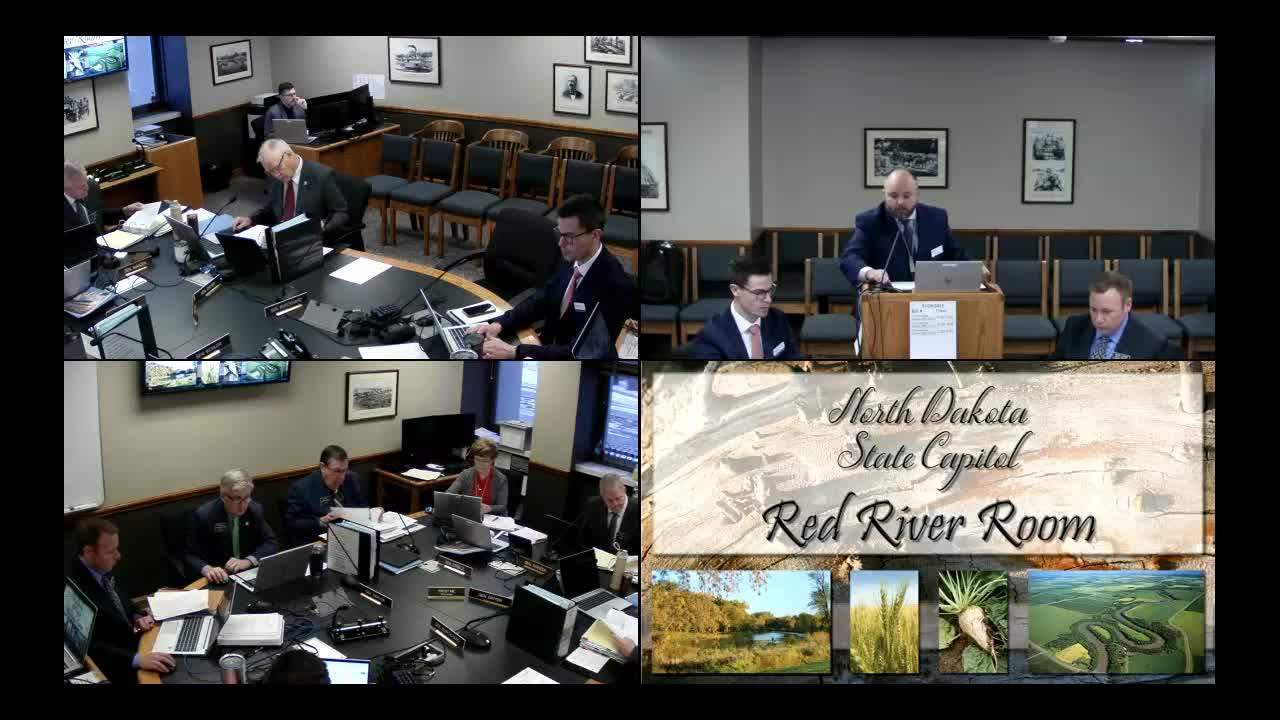
Committee gives do-pass recommendation to hazardous-materials fee bill
Summary
The Appropriations — Government Operations Division recommended a do-pass for Senate Bill 2082, which would let the Division of Homeland Security set hazardous-materials fees, raise the facility fee cap, and allow late fees for otherwise fee-exempt facilities, the committee heard.
The Appropriations - Government Operations Division voted to give a do-pass recommendation to Senate Bill 2082, a bill that would allow the state Division of Homeland Security to set hazardous-materials fees, raise the maximum per-facility charge, and authorize late fees for facilities that are otherwise exempt from the fee but fail to file required reports.
Darren Hansen, director of the Homeland Security Division at the Department of Emergency Services, told the committee the bill “does 3 things.” He said it would (1) allow the division director to set the hazardous-materials fee currently collected from facilities that store chemicals at or above specified thresholds to support the state’s SARA Title III responsibilities; (2) change the cap on how much a facility can be charged (as described in the bill); and (3) allow the state to assess a late fee against facilities that are currently fee-exempt if they fail to file required reports on time.
Hansen said the fee level was last set in 1991 and that revenue from the fee is split so counties receive half for their hazardous-materials programs, which local emergency planning committees administer. He told the committee the fiscal note projects roughly $582,000 in annual revenue if the baseline fee were doubled (from $25 to $50), with the fiscal note showing the revenue split roughly half to counties and half to the state. “The information is used by your local first responders,” Hansen said, describing the purpose of the reporting requirement.
Senators asked clarifying questions about the fee structure and which sites would be treated as single facilities versus multiple facilities when located on separate sites. Hansen said he would follow up with a technical expert (who was at a national emergency response meeting) to clarify the facility-boundary question. A senator sought clarification about the maximum per-facility charge; committee discussion included differing renderings of the numeric cap in the transcript and the staff present pointed the committee to the fiscal note and the bill language for precise figures.
There was no recorded opposition in the room during the committee presentation, Hansen said, and he described prior consultations with industry through the state emergency response commission. Hansen said the division generally tries to work with facilities for months before pursuing enforcement through the attorney general’s office.
Senator Sickler moved that the committee give Senate Bill 2082 a do-pass recommendation; the motion was seconded and the committee recorded aye votes, after which the chair agreed to carry the bill to the full committee. The committee recessed for scheduling reasons after the vote.
The bill will next move to the full committee and then, if reported out, to the floor; the committee did not take final legislative action beyond the do-pass recommendation at this hearing.