Get Full Government Meeting Transcripts, Videos, & Alerts Forever!
Get email alerts on the Long Term Services And Supports topic
No spam. Unsubscribe anytime.
Commission forms LTSS and health-equity subcommittee, names co-chairs and outlines priorities
Summary
At its inaugural Long Term Services and Supports (LTSS) and Health Equity Subcommittee meeting, the Commission on the Status of Persons with Disabilities set a multi-pronged agenda—MassHealth briefings, a public resources list, investigation of crisis triage disparities—and unanimously nominated co-chairs to lead recruitment and outreach.
At its inaugural Long Term Services and Supports and Health Equity Subcommittee meeting, the Commission on the Status of Persons with Disabilities elected co-chairs and laid out initial goals including inviting MassHealth to brief the subcommittee, creating a public list of LTSS resources, and researching health-care disparities that affect people with disabilities.
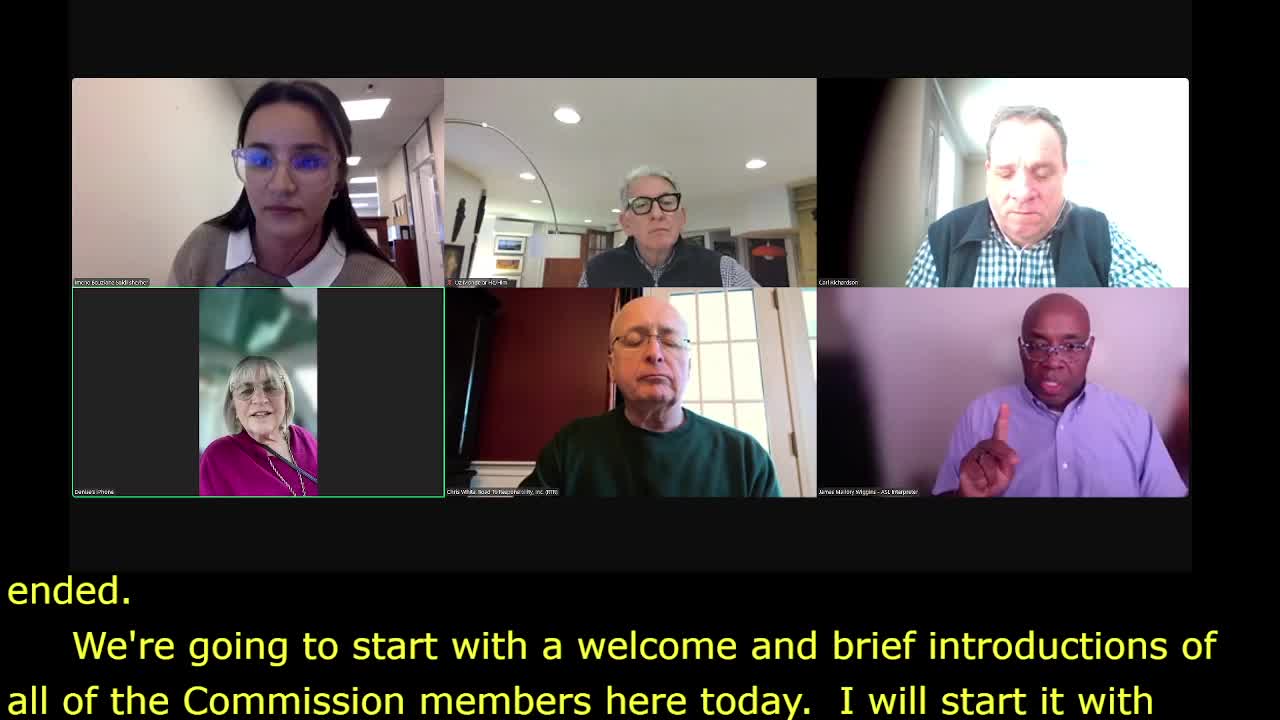
The meeting opened with commission Chair Denise Skalick introducing the new subcommittee and the commissioners present. “I am Denise Skalick. I am currently the chair of the commission ... and I am a registered nurse,” Skalick said, noting the group’s focus on health equity and long-term supports.
The subcommittee’s nut graf: members said the work matters because long-term services and supports are a major component of MassHealth spending and because people with disabilities can face unequal treatment in clinical settings and crisis triage. “Long term services and supports are generally funded by MassHealth, but also other state agencies,” said Charlie, legislative liaison for the Disability Policy Consortium, outlining the program areas the subcommittee may cover and the potential impact of state and federal budget changes.
Members identified three initial, measurable objectives: invite MassHealth to present about programs and populations served; compile a detailed, publicly accessible list of LTSS and health-care resources (state, federal and nonprofit); and research documented disparities in policy and practice, including crisis triage protocols that historically disadvantaged people with disabilities during COVID-19. Angela, executive director of the Massachusetts Health Council, urged using the commission’s convening role to “bring in those coalitions that are doing really important work right now,” and members agreed to pursue partnerships with existing coalitions and organizations.
Discussion also flagged related priorities the subcommittee will monitor: the phase-out of the Pappas Center for students with complex medical needs; capacity and choice issues involving nursing homes versus home- and community-based services; mental-health workforce reductions (including recent DMH changes to case management); and federal policy risks such as Medicaid block-grant proposals. Commissioners stressed intersectional outreach across the Commonwealth — noting that needs in Western Massachusetts differ from Greater Boston — and the importance of including consumers, providers, funders and state agencies in future meetings.
The subcommittee agreed on several administrative next steps: staff will circulate cleaned meeting notes and a draft of broad goals for revision; commissioners will assemble a roster of potential non-commission members to recruit to the subcommittee; and the group set its next meeting for February 24 (staff to circulate final agenda and materials in advance).
The only formal vote at the meeting was the subcommittee’s leadership selection. The commission chair nominated co-chairs from among members; the nomination was seconded by Commissioner Chris White and adopted unanimously. The transcript records the motion and a unanimous “aye,” though individual vote names were not listed in the record.
Members closed the meeting urging prompt follow-up because of what several called an urgent policy environment. Skalick and others emphasized that the group will act primarily as a convener and information-gathering body rather than as a political advocacy committee, and will be careful about scope as it develops formal work products.
Ending: Staff will circulate a cleaned set of meeting notes and draft goals before the next meeting; commissioners nominated to lead the subcommittee will begin outreach and roster-building for broader membership and subject-matter presenters.