
Committee hears competing views on bill to authorize public charter schools in North Dakota
Get AI-powered insights, summaries, and transcripts
Subscribe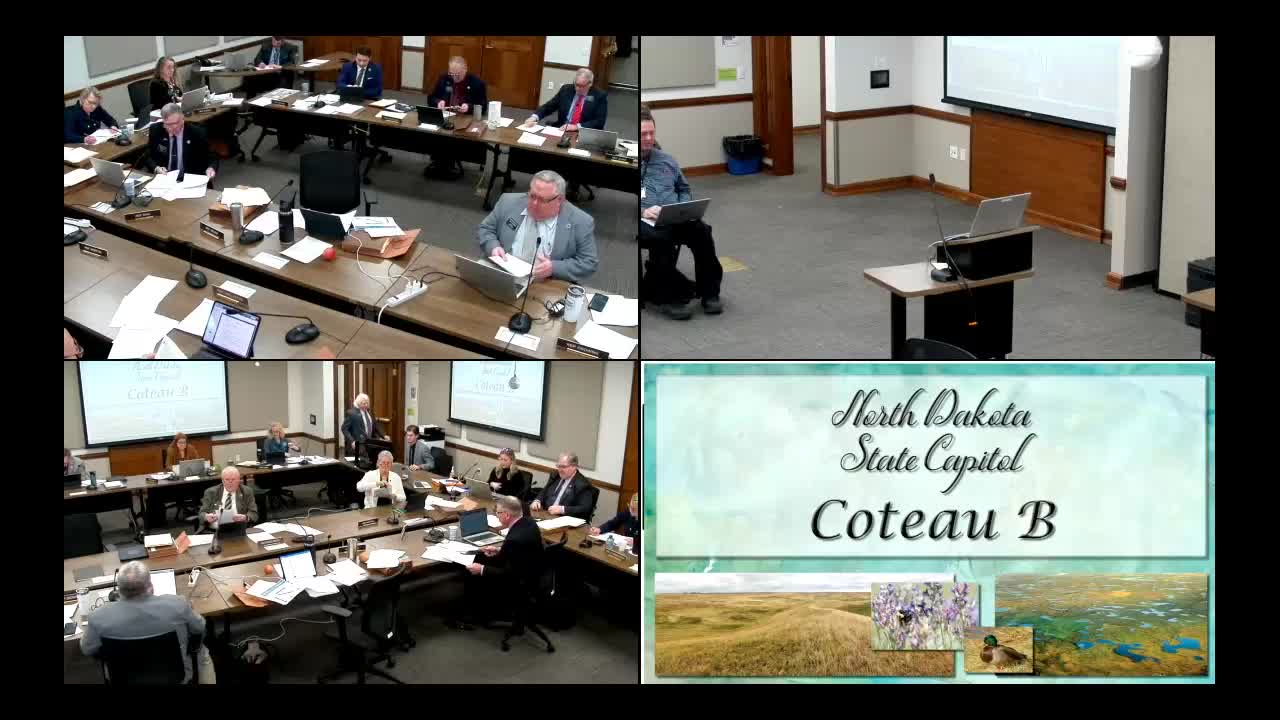
Summary
Representative Murphy introduced House Bill 1358 to permit public charter schools in North Dakota; supporters emphasized choice and specialized programs for at‑risk and IEP students, while school boards, teacher groups and disability advocates warned of funding, staffing, accountability and IDEA compliance risks.
Representative Murphy, sponsor of House Bill 1358, told the committee the bill would allow public charter schools in North Dakota and noted that 45 states already permit charters. He described the proposal as a publicly funded, no‑cost option he said could expand specialized choices — especially for students with individualized education plans (IEPs) and for dropout‑recovery programs.
Murphy said the draft limits expansion in early years and contains guardrails: an initial cap of charter authorizations (the sponsor said 12 for the first biennium, then 15 in a later cycle), requirements for a charter holder and a local governing board, a prohibition on sublicensing charters to educational management companies, and a provision to fund charters with the state aid payment at 100 percent.
Several speakers in support said charters can serve at‑risk students and re‑engage dropouts. Harriet Caruso and James Meehan, who operate and oversee charter schools in Arizona, described mission‑driven programs that emphasize individualized learning plans, mentoring and flexible scheduling for students who have left traditional schools.
Opponents included Amy Kopas (North Dakota Council of Educational Leaders), Amy DeCook (North Dakota School Boards Association), Nick Archuleta (North Dakota United), Mike Heilman (North Dakota Small Organized Schools) and the North Dakota Protection and Advocacy Project. Their concerns included the potential diversion of state aid from small rural districts, the uneven regulatory/operational obligations of charter operators compared with public districts, higher failure rates of charters in other states, uncertainty about whether charter staff would be public employees and how IDEA and Section 504 services would be delivered.
DeCook and other witnesses noted that the bill’s text does not require charters to accept every student regardless of disability or special needs, and she said the proposal does not impose the full set of federal obligations that apply to district schools. Anna Rackley, representing the Protection and Advocacy Project, urged explicit statutory language to require compliance with IDEA, ADA and Section 504 and DPI oversight of IDEA implementation.
Supporters and opponents also debated operational details: transportation (the bill does not require charters to provide it), who owns or leases facilities (the sponsor said charter organizations would be responsible for facilities), extracurricular access and cooperative arrangements with local districts, and workforce impacts in an already tight teacher market.
The committee heard extensive testimony for and against the bill. The hearing closed with no committee vote recorded; members signaled divergent views and asked for additional review and drafting.