Get Full Government Meeting Transcripts, Videos, & Alerts Forever!
Get email alerts on the School Safety Elections topic
No spam. Unsubscribe anytime.
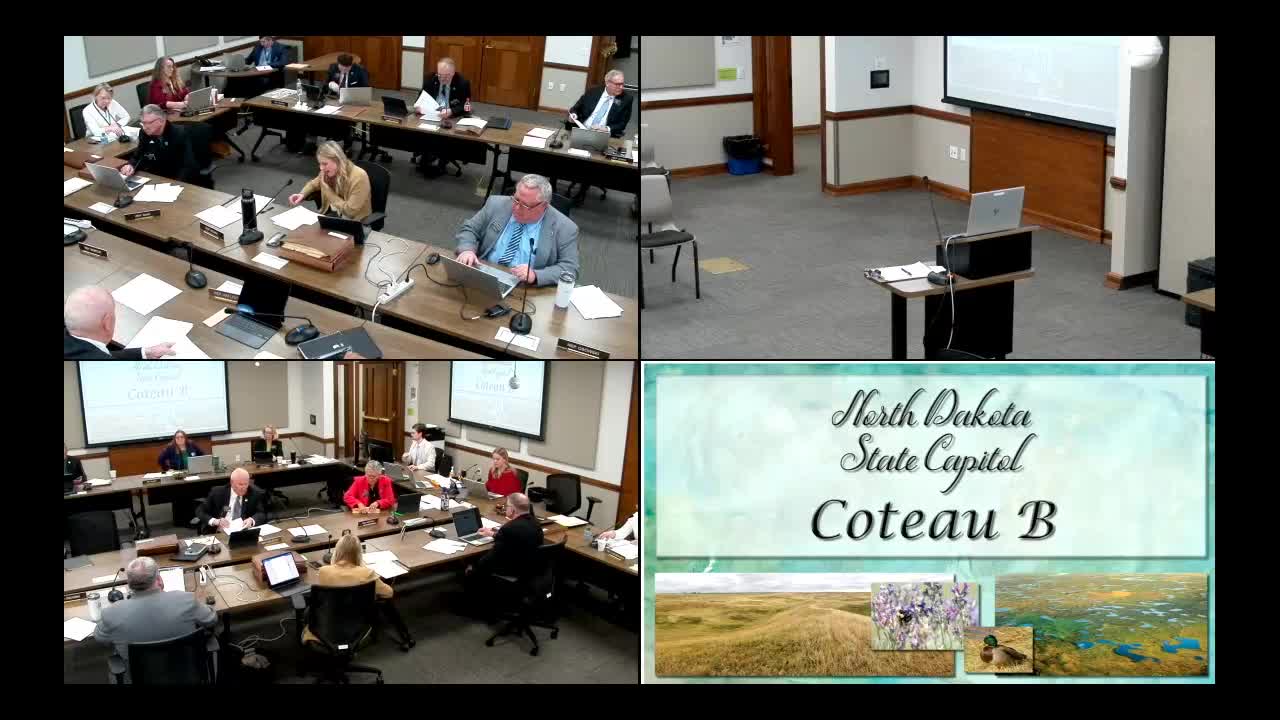
Bill would limit school attendance on election days used as polling places; committee hears parents and education groups
Summary
Rep. Pat Heinert introduced HB1387 to prohibit schools from being in session when used as polling locations unless students are segregated or professional development days are used; parents and education leaders generally supported the proposal while urging local flexibility and amendments.
Representative Pat Heinert told the House Education Committee he introduced House Bill 1387 because of concerns for student safety when schools are used as polling places. Heinert described personal experience picking up a grandchild from a school used as a polling site and recounted how the school's normal visitor-screening contrasts with the large public presence during an election day.
"I'm asking that school either be not held on election day or held somewhere else," Heinert said, adding that elementary and middle-school settings were his primary concern. He acknowledged that schools are often the most accessible polling locations because of parking, gym space and handicap access, and that local alternatives may be impractical in smaller communities.
Multiple witnesses supported the proposal but urged committee changes or local flexibility. Amber Heinert, a parent who testified in support, described her experience walking "right into the gymnasium" on election day while the after-school program was operating and said the arrangement left her concerned about supervision and security. Amy Kopas of the North Dakota Council of Educational Leaders and Amy DeCook of the North Dakota School Boards Association both recommended amendments to allow schools to remain open if they can segregate students from voters or to permit professional development days for staff instead of a full student holiday.
Committee members discussed options including: specifying elementary-only coverage, allowing school districts to declare a professional-development day, or requiring physical segregation of voting areas so students and voters have no contact. Representative Jonas suggested professional development as an alternative that would accommodate working families; Representative Longmire proposed local decisions about securing gym entrances and segregating voting from classroom space.
Why it matters: the bill raises a tension between student safety and local control. Education groups supported the policy goal but asked for language that allows districts to use local safeguards — for example, isolating voters in a gym with separate entrances — and to avoid imposing statewide mandates without funding or operational flexibility.
Next steps: the committee closed the hearing on HB1387 after hearing several supporters and no formal opposition. Sponsors and witnesses said they expect amendments to refine coverage by grade levels or to add permissive language for professional development or segregation plans.