Get Full Government Meeting Transcripts, Videos, & Alerts Forever!
Get email alerts on the Technology Research Center topic
No spam. Unsubscribe anytime.
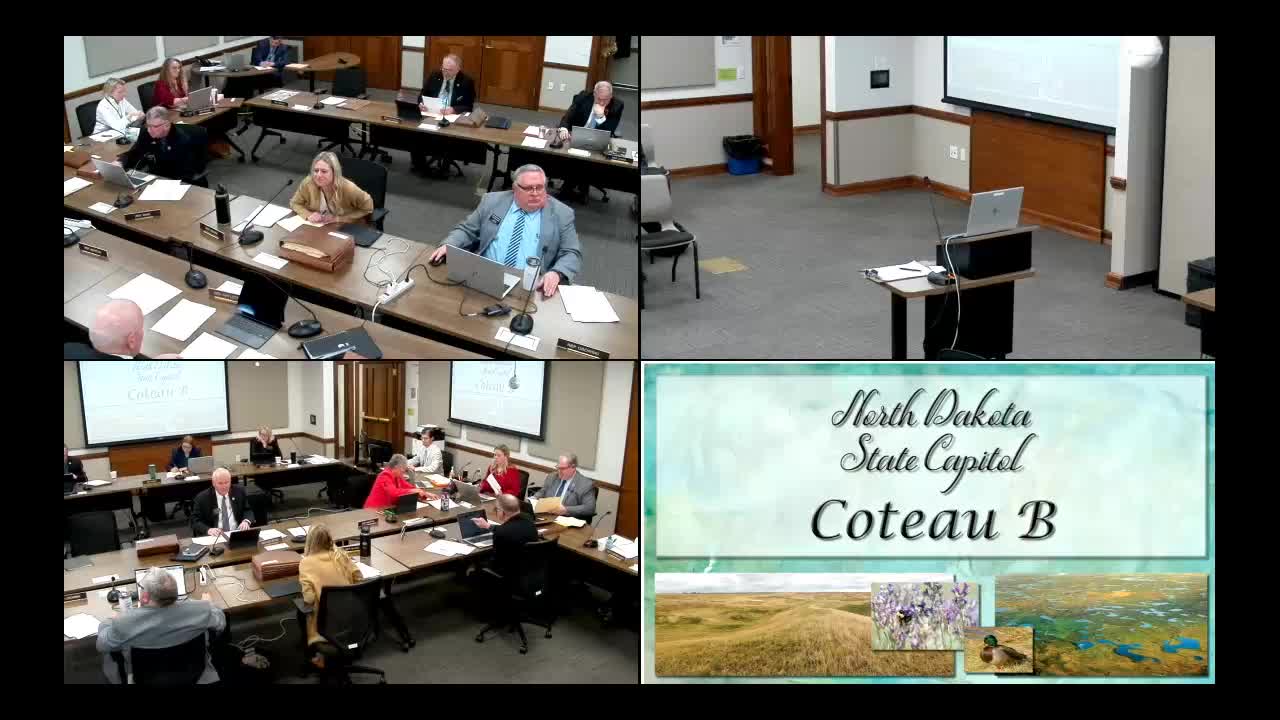
Lawmakers hear bill to create state technology research center and $5 million grant fund
Summary
House Education Committee heard testimony on HB1265, which would establish a State Information Technology Research Center, an Advanced Technology Review Committee, compute-credit grants, and a $5 million advanced technology grant fund to support startups and R&D.
Lawmakers in the House Education Committee heard testimony on House Bill 1265, a proposal to establish a state information technology research center, a review committee to oversee grants, compute credits for advanced computing, and a $5 million advanced technology grant fund.
Representative Josh Christie, the bill sponsor, said the bill would create a "state information technology research center" initially listed at the University of North Dakota and would establish an advanced technology review committee and a $5,000,000 advanced technology grant to support early-stage companies. Christie described the intent as economic and workforce development: to "support innovation, attract investment, and equip our workforce for high demand industries."
Supporters from higher education and research stressed existing capacity in the state and urged collaborative governance. Mark Wahlman, vice president for IT and chief information officer at North Dakota State University, told the committee NDSU is already operating a large research computing facility — CCAS — with "over 13,000 processors, processing cores, a 100 NVIDIA GPUs" and supports nearly 100 research groups. Wahlman said NDSU supports the concept but noted overlap with existing university infrastructure. Jerry Rasted, vice chancellor for strategy for the North Dakota University System, recommended language changes to make the center collaborative and to include representatives from the governor’s office, NDSU, UND, and the Dakota Digital Academy on governance.
University of North Dakota President Andy Armacost said the bill would help the state prepare for AI and advanced computing and serve as an attractor for firms and talent. Rasted encouraged removing an exclusive reference to a single campus and described the center as best implemented as a collaborative, "virtual" center across institutions.
Program details raised by committee members include intellectual property ownership, board composition and appointment, the possibility of duplication with NDSU programs, and whether a chief technology officer on the governor’s cabinet or other state technology offices should have an explicit role. Representative Christie said the $5 million grant fund would be allocated by a five-member board (one appointment by the governor, one from NDIT, one from NDUS, and two public citizens as drafted) and that he was open to amendments on restrictions and eligibility. Christie suggested typical grant sizes would be modest — he mentioned "25 to $50,000 grants" as his intention for early-stage companies.
What matters: the bill aims to position North Dakota to support artificial intelligence, machine learning, quantum computing and other advanced computing research and to use state resources to attract startups. Supporters argued the state risks losing talent and investment without action; some university speakers recommended a collaborative, system-wide approach rather than locating authority at a single campus.
Next steps: the committee received testimony in support from university and higher-education representatives and closed the hearing without action. The sponsor and advocates said they are open to amendments to broaden participation and clarify governance and procurement questions.