Get Full Government Meeting Transcripts, Videos, & Alerts Forever!
Get email alerts on the Housing topic
No spam. Unsubscribe anytime.
Committee hears plan for $50 million HOME grant to lower housing infrastructure costs
Summary
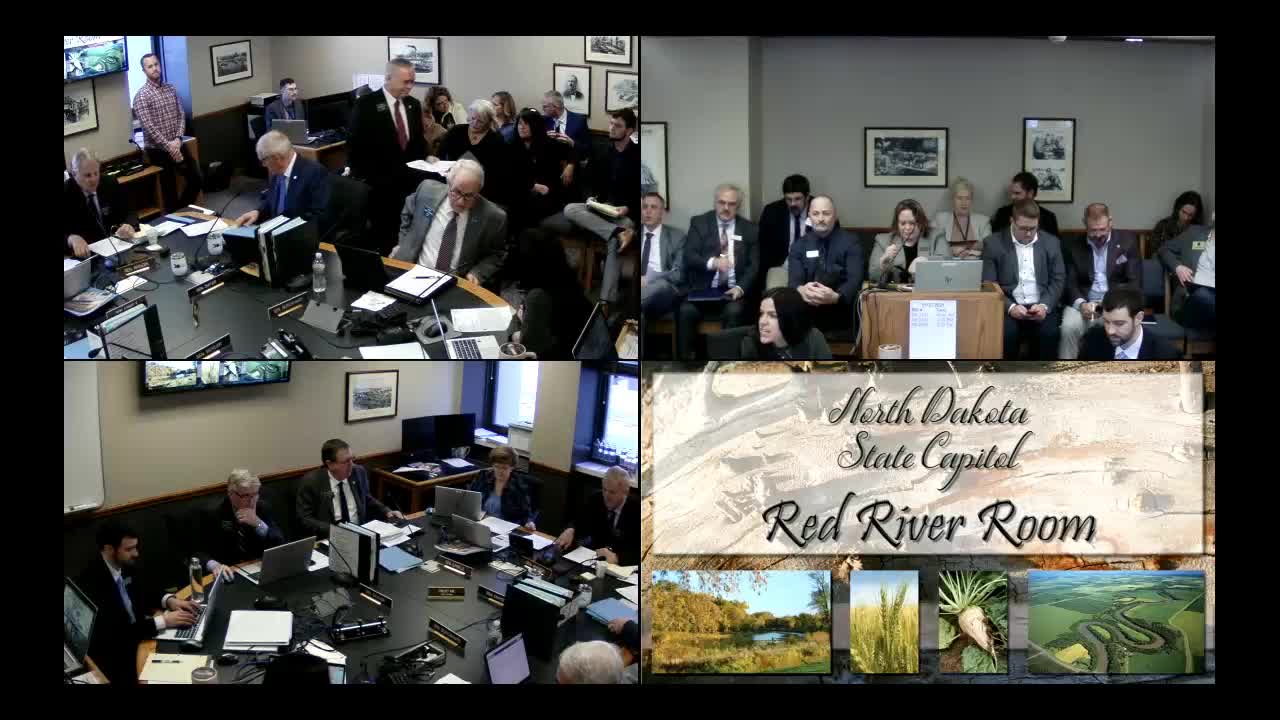
Senators and witnesses in the Government Operations Division heard testimony on Senate Bill 2225 on a proposed $50 million Department of Commerce HOME grant program to lower infrastructure costs for new housing.
Senators and witnesses in the Government Operations Division heard testimony on Senate Bill 2225 on a proposed $50 million Department of Commerce HOME grant program to lower infrastructure costs for new housing.
Supporters told the committee the program would use a combination of state, local and private investment to reduce lot and utility development costs that make new housing unaffordable in many North Dakota communities.
The bill would authorize Commerce to administer a one‑time $50,000,000 HOME grant program and set the department’s role in distributing awards and reporting results. “The commerce department shall establish the guidelines for providing the grants,” said Senator Brad Beckettall, who introduced the bill as a request of Governor Armstrong. The bill also includes an emergency clause intended to move funds quickly into the 2025 construction season if passed with the required vote margin.
Governor Kelly Armstrong, appearing in support, described the proposal as part of a broader housing package. “What people need is we need less programs and more solutions,” Armstrong told the committee. He said the HOME fund would pair state grants with local and private matches so communities decide the housing type they need. “A community decides the type of housing they need and which contractor they want to build the project,” Armstrong said.
Chris Shilkin, Commissioner of the North Dakota Department of Commerce, told the panel Commerce would award grants to political subdivisions to lower the cost of infrastructure—water, sewer, roads and site preparation—rather than pay directly to construct housing. Shilkin summarized the allocation brackets described in testimony: $10,000,000 for communities under 5,000 population; $20,000,000 for communities of 5,000–20,000; $15,000,000 for communities of more than 20,000; and $5,000,000 set aside for rural metro areas within 20 miles of a city center over 20,000 residents. He said the maximum individual award would be $1,500,000 and grants would require a dollar‑for‑dollar match from nonstate resources, expected to be equally derived from the political subdivision, local developers and private community funds.
“The matching fund requirement is a dollar for dollar match from non state resources,” Shilkin said. He added Commerce would report program status, including expenditures, units supported and matching funds, to the governor and legislative management by June 30, 2026. Commerce representatives told the committee the HOME program would be a one‑time appropriation running through the 2025–27 biennium and would be implemented under the department’s guidelines.
Don Morgan, president and CEO of the Bank of North Dakota, described a complementary, nonappropriated program the bank is developing to address appraisal gaps in rural markets. “What that has done is created a bit of a bottleneck in the financing world,” Morgan said. He said the bank’s market program would fill financing gaps for loans that otherwise meet underwriting standards but face appraisal issues that make them unsellable on the secondary market.
Local officials, economic development professionals and builders gave examples from across the state, saying infrastructure cost and appraisal gaps make many rural and smaller city housing projects financially infeasible. Mortgage banker Joe Sheehan offered an illustration of buyer impact: reducing a lot cost by roughly $40,000 could lower monthly payments materially and increase buyer purchasing power. “That $40,000 would automatically bring it down,” Sheehan said, describing how lower lot or special assessment costs translate to lower monthly payments for buyers.
Several witnesses asked the Legislature or Commerce to keep program rules flexible for local conditions. Lisa Rotvold, executive director of Red River Community Housing Development Organization, urged tweaks to matching rules and the allocation brackets that appear on page 2 of the bill. “The match has already been addressed and it would be great to see some tweaks to that to make it a little bit more flexible and attainable for rural communities,” Rotvold said, noting the number of small towns that lack buildable lots or face high land or floodplain constraints.
Testimony also included examples of projects that required multiple partners—local government, companies, the Bank of North Dakota and others—to reach financial feasibility, most notably a Grafton project that combined employer investment, local incentives and bank programs to reach construction.
No formal action or vote occurred; the session was a hearing to gather information. Committee members asked clarifying questions about whether the appropriation already appeared in Commerce’s budget requests and how Commerce would ensure local agreements do not result in undue private benefit to developers. Shilkin and other witnesses said Commerce would rely on local development agreements and Department guidelines to address those concerns.
The committee closed the hearing on SB 2225 after a full day of testimony from municipal officials, builders, bankers and workforce development advocates.