Get Full Government Meeting Transcripts, Videos, & Alerts Forever!
Get email alerts on the Transportation topic
No spam. Unsubscribe anytime.
DOT outlines airport funding, PFAS cleanup and sustainable aviation fuel planning at Anchorage hearing
Summary
DOT told the Senate Transportation Committee it expects roughly $190 million in AIP funds and another $40 million from the Bipartisan Infrastructure Law for airports this fiscal year; officials described PFAS transition work, lighting upgrades, AWOS/ASOS outages and a planning grant for sustainable aviation fuel.
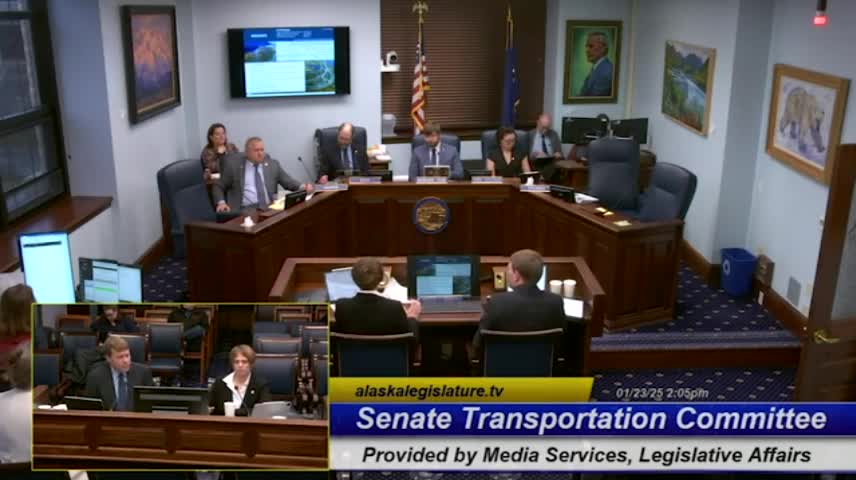
At the Jan. 23 Senate Transportation Committee meeting in Juneau, Deputy Commissioner Catherine Keith and Commissioner Ryan Anderson delivered a detailed briefing on Alaska’s airport system, federal funding expectations, ongoing PFAS transition work and an FAA planning grant to evaluate sustainable aviation fuel (SAF) options.
Funding and project volumes
Keith said that for the current fiscal cycle DOT expects about $190 million in Airport Improvement Program (AIP) funds and an additional $40 million from Bipartisan Infrastructure Law airport infrastructure grants and terminal grants. She told the committee that FY24 saw 70 AIP grants executed and FY25 expects roughly 73; that activity is cyclical due to multi‑year airport projects.
PFAS/PFOS transition and airport safety
On PFAS — identified in the transcript as PFOS — deputy commissioner Keith said last year the legislature appropriated funds to transition away from PFAS‑containing firefighting foams and to clean contaminated equipment. DOT has an RFP out to help with PFAS transition, starting with the two international airports and then moving to Part 139 airports after methods are demonstrated and validated.
Rural airport operations and lighting
DOT said it operates 235 state-owned airports and that airport lighting systems and AWOS/ASOS weather stations are recurring problems in rural aviation. Keith said there are 153 AWOS/ASOS stations statewide and on average 50–60 of them are out of service at any time because equipment is older and not fully supported; the AWOS/ASOS systems are within FAA and National Weather Service purview but affect DOT operations and communities. DOT is distributing emergency lighting kits to rural hubs and expects eight lighting improvement projects to replace aging systems.
Sustainable aviation fuel planning
Deputy Commissioner Keith said DOT received a planning grant from FAA to evaluate sustainable aviation fuel potential at Ted Stevens Anchorage International Airport; she noted that Alaska Airlines, Atlas, UPS and FedEx have expressed interest and that UAF and other partners are exploring feedstock and production options. Keith said the FAA planning grant is a first step; construction-scale work would require further funding and potential Department of Energy loan options.
Why it matters: Airport funding, PFAS remediation, and SAF planning bear directly on rural mobility, cargo capacity through Anchorage and long‑term fuel and emissions strategies. Senators asked for additional technical presentations on SAF to better understand engine compatibility, feedstock and scale.
Ending: DOT said it will provide additional detail about the PFAS RFP timeline, the eight lighting projects cited for rural airports and follow‑up presentations on SAF planning if the committee requests them.