Get Full Government Meeting Transcripts, Videos, & Alerts Forever!
Get email alerts on the Behavioral Health topic
No spam. Unsubscribe anytime.
Department details youth behavioral‑health roadmap, DOJ agreement and steps to expand crisis and complex‑care supports
Summary
The Department of Health briefed the Senate committee on an eight‑month engagement that produced 47 youth behavioral‑health recommendations, a three‑year letter of agreement with the U.S. Department of Justice, and actions to expand crisis services, case review teams and residential options.
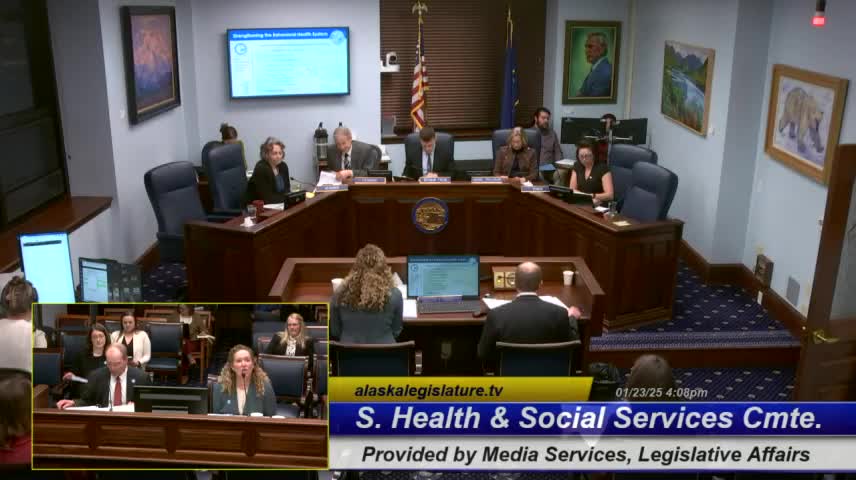
Commissioner Heidi Hedberg, Deputy Commissioner Emily Ricci and D.C. Ritchie told the Senate Health and Social Services Committee on Jan. 23 that the Department of Health and Department of Family and Community Services have implemented the first steps from a youth behavioral‑health roadmap.
The departments held listening sessions across five regions and with behavioral health aides, which resulted in 47 recommendations and actionable next steps. Hedberg and Ricci said 21 of the 47 recommendations are actively under way.
Nut graf: The Department of Justice reviewed state practices and the departments signed a letter of agreement last week that pauses potential litigation for three years while the state reports progress implementing reforms aimed at reducing unnecessary institutionalization of children. The agreement covers but is not limited to the youth behavioral health roadmap.
Key measures: Ricci and D.C. Ritchie highlighted immediate operational fixes requested by providers — rate methodology review focused on behavioral health, improving the timeliness and accuracy of claims payment, and reducing administrative burden for providers. Ritchie said behavioral health claims were moved into the standard Medicaid claims system on Nov. 1 and the department is in stabilization and provider‑support phases.
The department is also pursuing crisis stabilization and crisis residential services and contracted Milliman to evaluate the crisis system and identify next steps for 2025. For complex cases, Ritchie described weekly case‑review teams and monthly coordination meetings to address individuals with severe behavioral health, developmental disability and complex medical needs; those efforts have led to waiver changes and new placement and staffing options.
Ending: The department said it will expand certified community behavioral health clinics planning (supported by a $1 million federal planning grant) and continue implementing the youth roadmap actions over the next two years.