Get Full Government Meeting Transcripts, Videos, & Alerts Forever!
Get email alerts on the Public Pensions topic
No spam. Unsubscribe anytime.
Appropriations panel OKs PERS IT and one‑time developer funding; FTE additions left undecided
Summary
A House Appropriations Government Operations subcommittee approved ongoing IT cost increases and one‑time contractual developer funding for the Public Employees Retirement System (PERS) but left a proposal to add two full‑time positions undecided for now.
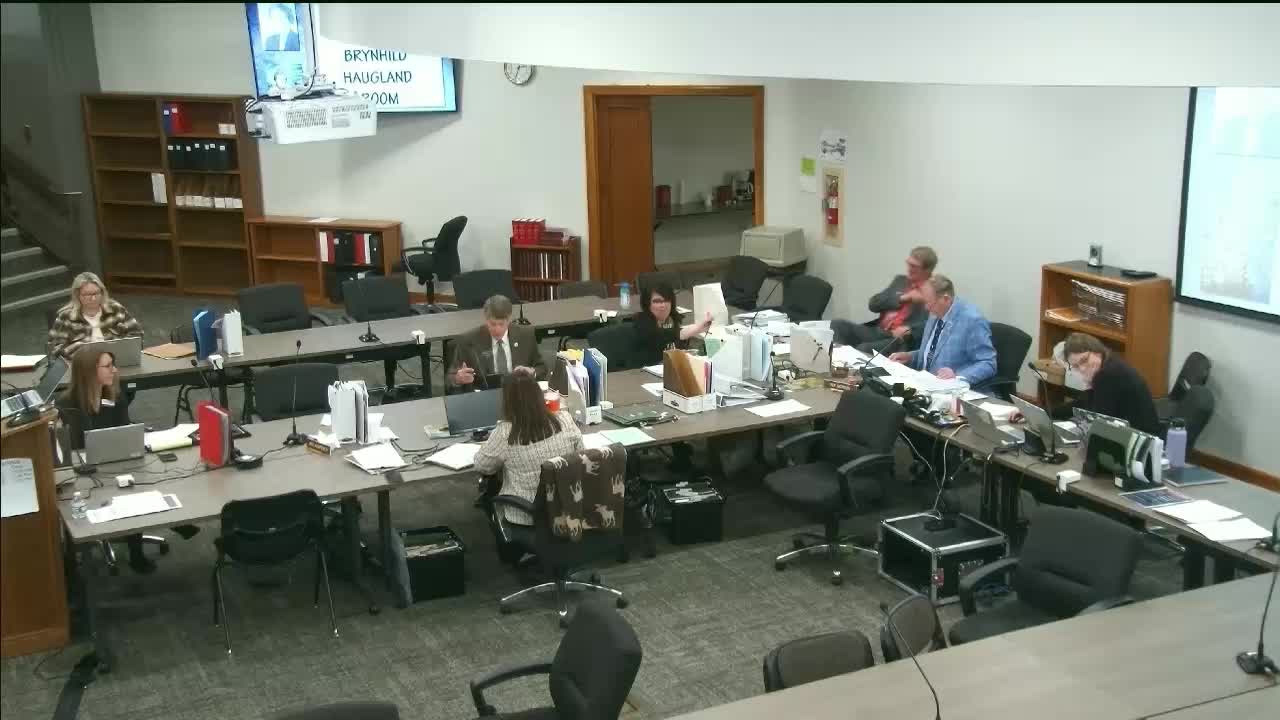
A House Appropriations Government Operations Division subcommittee on Tuesday approved funding to keep the Public Employees Retirement System (PERS) operating at its current service level while also authorizing one‑time money for contracted developers, but the panel delayed a decision on adding two new full‑time positions.
The subcommittee voted to move forward with an ongoing cost‑to‑continue IT increase of $298,906 and approved a one‑time appropriation of $539,595 for additional contracted developers and a project manager to finish several large IT projects, including an electronic retiree portal and enrollment “wizards.” The panel placed a question mark — effectively tabling a decision — on a request to add two FTEs (an enrollment specialist and an accounting position) that PERS staff said are needed after the agency’s shift from a defined‑benefit to a defined‑contribution model.
Why it matters: PERS is implementing major system and program changes after the closure of its main defined‑benefit plan under last session’s House Bill 1040. Agency leaders told the committee the changes substantially increase workload for enrollment and employer onboarding, and they argued that failing to fund technology and staff could produce long‑term problems for members and employers.
Derek Cobine, chief operating and financial officer for PERS, told the committee the $298,906 ongoing increase covers licensing and other charges that reflect new NDIT rates and Sagic (contracted vendor) fees. “This ask really isn't a request for anything additional from our agency,” Cobine said. He added the amount reflects projected rates for the next biennium and is intended to “maintain operations as they exist today.”
Cobine described the $539,595 one‑time request as funding for contractual development work — not agency payroll — to complete four major projects: an online retirement paperwork process, new‑hire and annual enrollment wizards, a business‑process management redesign, and other automation. He said the work is done by contracted developers through Sagitech and that the request would fund contractors, not new salaried employees.
Committee members pressed PERS staff on whether some of the enrollment work could be handled temporarily rather than by permanent hires. Representative Meyer said, “The one accounting specialist we might might wanna visit a little bit about,” and later suggested the committee could consider temporary funding for one position. Cobine cautioned that the increased workload tied to matching provisions and incremental elections will be ongoing: “The work efforts not gonna go away for 40 years,” he said, explaining that certain legacy defined‑benefit workloads will persist even as the agency operates a defined‑contribution plan.
On the two FTEs under consideration, Representative Pyle read agency estimates: roughly $239,016 for a support position and $203,648 for an enrollment position, plus $3,750 each for office setup. The committee left those additions as undecided pending an amendment and further review.
Committee action and next steps: the panel directed staff to draft an amendment reflecting the agreed items and the outstanding question marks; members said they would meet again to finalize language before sending the matter to the full committee. Cobine said the one‑time development funding is intended for the current biennium only, with PERS to reassess the need in two years.
Context: PERS earlier received one‑time developer funding in the prior biennium (two developers at about $125,000 each), and agency officials said current developers were funded previously with one‑time money that will expire. Cobine told members licensing fees total about $413,882 in ongoing costs tied to the business system and that licensing and development are distinct line items.
The discussion also touched briefly on related legislation referenced in PERS testimony, including House Bill 1113 (changing fee mechanics for the 457 deferred compensation plan) and other health‑insurance mandate bills that could affect state agency insurance costs; committee members did not take final action on those bills during this session.
Ending note: The subcommittee approved the ongoing IT cost and the one‑time developer funding and left the proposed two FTEs unresolved. Staff will prepare amendment language and additional materials for the committee’s next meeting before the matter advances to the full committee.