Get Full Government Meeting Transcripts, Videos, & Alerts Forever!
Minnesota educators, principals tell Senate committee licensure rules and pay worsen teacher and substitute shortages
Summary
School leaders, teachers and advocates told the Senate Education Policy Committee that tiered licensure changes, slow out‑of‑state licensing, unpaid student teaching and low pay are worsening shortages. Witnesses urged legislative fixes, apprenticeship funding and simpler license pathways.
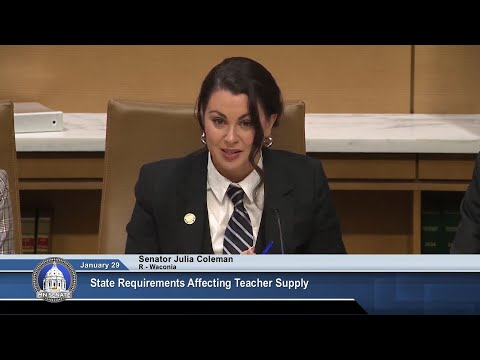
Members of the Minnesota Senate Education Policy Committee heard detailed testimony Feb. 29 from principals, superintendents, special‑education leaders and teacher‑pipeline advocates linking teacher and substitute shortages to licensure barriers, compensation and workload.
The committee’s listening session aimed to surface policy options affecting teacher recruitment and retention. Angela Charbonneau Folch, principal at the Integrated Arts Academy and state coordinator for the Minnesota Association of Secondary School Principals, told the committee that Department of Employment and Economic Development projections show “over 30,000 teacher vacancies within the next 10 years” and that first‑year teacher pay in Minnesota averages $45,630 as of January 2025. “For a 4‑year college student thinking about going into education, these numbers matter,” she said.
Why it matters: Lawmakers heard multiple, concrete barriers that districts say keep qualified people out of classrooms — rigid paths from Tier 1 to Tier 2 licensure, extra paperwork and slow licensing for out‑of‑state candidates, unpaid student teaching that deters diverse candidates, and compensation and benefits that lag comparable public safety retirement timelines.
Committee testimony and examples
Sharon Johnson, community education director for Worthington Public Schools, described the tiered licensure process as a central problem for early childhood staffing. She said recent changes require Minnesota‑based college enrollment to…
Already have an account? Log in
Subscribe to keep reading
Unlock the rest of this article — and every article on Citizen Portal.
- Unlimited articles
- AI-powered breakdowns of topics, speakers, decisions, and budgets
- Instant alerts when your location has a new meeting
- Follow topics and more locations
- 1,000 AI Insights / month, plus AI Chat