Get Full Government Meeting Transcripts, Videos, & Alerts Forever!
Get email alerts on the Administrative Hearings And Adr topic
No spam. Unsubscribe anytime.
Office of Administrative Hearings reports small caseload dip, higher use of ADR and growing police‑accountability caseloads
Summary
OAH said FY2024 dispositions remained timely while average processing times ticked up; alternative dispute resolution rose to 37.1% of dispositions and OAH has received police‑accountability matters under MOUs with roughly 20 law‑enforcement agencies.
The Office of Administrative Hearings told the Public Safety and Administration Subcommittee that overall case dispositions remained timely in fiscal 2024 even as average processing times rose and the agency increased use of alternative dispute resolution techniques.
Jacob Polikoff, the DLS analyst, said OAH’s fiscal 2026 budget rises by about $427,456 (2.2 percent) and that personnel comprises roughly 86 percent of the agency’s allowance to support 117 regular positions. Polikoff said the agency reported five vacancies as of November 30, three of which were administrative law judge positions; OAH typically recruits and trains ALJs in cohorts to manage training costs.
Polikoff told the subcommittee OAH disposed of 99.9 percent of decisions in a timely manner in FY2024, though the average number of days from appeal receipt to disposition rose by about 4.5 days year to year. The largest case sources remained the Department of Health (13,207 cases), the Motor Vehicle Administration (8,890) and the Department of Human Services (5,195). Mortgage foreclosure mediations rose to 940 matters as the federal foreclosure moratoria ended.
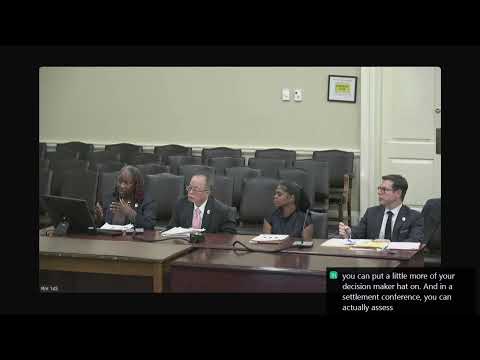
OAH reported it resolved 37.1 percent of cases through alternative dispute resolution (ADR) techniques in FY2024, up 9.2 percentage points from the prior year, but still well below a 2018 peak of 50.6 percent. Chief Administrative Law Judge Chung Park explained that ADR techniques at OAH include mediation, settlement conferences and neutral case evaluation; mediation is party‑led facilitation while settlement conferences allow judges to assess case strengths and suggest settlement terms.
Judge Park also told the committee OAH has begun receiving cases created by the Maryland Police Accountability Act and has entered memoranda of understanding with about 20 jurisdictions; OAH reported receiving 106 police‑accountability matters and resolving all but roughly a dozen. The agency said funding for MOU work is handled through compensation mechanisms set out in the agreements and that any funds collected are returned at fiscal year end consistent with state budget practice.
Why this matters: OAH provides a central, independent forum for administrative appeals across many agencies; rising ADR use can lower hearing workloads and speed resolution but requires data to track which case types are most successfully resolved by ADR.
DLS recommended committee narrative asking OAH to include additional ADR metrics in its managing‑for‑results submission; OAH said it would provide further detail and has management staff available to implement recommendations.