Get Full Government Meeting Transcripts, Videos, & Alerts Forever!
Get email alerts on the Corrections Health Contracts topic
No spam. Unsubscribe anytime.
DPSCS fiscal 2026 budget rises as audit flaws in inmate health contracting draw scrutiny
Summary
The Maryland Department of Public Safety and Correctional Services' fiscal 2026 allowance grows by about $22.6 million to roughly $1.9 billion, while legislators and auditors flagged failings in medical contracting and oversight that preceded a 2024 vendor change.
The Maryland Department of Public Safety and Correctional Services' fiscal 2026 allowance grows by about $22.6 million to roughly $1.9 billion, but legislative analysts and a recent audit found lapses in contracting and contract oversight for incarcerated-person health services that preceded a vendor change in 2024.
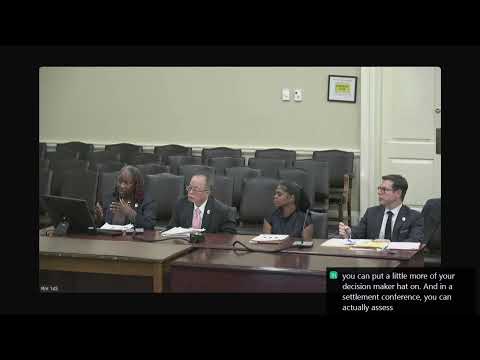
Catherine Barber, a budget analyst with the Department of Legislative Services, told the Public Safety and Administration Subcommittee that DPSCS’s fiscal 2026 budget “increases by $22,600,000 or about 1% to $1,900,000,000,” and highlighted an Office of Legislative Audits (OLA) fiscal compliance audit (November 2024) documenting nine findings tied to medical contracts and procurements from April 2018 to December 2023.
The audit and the DLS analysis focus on the department’s decision to transition from YesCare to Centurion of Maryland for medical and mental-health services. Barber noted the Board of Public Works awarded two Centurion contracts in May 2024 for correctional facility and pretrial medical care; the presentation recorded multi‑year contract totals as described in the DLS exhibit materials. DLS reported that the contracts use a fixed‑fee payment model and that DPSCS did not provide documentation of the vendor-survey that justified that model. According to the analysis, DPSCS’s reported health-care costs rose even as the average daily corrections population declined.
The OLA audit described gaps including: failure to document or verify staffing reports submitted by the prior contractor, missed medical and mental‑health intake exams, uninvestigated complaints from incarcerated individuals, and weak invoice verification and financial controls. DLS said YesCare was able to staff a maximum of about 81% of required positions monthly, and that Centurion staffing was about 70% as of January 10, 2025. Barber said DLS could not find documentation that DPSCS surveyed other states as justification for the fixed‑fee model and recommended adding budget bill language to restrict $500,000 pending a department report on how prior audit findings were addressed in the new contract.
Secretary Carolyn J. Scruggs, testifying for DPSCS, said the new Centurion contracts align hourly rates for health professionals with the top 25% of regional earners using Bureau of Labor Statistics data “to ensure competitive recruitment and retention.” She said the new agreements increase funded healthcare positions from 926 under the prior contracts to 1,294 positions and that the department is requiring Centurion to submit biweekly recruiting and staffing reports and to achieve an 85% fill rate by April 2025.
The DLS presentation also identified personnel and overtime as major budget drivers. Barber said DPSCS’s personnel costs represent the largest share of the allowance — about $1.2 billion — and highlighted more than 1,355 vacancies reported as of November 30, 2024. The analysis showed vacancies driving overtime costs from under $100 million in FY2017 to more than $223 million in FY2025 and a FY2026 overtime appropriation of $228.5 million. Secretary Scruggs and deputy secretary Joseph Bridal described recruitment events, hiring bonuses and regional premiums aimed at improving recruitment and retention.
DLS recommended two pieces of budget bill language: restrict $500,000 pending a report on incorporation of OLA recommendations into the Centurion contract and restrict $250,000 pending a report on DPSCS hiring goals and a plan to reduce mandatory overtime. Secretary Scruggs said DPSCS submitted a corrective action plan to the joint audit committee and had already implemented some OLA recommendations; she said the department’s Office of Inspector General will audit the corrective action plan’s implementation.
The subcommittee pressed on open matters including whether withheld funds or liquidated damages remained available from the prior contract settlement; DPSCS officials said a global settlement resolved many claims but that the department has withheld a final invoice to YesCare while pursuing payments owed to subcontractors.
Why this matters: the contracts cover a core state responsibility — health care for detained and incarcerated people — and audit findings and contractor staffing shortfalls affect care timelines, litigation risk and the department’s budget. DLS and the department both urged continuing oversight by the legislature and follow‑up reporting on corrective actions and hiring plans.
The subcommittee did not take formal votes during the overview. Discussion focused on the DLS presentation, the OLA audit findings and DPSCS’s corrective actions and hiring strategies.