Get Full Government Meeting Transcripts, Videos, & Alerts Forever!
Get email alerts on the Cook Inlet Supply topic
No spam. Unsubscribe anytime.
State officials and utilities outline short‑term Cook Inlet measures and utility plans for backup gas
Summary
State natural‑resource officials and utilities described steps to increase Cook Inlet production and short‑term supplies, including royalty relief, a Kenai storage expansion, and utility plans to evaluate imported LNG as a bridge solution while longer‑term options are pursued
ANCHORAGE — State Department of Natural Resources officials and electric and gas utilities described a multi‑pronged short‑term effort to keep natural‑gas supplies flowing to the rail belt and to shore up utility systems while longer‑term projects advance.
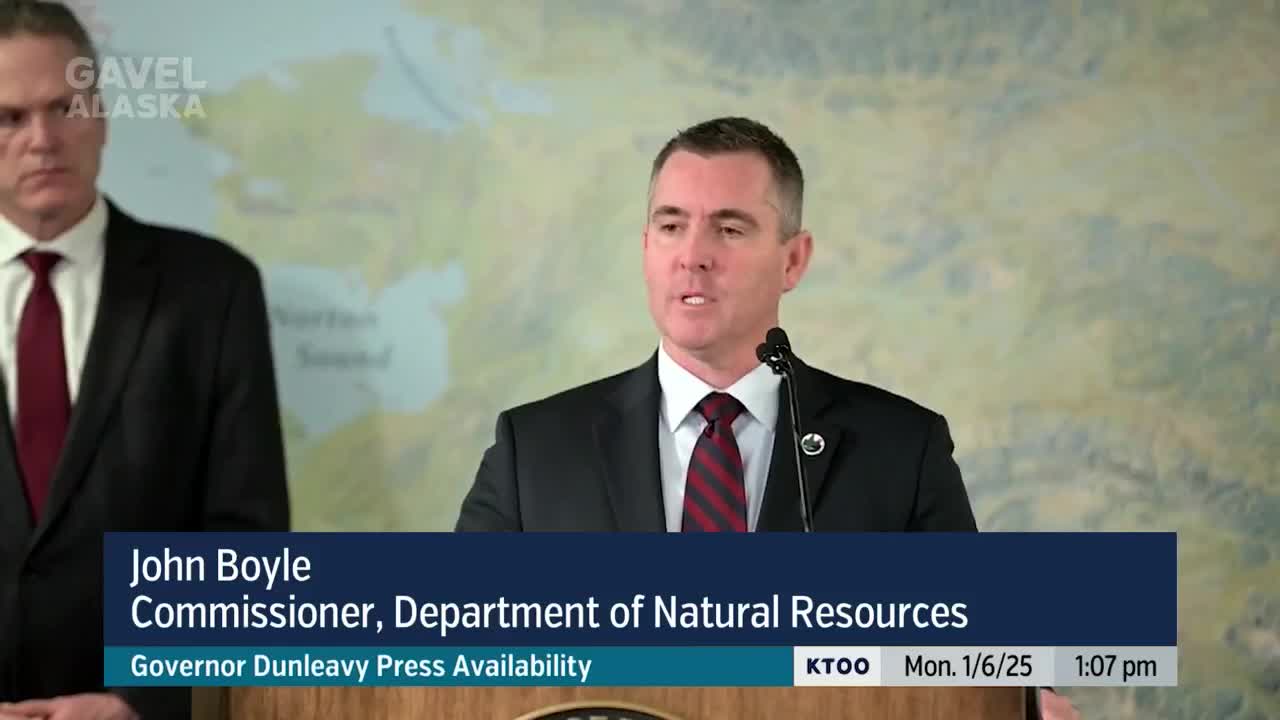
"We have incorporated more novel approaches on how we have conducted our lease sales," said Commissioner Boyle of the Department of Natural Resources, explaining administrative steps to incentivize Cook Inlet production. Boyle said one recent administrative action included granting royalty relief on a public application, and that action contributed to a well drilled last year by HexFury whose gas will enter the system.
John Sims, representing NSTAR, said utilities have invested to expand storage and are pursuing contracts to secure gas supply. "We have spent $67,000,000 to expand this ... storage facility down in Kenai," Sims said, adding the project added two new wells and increased capacity by about 2 billion cubic feet and is expected to finish in the coming months. Sims also said NSTAR submitted a five‑year contract to the Regulatory Commission of Alaska to bring new gas from HexFury starting in 2026, and that the price under that contract will likely be higher than historic levels — "between 12 and $13" (per MMBtu, as described in the conference) compared with a prior roughly $9 range.
Sims and the utilities said they are also evaluating bridge options until longer‑term supply solutions take effect. "The second was finding some sort of in‑state solution... The third was really importing LNG," Sims said, and he said utilities had engaged a project developer to evaluate an imported LNG bridge project while maintaining flexibility to use Alaska resources.
Why it matters: State officials and utilities told reporters the rail belt faces a short‑to‑midterm supply crunch as legacy Cook Inlet contracts expire and some producers have scaled back. Utilities and the state are pursuing a mix of incentives and infrastructure (storage, wells) to keep supply adequate in the near term while also evaluating imported LNG as a contingency.
Details and caveats: Commissioner Boyle described DNR's switch to net‑profit sharing lease terms and more proactive handling of royalty relief requests. He said the administration "took a more proactive approach in working with companies" and noted that signals from federal and independent resource estimates suggest remaining resource potential in Cook Inlet and federal waters.
Sims emphasized cost and timing tradeoffs: a newly contracted supply from HexFury would start in 2026 and likely cost more than prior purchases; storage expansion work is nearly complete; and imported LNG remains under evaluation as a potential bridge.
Ending: State and utility officials said they will continue to press for more Cook Inlet production while keeping open contingency plans, including imported LNG, to ensure the rail belt has gas for heating and electric generation in the coming years.