Get Full Government Meeting Transcripts, Videos, & Alerts Forever!
Get email alerts on the Beach Dune Management topic
No spam. Unsubscribe anytime.
Committee advances islandwide dune-planting plan, FWC to apply herbicide in posted shorebird zones
Summary
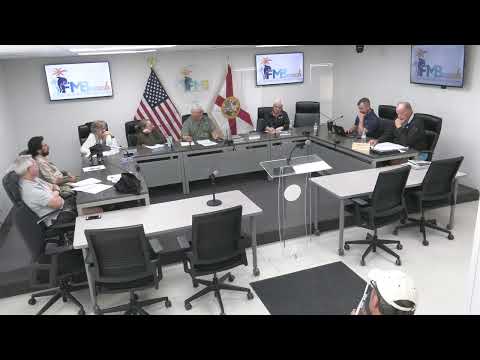
The MURPH advisory committee on Fort Myers Beach reviewed a multi-block dune-vegetation plan meant to increase shoreline resiliency and reduce hazards to nesting shorebirds.
The MURPH advisory committee on Fort Myers Beach reviewed a multi-block dune-vegetation plan meant to increase shoreline resiliency and reduce hazards to nesting shorebirds.
Committee chairman Dave Nussbaum told members that the plan is intended to “plant as much as we can” and said the first rollout will follow a one-size-fits-most approach, with exceptions handled case-by-case.
The plan matters because committee members said years of un-vegetated openings and vehicle raking increase erosion and reduce nest survival. The committee discussed a standard planting module that shows a typical 100-foot-wide dune segment with a 10-foot access opening; one schematic presented called for roughly 70% sea oats, 15% panic grass and small amounts of other native species, plus 1-gallon “mature” sea oat plantings to improve survivability.
The committee discussed beach-owner easements and permitting limits. Chad (town staff) told the group the dune management plan as stamped by the State and town code allow a 10-foot cleared access for equipment and that if property owners have not signed the easement they do not receive the plan benefits. Chad also said, “If property owners want 30 foot gaps per 100 feet, they can get that,” and clarified the dune plan’s implementation limits and the 75% rule for vegetated/unvegetated area described in the plan.
The group discussed shorebird management for the 6000–8000 blocks. Nussbaum and Chad said FWC applauded last season’s owner cooperation and will not issue a blanket “block” incidental-take permit covering all those blocks; instead FWC will partner locally, post protected areas and — where needed — issue take permits for narrow, defined access corridors. Chad said FWC will apply an approved herbicide only in posted areas and that “that’s where we’re at on the herbicide.”
Committee members raised operational questions about whether tractor raking or the use of MobiMats (temporary beach access surfaces) would be allowed near nesting or turtle-critical areas. Chad said FWC authorization for such products typically ends at the dune feature and recommended consulting FWC biologist Brianna on specific locations; he planned to ask her for more detail during a scheduled call.
Members emphasized phased rollout to limit disruption. The committee proposed a phase 1 plant-out using the low-dune scheme across contiguous properties, then phase 2 funding to add species diversity for wildlife habitat at selected sites. Chad and the engineering team will post the schematic on the town website, solicit owner feedback, and prepare bid documents for contractors. The committee targeted planting before the sea-turtle season if demobilization of the ongoing beach nourishment pipe allows, and asked staff to coordinate planting timing with the contractor’s March demobilization forecast.
The meeting produced direction to staff rather than a formal policy vote. The committee asked staff to brief town council in the next council update and to post the planting plans for public comment so bids can go out quickly.
The committee also noted that beach nourishment and future construction (buried and exposed pipeline) make planting timing critical; Chad said it makes little sense to plant areas that will soon be reworked and advised doing site-by-site scheduling to avoid rework.
Ending: The committee instructed staff to post the schematic, gather owner feedback, pursue a bid schedule that aims for planting before turtle nesting if possible, and to brief council on the project in the next council update.