Get Full Government Meeting Transcripts, Videos, & Alerts Forever!
Get email alerts on the Appointments topic
No spam. Unsubscribe anytime.
Senate Rules Committee advances Baxter nomination to California Gambling Control Commission, 5-0
Summary
The Senate Rules Committee voted 5-0 to advance the governor's nominee, Ms. Baxter, to the full California State Senate for final confirmation after a hearing on her background, agency jurisdiction, advertising regulations and fund accounting in the gambling industry.
The Senate Rules Committee voted 5-0 on Jan. 29 to advance the nomination of Ms. Baxter to the California Gambling Control Commission (CGCC), sending her to the full Senate for a final confirmation vote.
The nomination hearing focused on Ms. Baxter’s experience as a long-time state regulator, the split responsibilities between the Bureau of Gambling Control and the commission, proposed advertising rules for the gambling industry, and recent fund movements tied to a planned settlement. Committee members asked about ex parte communication rules, the gambling control fund balance and the implications of SB 549 litigation on enforcement.
Ms. Baxter told the committee she has 32 years of state service and has worked for “nearly 9 years” as the California Gambling Control executive director and previously as assistant director in the Bureau of Gambling Control. She described California’s oversight as “a bifurcated system,” saying, “the Bureau of Gambling Control is the enforcement and compliance arm. And we are the adjudicatory decision policy making body.”
On advertising rules, Ms. Baxter said the commission has a proposed regulation package that will return for a 45-day public comment period. “What that package, at a very high level, does is define what is deceptive advertising and what needs to be included in any sort of advertising that comes from this industry such as, problem gambling statements. And to also ensure that the advertisement is not, appealing to underage gamblers as well,” she said.
Committee members pressed Ms. Baxter on the gambling control fund balance. She said the fund balance had been reduced to roughly a three-month reserve at the end of the last fiscal year and that a recent $45 million general fund repayment is earmarked for settlement negotiations. “While it might look like there’s a significant surplus in that gambling control fund, $45,000,000 of that 47,000,000 surplus is actually earmarked for a settlement negotiation,” she said, and noted the commission previously implemented fee adjustments and a two-year industry fee waiver to reduce surplus levels.
On a 2023 memo that limited direct communications to commissioners, Ms. Baxter said the memo’s intent was to route substance through staff so all commissioners receive the same information. She clarified the memo “does not state anywhere that they are to not ever have any sort of communication with the commissioners,” but that the policy aims to ensure uniform staff briefings on matters that could later come before the commission.
Senators also asked about SB 549 litigation concerning card rooms and tribal gaming. Ms. Baxter told the committee that any compliance or enforcement resulting from litigation would be handled by the Bureau of Gambling Control and that the commission itself would have “zero impact from the resulting litigation based off of SB 549,” as explained during the hearing.
Public comment included Jim Evans, a former Senate staffer and former chair of the Gambling Control Commission, who urged support for the nominee and described her as among the most qualified people to serve on the commission. "One of the most professional and public service oriented individuals I've ever met," Evans said, urging the committee to forward the nomination.
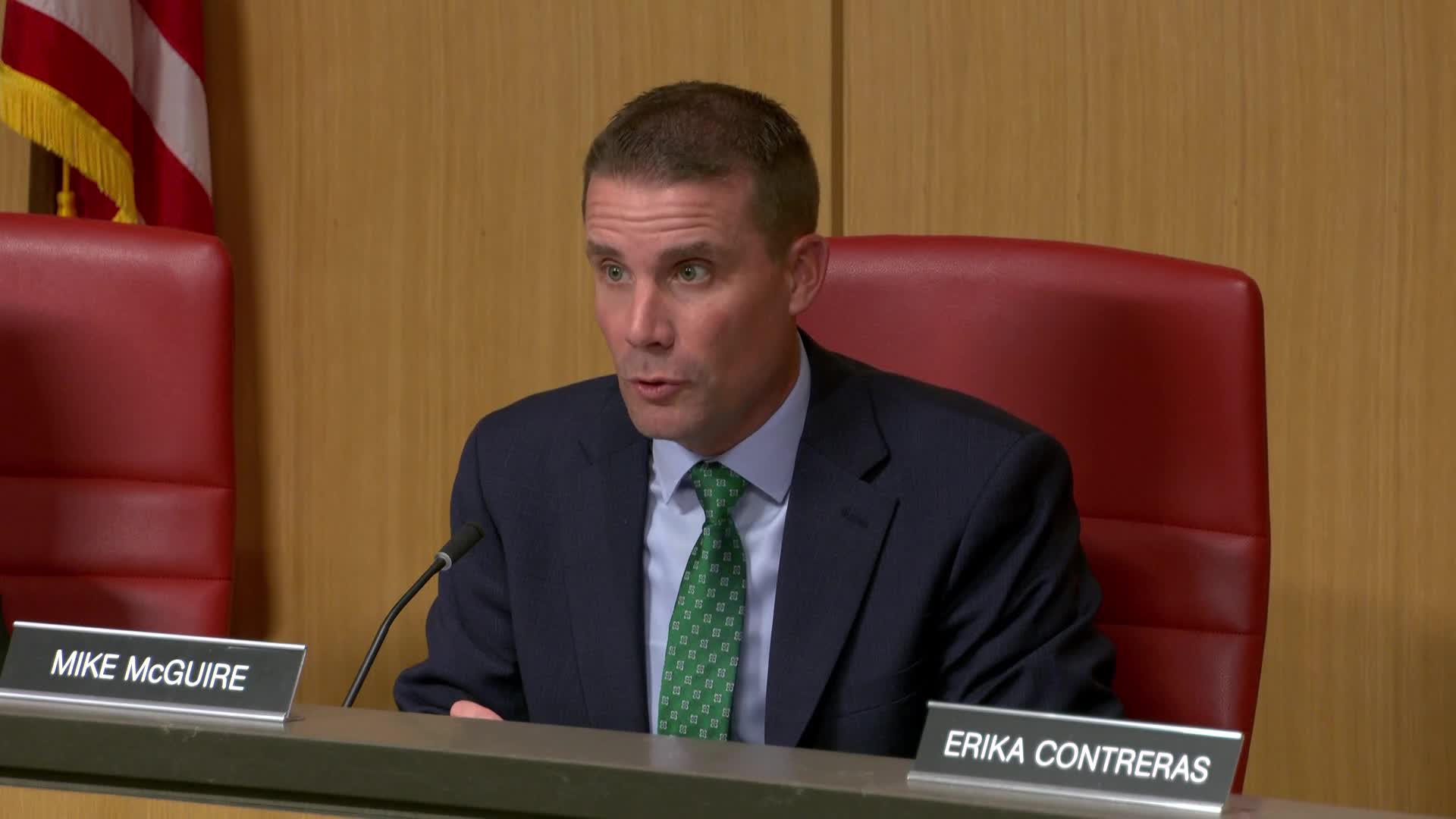
After questions and public comment, the committee voted, with Senators Maguire, Grove, Gonzales, Jones and Laird recorded as voting yes. The clerk announced a 5-0 vote to advance the nomination. The nomination will next go to the Senate floor for a final confirmation vote.
No opponents spoke during the public comment period in committee. Committee members who asked questions said they had follow-up concerns they may pursue on the Senate floor or in future oversight work, particularly about rulemaking timelines and the handling of the earmarked settlement funds.