Get Full Government Meeting Transcripts, Videos, & Alerts Forever!
Get email alerts on the Gambling Diversion Court topic
No spam. Unsubscribe anytime.
Bill would create a gambling‑treatment diversion court pilot for financial‑crime cases
Summary
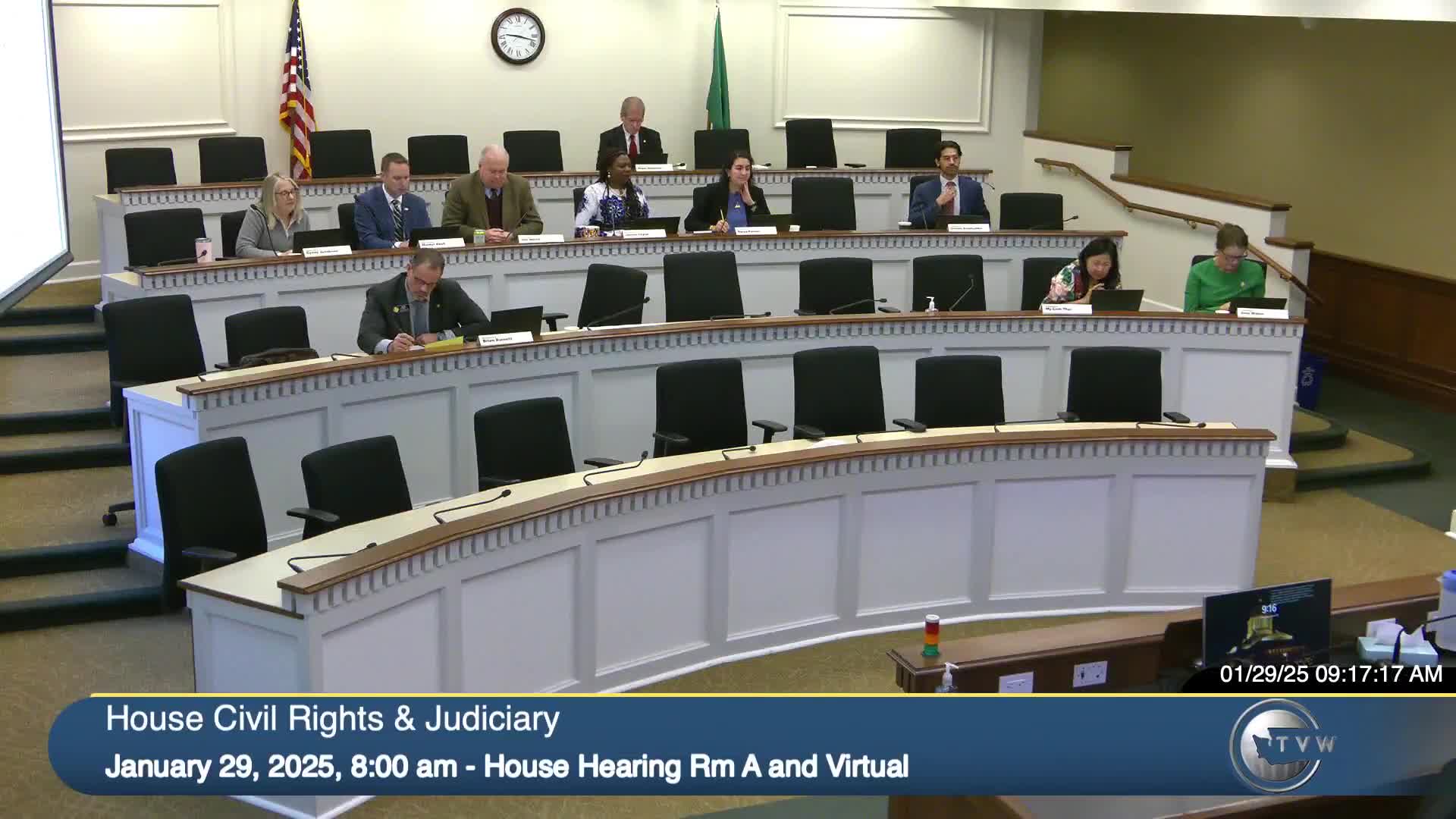
Matt Sterling, staff to the committee, told lawmakers that House Bill 1362 would require the Administrative Office of the Courts to establish a gambling treatment diversion court pilot, with access required by July 1, 2027.
Matt Sterling, staff to the committee, said House Bill 1362 would create a gambling treatment diversion court pilot administered by the Administrative Office of the Courts (AOC). The pilot would be established in a superior court and must be accessible by July 1, 2027. Sterling said therapeutic court models already authorized in Washington provide precedents for programs that substitute treatment and supervision for traditional court outcomes in appropriate cases.
Representative Chris Stearns, the bill sponsor, told the committee the proposal grew from his prior service as chair of the State Gambling Commission and from conversations with the recovery community. "What we learned is that we have a lot of people in the state of Washington who suffer from gambling disorder," Stearns said. He cited a prevalence study and told the committee the pilot is modeled on Nevada's gambling diversion court and some New Jersey language. Stearns said the program is aimed at financial crimes connected to gambling disorder (fraud, embezzlement), not violent crimes or offenses involving children.
Under the bill as presented, a court that finds a person eligible could order a treatment assessment, impose conditions similar to probation, defer sentencing while the participant receives treatment, and require supervision by a treatment professional. Participants must pay program costs if able; if they cannot, the court must arrange an alternative program that receives sufficient federal or state funding to offset the remaining costs. Successful completion could lead to discharge of a conviction and an application to vacate the offender's conviction record; failure to complete can result in sentence imposition for the original offense.
Stearns described the goal as reducing incarceration for those whose criminal behavior is driven by an addictive disorder and increasing access to treatment as an alternative to imprisonment. The committee record in the transcript shows staff report and sponsor remarks; no public testimony or committee votes on HB 1362 are recorded in the provided segment.