Get Full Government Meeting Transcripts, Videos, & Alerts Forever!
Get email alerts on the Bottle Deposit topic
No spam. Unsubscribe anytime.
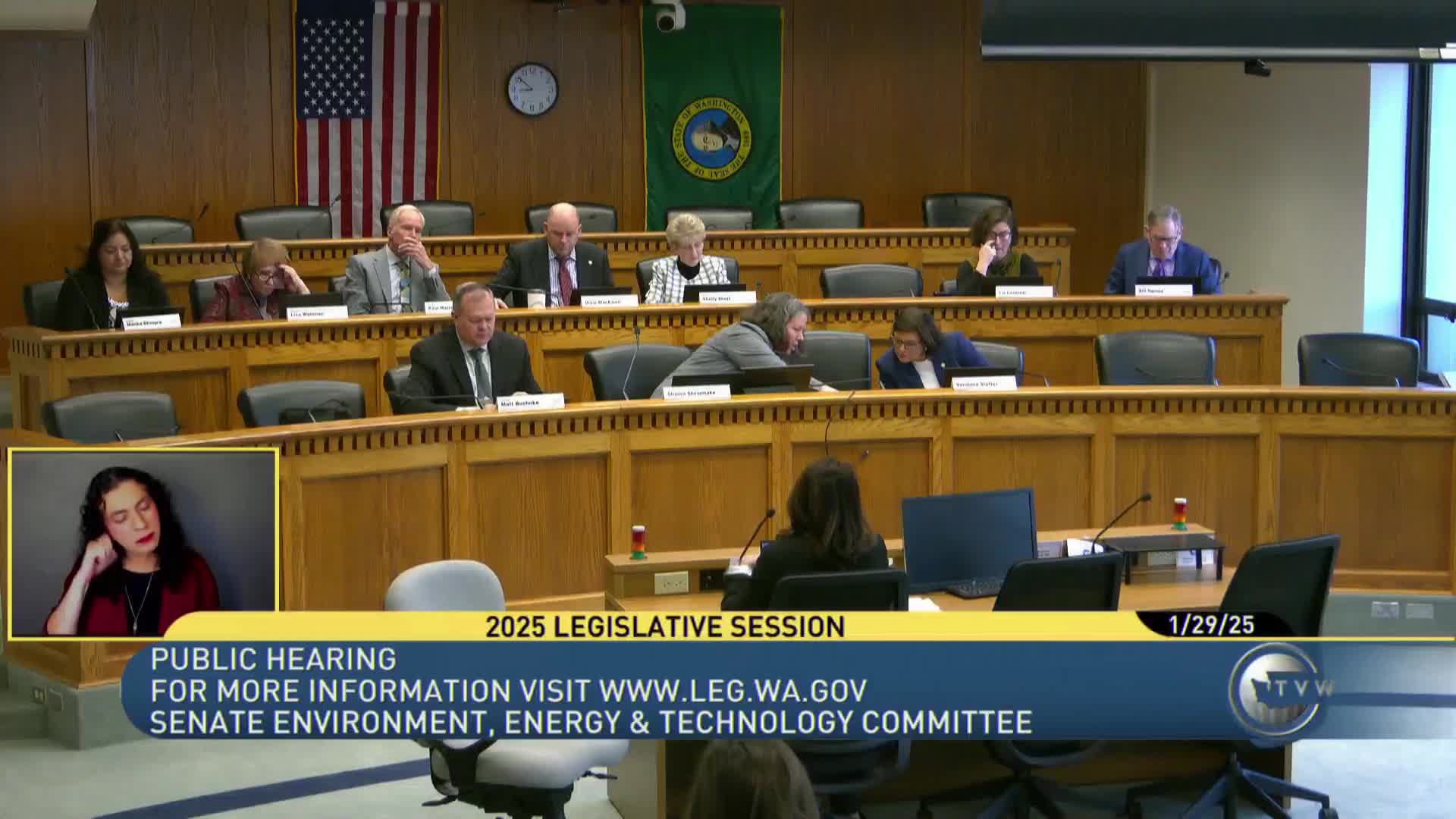
Senate Debate on Bottle Deposit Bill Centers on Litter Reduction, Costs and Retail Burden
Summary
Senate Bill 5502 would create a 10¢ refundable deposit on beverage containers ≤1 gallon and require a producer responsibility organization to fund and operate a network of redemption sites; supporters argued it raises recovery rates and reduces litter, while opponents warned of added costs to consumers, retailer burdens and potential neighborhood
Senate Bill 5502 would establish a statewide deposit‑refund program for beverage containers, charging a 10¢ refundable fee on covered containers (plastic, metal and glass, one gallon or less). A producer responsibility organization (PRO) would design and administer the program, fund redemption sites (express and full‑service), develop consumer‑education plans and meet redemption‑rate targets in statute. The bill sets an initial target of greater than 65% redemption by the end of year two and greater than 80% by the end of year five.
Sponsor and agency briefing
Senator June Robinson (30th Legislative District), the bill’s prime sponsor, told the committee she supports the measure based on personal experience with deposit systems and concern about visible litter. “People are, for better or for worse, motivated by money,” Robinson said, describing a past experience in Michigan returning bottles for small store credit and arguing a deposit creates an incentive to keep bottles out of parks, roadways and waterways.
Peter Lyon, program manager for Ecology’s solid waste program, submitted technical comments and described the bill as “a highly effective recovery system for beverage containers.” He recommended changes to payment timing for agency costs, additional due dates to allow a two‑year rulemaking process, and explicit inclusion of tribal nations as eligible program participants.
Arguments for the bill
Proponents — including the Coalition for High Performance Recycling (CHIPR), The Recycling Partnership, glass and aluminum recyclers, environmental groups and many beverage manufacturers — argued deposit‑refund systems consistently produce higher recovery rates and cleaner material streams than curbside collection alone. Megan Lane of CHIPR told the committee that nine of the 10 U.S. states with the highest recycling rates have deposit systems and that internationally such programs can achieve 90% or higher recovery. Supporters also argued DRS (deposit return systems) create feedstock for closed‑loop recycling and can complement EPR policies.
Megan Lane said modeling shows SB 5502 could help Washington reach a roughly 75% beverage‑container recycling rate by 2028 and 90% by 2030 when paired with complementary EPR policies. Industry representatives from aluminum recycler Novelis and large PET recycler Indorama described increased domestic processing capacity and demand for higher‑quality feedstock.
Arguments against the bill
Opponents — including the Washington Refuse and Recycling Association, Basin Disposal and many grocers, food retailers and some waste companies — said the bill would create a parallel, duplicative system that shifts costs and operational burdens to consumers and retail businesses. Vicki Kristofferson of the Washington Refuse and Recycling Association called the proposal “a 1980 solution in search of solving our 2025 problem,” criticized Oregon’s implementation experience and said the approach can be regressive for people who rely on public transit.
Retail and grocery representatives said hosting redemption sites or servicing drop‑off locations imposes significant labor, liability and space burdens. The Washington Food Industry Association provided an example (from Oregon) of a drop center costing a store $76,000 per year to operate; the association recommended clarifying which costs a PRO must cover.
Implementation questions and local concerns
Witnesses debated whether the bill would worsen neighborhood disorder at busy drop sites. Several senators referenced Oregon’s experience; proponents acknowledged problems at some Oregon sites but said the bill incorporates improvements and includes options for nonprofits to redeem containers in large volumes and for MRFs that meet reporting requirements to receive at least 50% of the refund value for containers they bring to end markets.
Seattle Public Utilities, Pierce County and other local governments voiced conditional support, noting that a properly designed DRS paired with EPR could reduce litter, improve closed‑loop recycling and create economic benefits. Pierce County testified that beverage containers currently make up a material share of litter and that return incentives could reduce county expenditures for roadside and park cleanup.
Oversight, equity and co‑implementation with EPR
Multiple witnesses and Ecology staff said a DRS can coexist with an EPR program. The bill authorizes a PRO and an advisory council to oversee program planning; Ecology recommended reconciling timing for rulemaking and establishing funding flows so the agency is reimbursed for implementation costs. The Office of Equity asked that a council seat intended to represent vulnerable populations be specified as a member organization rather than the Office of Equity itself, to preserve community representation.
Where the record closed
Testimony for SB 5502 ran through a mix of industry, government and nonprofit witnesses. No committee vote was recorded at the conclusion of the public hearing. Committee members and stakeholders signaled continuing discussions on retail participation, convenience standards for redemptions, agency cost recovery timing, and measures to avoid creating duplicate or regressive systems. The public hearing closed with no formal action taken at this session.