Get Full Government Meeting Transcripts, Videos, & Alerts Forever!
Get email alerts on the Correctional Health topic
No spam. Unsubscribe anytime.
Committee examines proposal to substitute DOC accreditation by NCCHC for Department of Health licensure
Summary
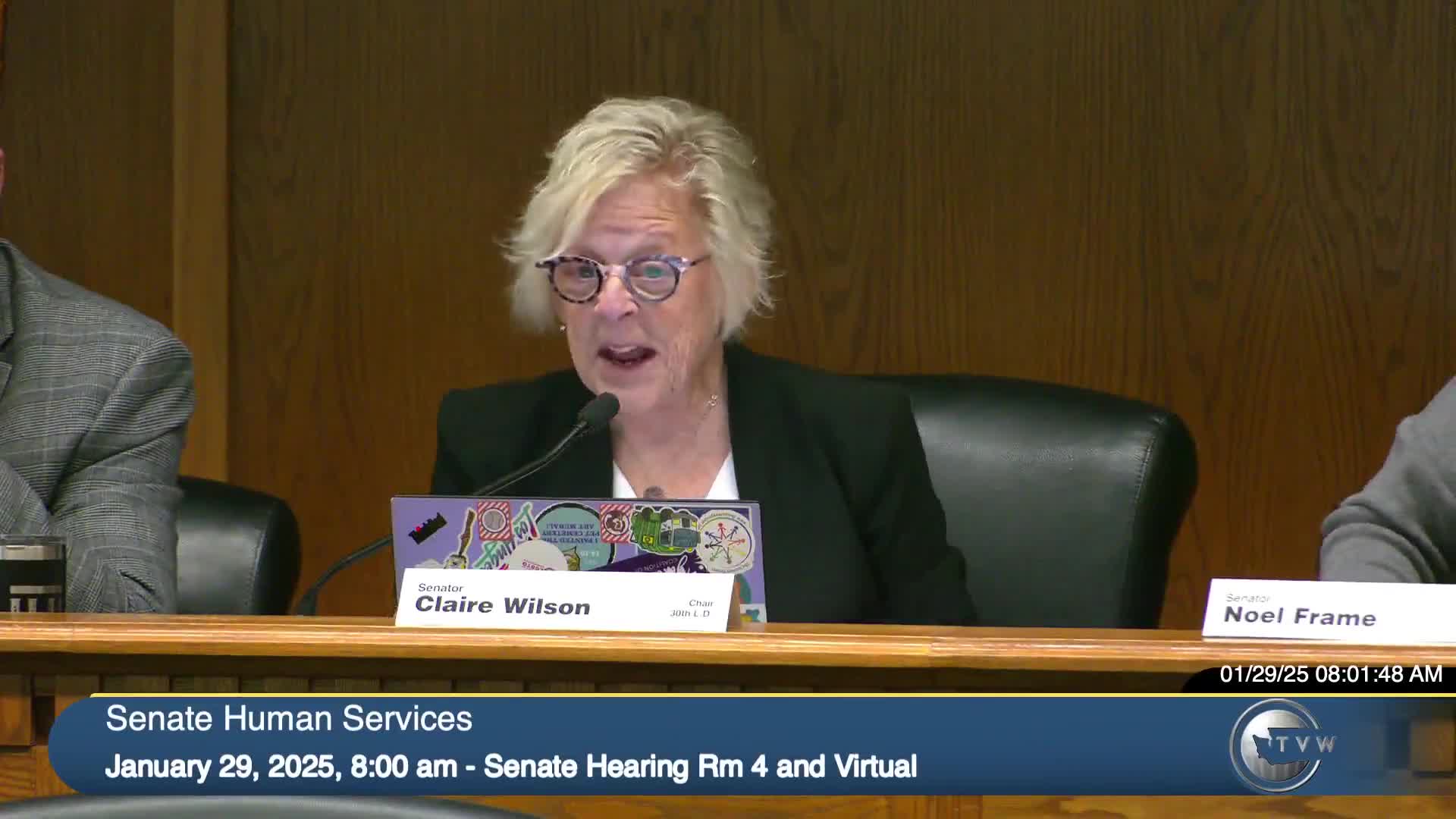
Senate Bill 5388 would allow the Department of Corrections to pursue accreditation through the National Commission on Correctional Health Care instead of licensure by the Department of Health for prison-based behavioral health and substance-use services, subject to appropriation, a committee staff briefing said Jan. 29.
The Senate Human Services Committee heard Jan. 29 on Senate Bill 5388, sponsored by Sen. Manka Dhingra, which would change certification requirements for behavioral health and substance use disorder (SUD) services in Washington prisons. Under the bill, SUD treatment provided as part of the prison-based drug offender sentencing alternative (DOSA) would need to be delivered by licensed individuals, and the Department of Corrections (DOC), subject to appropriation, would seek accreditation through the National Commission on Correctional Health Care (NCCHC) by July 1, 2028. The bill would also change agency language from “offender” to “individual.”
Kelsey Anne Fung, committee staff, summarized background: the Department of Health currently licenses and regulates inpatient and outpatient behavioral health agencies; 2020 legislation required SUD services provided as part of prison-based DOSA to be licensed by DOH; DOC’s Substance Abuse Recovery Unit is currently a certified treatment agency with services in prisons and reentry centers. Fung noted a fiscal note request had been filed Jan. 23 but had not yet been received.
Sponsor Sen. Manka Dhingra told the committee she previously sponsored 2021 legislation that put the DOSA program under Department of Health licensure and said she is proposing this change because of state fiscal constraints. “We are in an extremely tough financial situation,” Dhingra said, and she described the change as a way to continue certification without pausing treatment while saving state costs. Dhingra said the NCCHC standards are “comparable” and that the change could reduce a projected cost from roughly $20 million to about $10 million.
DOC officials and correctional health experts described competing considerations. David Flynn, Assistant Secretary for Health Services at DOC, said NCCHC accreditation is tailored to correctional settings and would require regular assessments, staff training and compliance demonstration; he said accreditation would advance care for roughly 13,000 people in DOC custody but acknowledged additional appropriations would be necessary. Mark Stern, a correctional physician and former DOC chief medical officer, supported removing DOH licensure as overly burdensome but urged a pause to coordinate DOC and DOH standards and suggested taking time to craft state standards before committing to a single external accreditor.
Opponents focused on oversight and the quality of care. Rachel Sievers of Disability Rights Washington, Ethan Frenchman of Columbia Legal Services, and Vanessa Sabedra of Northwest Health Law Advocates said DOH audits have identified substantive patient-care failures — including medical record-keeping problems, inconsistent mental health assessments, lapses in suicide-watch protocols and lack of access to substance use treatment — and warned that NCCHC accreditation focuses principally on policy and process rather than verifying delivery of substantive medical care. Sievers and Frenchman urged the committee to review DOH audit reports and to hear from DOH before removing DOH oversight.
Witnesses debated the source of projected costs. Mark Stern said the larger $20 million figure primarily represented treatment dollars DOC needs to provide required care, whereas the $10 million figure reflects administrative and process costs to prepare for an external accreditation audit. Several witnesses said eliminating DOH oversight would not remove DOC’s obligation to provide constitutionally required care and urged any savings be directed to patient care rather than accreditation administration.
Committee members and witnesses suggested further work with DOH and DOC to reconcile standards and to clarify fiscal impacts before finalizing policy. The hearing record shows robust testimony from DOC staff, clinical experts, legal advocates and court monitors; no committee final vote on SB 5388 was recorded in the transcript of this meeting.