Get Full Government Meeting Transcripts, Videos, & Alerts Forever!
Get email alerts on the Manufactured Home Communities topic
No spam. Unsubscribe anytime.
Senate panel reviews technical changes to manufactured‑home sale notice law
Summary
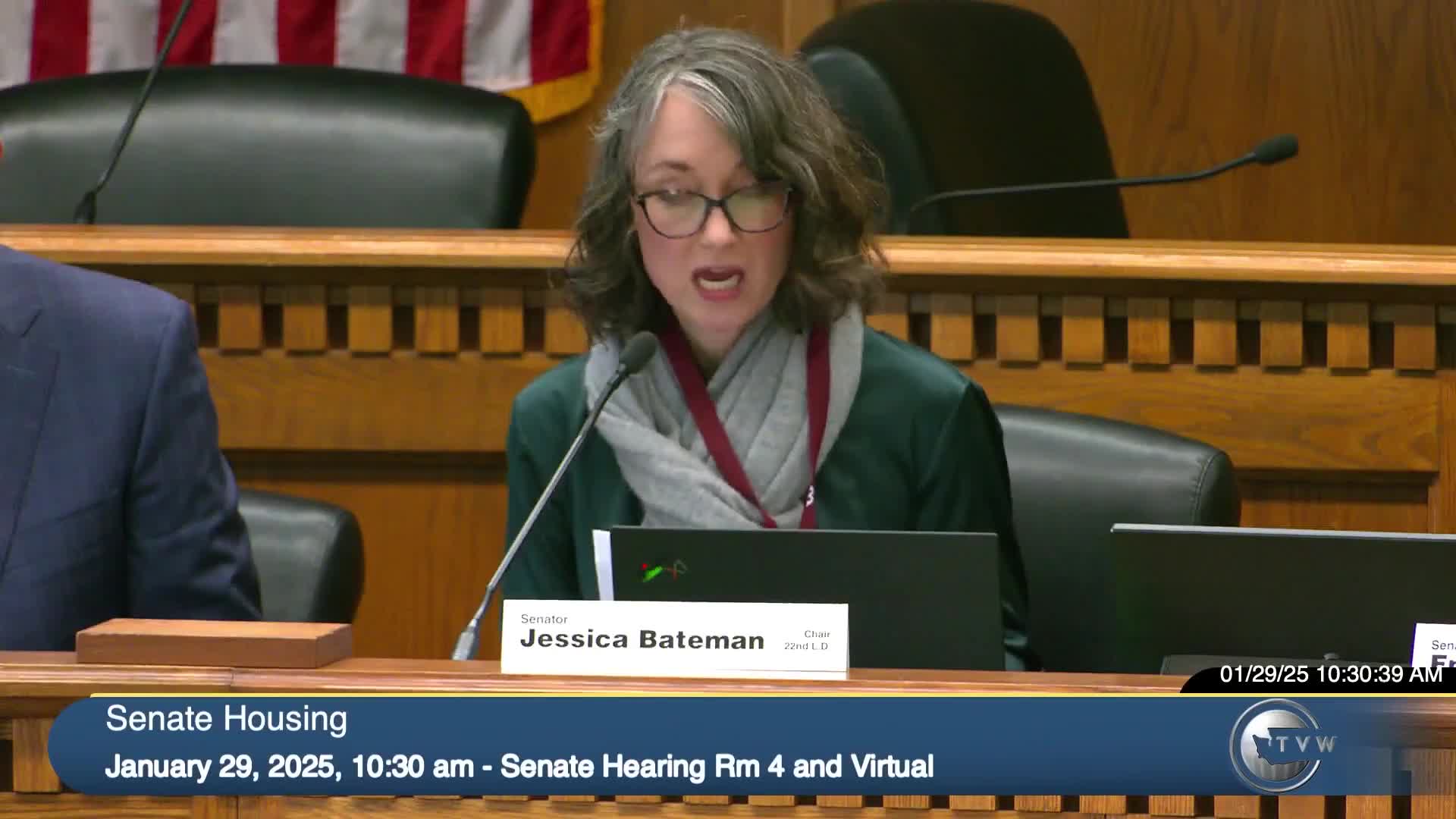
The Washington State Senate Housing Committee on a public hearing discussed a proposed substitute to Senate Bill 5298 that would change how owners notify residents and public entities when a manufactured or mobile‑home community is offered for sale.
The Washington State Senate Housing Committee on a public hearing discussed a proposed substitute to Senate Bill 5298 that would change how owners notify residents and public entities when a manufactured or mobile‑home community is offered for sale.
The bill, as briefed to the committee, would remove the initial "notice of sale" requirement, change the list of recipients for the required "notice of opportunity to compete to purchase," permit electronic delivery of notices to government entities, and require community owners to provide the Department of Commerce with a status update on any sale every six months.
The change matters because residents of manufactured‑home communities typically own their homes but not the land where those homes sit, leaving them vulnerable to rent and space‑rent increases after a park sale. The 2019 statute creating an opportunity‑to‑compete process was intended to give tenants, housing authorities and eligible organizations a chance to acquire parks and preserve residents’ housing.
Bill Fosbury, counsel to the committee, summarized the proposed substitute: it removes the first notice (the initial notice of sale), revises the recipients of the notice of opportunity to purchase and permits electronic notice to governmental entities, and requires a six‑month status update to the Department of Commerce. He also noted a fiscal estimate on the original bill: the Department of Commerce estimated about $393,000 in additional operating expenditures for the 2025–27 biennium for implementation and administration.
Senator Noelle Frame, the bill sponsor, framed the measure as a technical cleanup that responds to the vulnerability of manufactured‑home residents, saying the residents "own their manufactured home but not the land on which it sits," and that the earlier law grew out of "an outcry from frankly, really low‑income and fixed income residents in Washington State, particularly senior citizens." Frame told the committee the statute has led to notices statewide and that stakeholders have worked to negotiate technical fixes.
Supporters who testified urged passage and described how the opportunity‑to‑compete process has been used. Victoria O'Bannon, manager for Cooperative Housing Development at the Northwest Cooperative Development Center, told the committee that between July 2023 and June 2024, 59 communities were listed for sale and that those communities represent roughly $350 million in asset value and nearly 4,000 households. O'Bannon said NWCDC submitted winning offers on 10 communities and that three purchases have closed with a fourth closing soon.
Ishmael Dickens, a volunteer with the Association of Manufactured Homeowners, said the substitute will make the notice process more efficient and thanked sponsors and stakeholders for working on the bill. Lynnwood City Council member George Hurst described a set of sales in 2023 in which the city and county housing authority were not notified and said residents later faced space‑rent and fee increases of more than 40 percent after corporate investors completed purchases; Hurst asked the committee to consider stronger protections, including a priority purchase right for residents or housing authorities at an appraised value.
Representatives of industry and park managers — including speakers who said they spoke for management companies and park operators — testified that they worked with sponsors and stakeholders to refine the bill and supported the substitute language as operationally feasible.
The committee took testimony from proponents and partners but did not take a final vote during the hearing. The public hearing was closed and no further action was taken that day.