Get Full Government Meeting Transcripts, Videos, & Alerts Forever!
Get email alerts on the Tourism Marketing topic
No spam. Unsubscribe anytime.
Tourism industry pushes bill to create self‑assessment advisory process to fund statewide marketing and visitor management
Summary
SB 5492 would create a stakeholder advisory group to design an industry self‑assessment and oversight structure to fund sustainable, statewide tourism promotion and visitor‑management programs; supporters say the mechanism would increase marketing capacity without using general‑fund dollars.
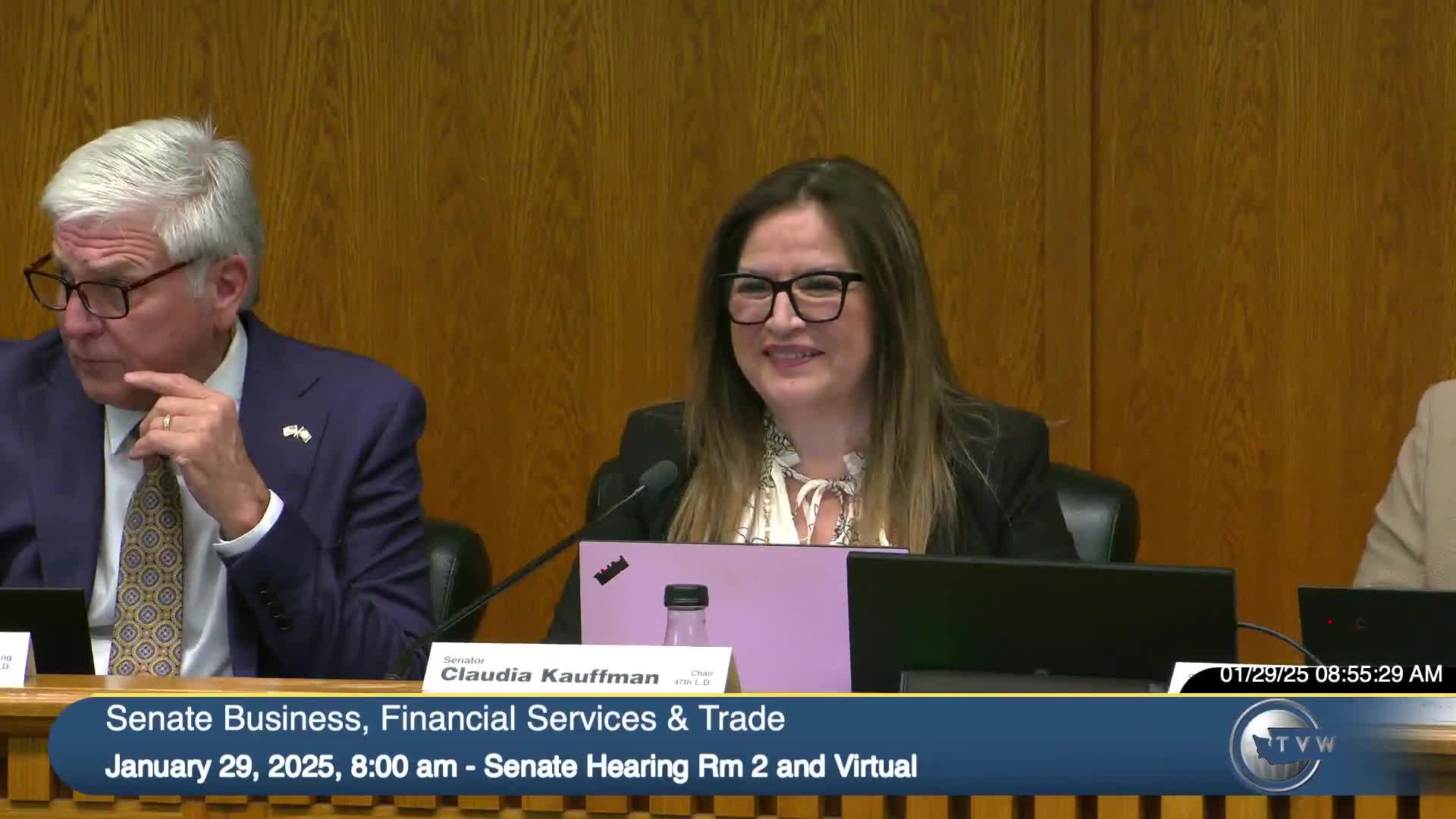
The Senate Committee on Business, Financial Services and Trade heard extensive bipartisan testimony Jan. 29 on SB 5492, a bill to convene an industry advisory group to design a self‑assessment funding model for statewide tourism promotion and sustainable visitor management.
Staff explained the bill would create an advisory body representing lodging, beverage and food service, arts and culture, tour operators, attractions and a statewide tourism nonprofit to draft a classification structure, assessment methodology and a petition process for businesses that could be subject to an assessment. The advisory group must report back by Nov. 1, 2025, with recommended assessment rates by business class, characteristics of businesses that would benefit, and a proposed oversight board for ratepayers.
Sen. Marcus Riccelli, the bill’s sponsor, said the measure would provide industry‑driven, collaborative funding to support communities and small businesses and cited successful models in other states. “This bill establishes a framework to bring together representatives from key tourism related sectors,” he said.
Statewide Tourism (the public‑private entity that administers the state tourism program) supported the bill in written and oral testimony and said a private sector assessment could avoid asking for additional general‑fund dollars while producing a sustainable marketing program. David Blandford, the organization’s executive director, cited a Tourism Economics study estimating Washington is underfunded and could forfeit billions in visitor spending over the next decade without stronger marketing.
Dozens of business and community witnesses — including the Washington Hospitality Association, Washington Wine Institute, the GSBA LGBTQ+ Chamber of Commerce, Visit Spokane and local destination management organizations — testified in favor and cited tight margins in food and lodging, rural economic benefits from tourism dollars, and the ability of destination marketing to support small businesses and inclusive events. Several witnesses asked the committee to broaden or streamline advisory appointments and to ensure Destination Marketing Organizations (DMOs) and local partners are included in design conversations.
Staff noted current statute permits up to $3 million per biennium from the 0.2% lodging/car/restaurant assessment to be deposited into the statewide tourism account after appropriation, and that program currently requires non‑state matching funds for expenditures. The bill would create a process for the private sector to design a self‑assessment and an oversight mechanism; any assessment would require further legislative review if it is to be enacted.
No committee action was taken at the close of public testimony; committee members asked staff clarifying questions about representation and whether state parks were included. Testimony emphasized this is a first step to allow the industry to return with a detailed, industry‑backed plan to scale statewide tourism promotion and visitor‑management work.