Get Full Government Meeting Transcripts, Videos, & Alerts Forever!
Get email alerts on the Pediatric Hospice topic
No spam. Unsubscribe anytime.
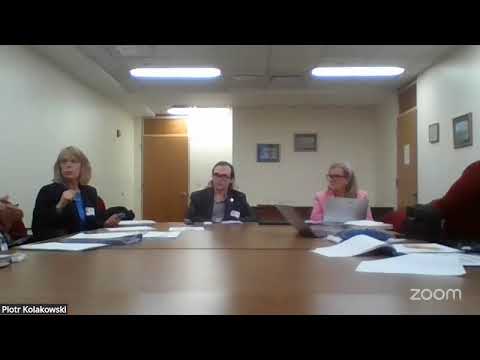
Connecticut pediatric hospice work group readies March report, flags gaps in access, workforce and funding
Summary
A state work group drafting recommendations on pediatric hospice and palliative care told members it will submit a report by March 1, has surveyed home-health agencies and identified workforce, payment and training shortfalls; members discussed requesting an extension, pursuing pilots and seeking legislative sponsors for a placeholder bill.
The pediatric task force work group charged with recommending how to provide pediatric hospice services across Connecticut said it will file a report on March 1 and is preparing recommendations that address access, workforce training and funding.
Barbara, a work group member and hospice provider, told colleagues, “we've been asked to recommend how we think we can get here providing pediatric hospice in the state of Connecticut.” That summary of the group's charge framed much of the hour-and-a-half meeting: review existing services, propose appropriate levels of hospice and palliative care for children statewide, and evaluate payment and funding options.
The work group said it has surveyed 88 licensed home-care agencies and had received eight responses at the time of the meeting; of those respondents, 24 reported providing hospice services. Melissa, a staff member assisting the group, and others said they will perform GIS mapping to show agency locations and service types so members can visualize gaps in coverage.
Members described persistent barriers to placing children on hospice at home. Dr. Wolfgruber, a physician at Connecticut Children's who also oversees pediatrics at Danbury Hospital, said families often are “petrified to go home” because they fear managing complex equipment and medications without support. He added that some hospitalized children do not qualify for the Medicare/Medicaid general inpatient (GIP) level of hospice care that hospitals use to provide in-hospital hospice services, leaving families and clinicians with limited options.
The group discussed models and evidence from other states. Carrie, who presented Massachusetts’ program, said that Massachusetts operates a state-funded pediatric palliative care system and that many children there remain on caseloads for years; members noted MassHealth covers most patients in that program. Participants said Massachusetts’ funding and delivery structure gives it broader flexibility than Connecticut has at present.
Workforce and training emerged as major obstacles. Karen and others reported interest from hospital-based pediatric nurses — including a cohort from Yale Children's who want to follow patients into the community — but the work group noted a shortage of certified pediatric palliative nurses statewide. One attendee said there are only 14 pediatric palliative care–certified nurses in Connecticut, a figure members flagged as inadequate for statewide scale-up.
Members proposed several policy and program options for the report: create guidance and a family-facing toolkit to explain concurrent care and hospice choices; build a “train-the-trainer” or regional center of excellence for pediatric palliative/hospice training; pilot a regional program tied to identified service gaps; and include workforce incentives or grant programs to expand clinician capacity. Tracy, a co-chair of the work group, said the group will recommend seeking authority to continue the work into 2025 so members can flesh out complex payment and implementation questions.
On legislative strategy, members reported that a placeholder bill already exists to carry potential recommendations into the legislative process. Several participants said they will ask Senator Anwar and Representative McCarthy to consider an extension or to sponsor language reflecting the group’s recommendations. The group noted that the March 1 report deadline is driven by committee schedules; Tracy and others said they will draft a report and, where necessary, include a recommendation asking the legislature to permit the task force to continue working beyond the March deadline.
Other practical details discussed included follow-up outreach to agencies that have not completed the survey, clarification in survey invitations about which agencies should respond (home health only vs. home health plus hospice), and two additional February meetings to finalize draft recommendations. Members also discussed the need for more detailed fiscal information to support legislative proposals — for example, a fiscal note showing estimated costs for a given recommendation — and the likelihood that state agencies would prepare formal fiscal estimates if the legislature pursues funding.
The work group did not adopt formal votes during the meeting. Instead, staff and members agreed on next steps: expand survey response rates, complete GIS mapping of providers, draft a recommendations document that will include limitations and suggested next steps, and contact legislative sponsors about timing and the possibility of extending the work group’s authorization.
Next steps for the work group include two February meetings to refine the draft, targeted outreach to nonresponding agencies, and outreach to legislative sponsors to discuss a possible extension and any placeholder bill language. Members said they will include a recommendation in the March report asking the legislature to allow continued work if more time is needed to develop funding and operational proposals.
A fuller report and draft recommendations are expected to be circulated to the full task force and to co-chairs before any formal submission to the legislature; the group also discussed presenting the report in committee and noted related public-health committee deadlines in mid-March.