Get Full Government Meeting Transcripts, Videos, & Alerts Forever!
Get email alerts on the Education Service Agencies topic
No spam. Unsubscribe anytime.
RESC Alliance tells House education panel it provides regional special‑education, early‑childhood and workforce services for Connecticut districts
Summary
Directors from Connecticut's six regional education service centers told the House Education Committee that RESCs deliver special‑education placements, early‑childhood services, paraeducator training, teacher residency pathways, transportation collaboratives and rapid innovation support to districts across the state.
Good afternoon. Thank you everyone for joining us. I am Jen Leeper, house chair of the education committee, and I'm really grateful for this opportunity for our RESC Alliance to come and share with us all the really innovative work they're doing and the partnerships they provide to all of our districts, said Jen Leeper at the start of a RESC Alliance briefing to the Connecticut House Education Committee.
The RESC Alliance — the six regional education service centers that serve Connecticut school districts — told legislators it acts as a shared services hub for districts on expensive and specialized needs, including special education placements, early‑childhood evaluations and services, paraprofessional training, teacher recruitment and regional transportation. Committee members asked questions about staffing shortages, costs and how RESCs scale programs quickly when districts need them.
Why it matters: Connecticut districts send students for out‑of‑district special‑education placements and face rising costs for transportation and highly staffed programs. RESCs present a regional, fee‑for‑service option that, officials said, can expand capacity more quickly than individual districts and reduce per‑student costs for some placements.
RESC structure, funding and role Chip Dume, speaking for the group, described the six RESCs as nonprofit, fee‑for‑service entities that are governed by representative councils made up of local board of education members and are accountable to Connecticut statute and the State Board of Education. He said RESCs’ revenue mix is primarily district fees (including magnet tuition and special‑education tuition), supplemented by state and federal grants, competitive grants, donations and interest on investments. RESCs may maintain reserves to operate across district budget cycles.
Special education: programs and quick expansion RESC directors highlighted regional specialized programs for students with high needs, including self‑contained and collaborative programs that serve multiple districts. Eric (speaking for the group) described “in‑district collaborative” placements and district buy‑in models where towns buy slots for short‑term or longer placements designed to return students to their home schools when ready.
Directors said RESCs also provide consultative services — for example, autism supports and statewide guidance for Board‑Certified Behavior Analysts (BCBAs) — and run large professional‑development efforts tied to special‑education compliance and transition programming. One RESC reported running 540 trainings that served more than 13,000 certified staff on a new IEP system; another said a CT SEDS help desk supported thousands of tickets from districts.
Legislators asked about costs and savings from regional programs. RESC directors said savings vary by student and placement because transportation, related services and staffing levels differ widely; they described regionalization of transportation and joint placement models as key ways to lower per‑student costs.
Early childhood and prevention Kate Erickson of LEARN described RESC involvement in early childhood, including Early Head Start/Head Start programs and support for programs pursuing NAEYC accreditation. RESC staff said they supported about 240 early‑childhood programs and roughly 5,000 children directly through RESC activities in the most recent reporting year. Birth‑to‑3 services and early evaluations were highlighted as preventive work that can reduce later special education needs.
Workforce development and teacher recruitment Panelists described a “grow‑your‑own” approach to staffing: paraeducator training modules (created after a legislative requirement for minimum annual hours), partnerships with adult education and community colleges, and the Connecticut teacher residency program (a RESC‑led residency that has produced more than 130 certified teachers and expanded into special education and other shortage areas). Directors said residency and apprenticeship models are central to addressing teacher and paraprofessional shortages.
Innovation, technology and regional services RESCs presented several innovation efforts: regional routing software to combine special‑education transportation runs and reduce costs; a college and career accelerator that uses daytime transportation capacity to move students to regional career programs and college courses; and broad educator training on artificial intelligence tools. Directors said the AI work includes a statewide community of practice, a micro‑credential in AI‑supported teaching with cohorts sold out, and district‑level planning support. One RESC reported it has supported dozens of districts with AI strategy and trained thousands of educators.
Programs for disconnected youth The RESC Alliance described programs aimed at re‑engaging students who are chronically absent or “disconnected.” Officials highlighted the LEAP home‑visitation model (used in 25 districts) and the Impact Academy alternative program for older students, both of which judges and legislators credited with improving attendance and re‑engagement in participating districts.
Questions from legislators Representatives asked about metrics for cost savings, timelines to stand up new programs and federal funding exposure for RESC operations. Directors said a new program can be stood up quickly in response to district requests — in one example a classroom was launched in weeks and expanded to multiple classrooms within 18 months — and said federal grants typically represent a single‑digit percentage of some RESCs’ budgets, though amounts vary by center and program (Head Start funding was described as critical and vulnerable to federal changes).
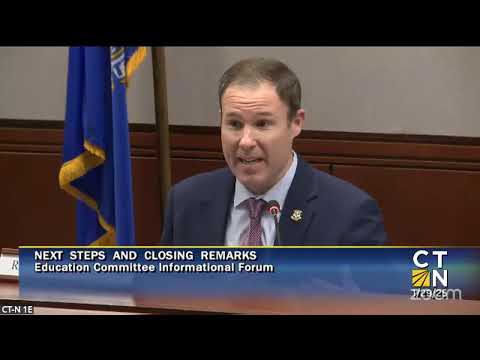
Bottom line and next steps RESC directors told the committee they can scale and regionalize services quickly and asked legislators to use RESCs as partners in designing cost‑effective responses to special‑education, early‑childhood and workforce challenges. "Equity is about giving kids what they need," Kate Erickson told the committee, adding that RESCs aim to help entire systems rather than single classrooms. The briefing closed with an invitation to legislators to continue the conversation and to visit RESC programs for deeper briefings.
Ending: Committee members said they would follow up with RESC directors on transportation collaboratives, program metrics and workforce pipelines; no formal votes or policy decisions were made at the briefing.