Get Full Government Meeting Transcripts, Videos, & Alerts Forever!
Get email alerts on the Rideshare Regulation topic
No spam. Unsubscribe anytime.
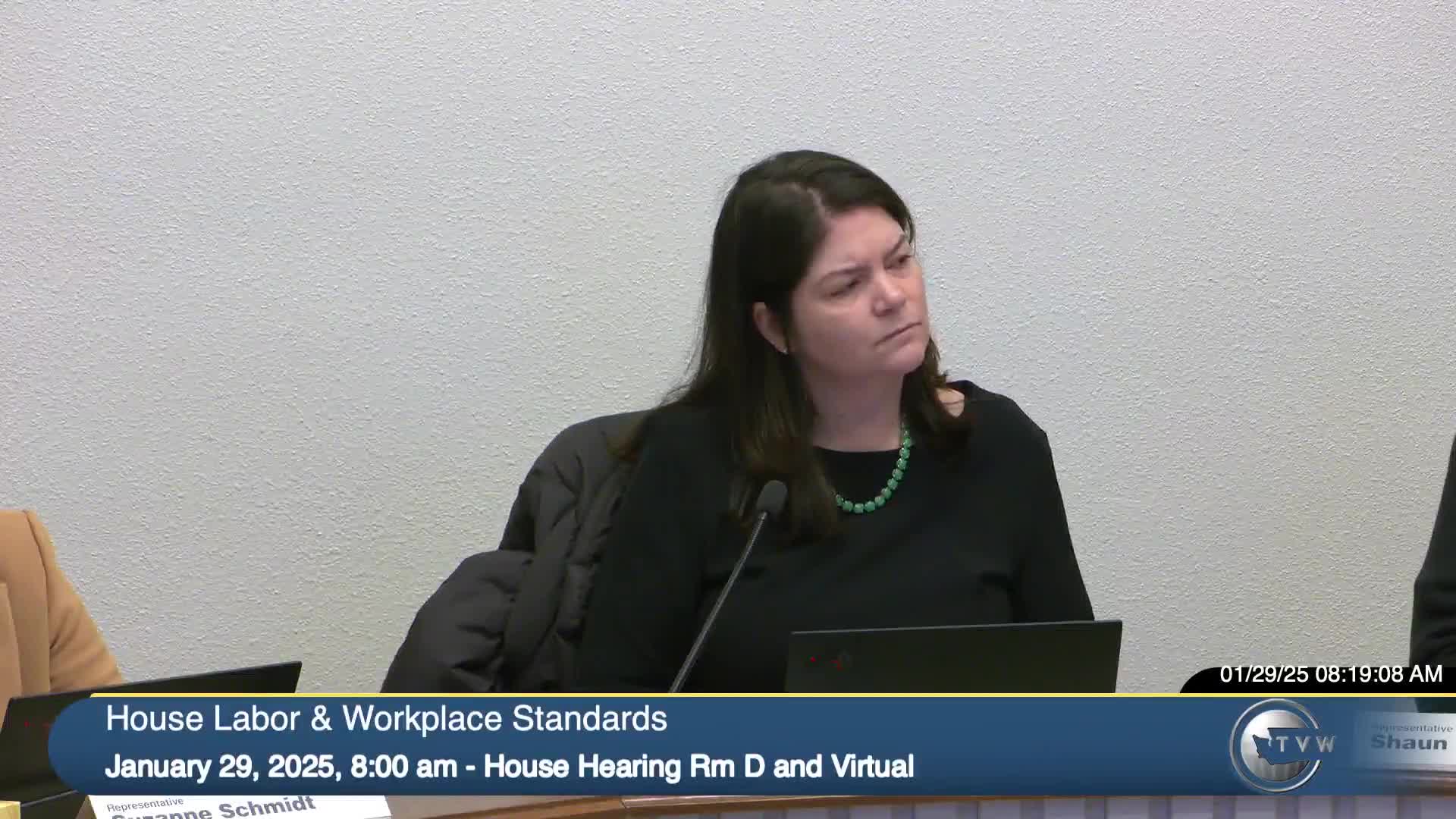
Committee hears HB 1332 on rideshare vehicle eligibility and driver data access
Summary
The Labor & Workplace Standards Committee heard testimony on HB 1332, which would require transportation network companies to disclose vehicle eligibility for premium "product classes," provide notice and limited grandfathering when product classes change, and offer drivers a single, searchable downloadable file of their two‑year trip history.
The Labor & Workplace Standards Committee on Wednesday, Jan. 29, heard House Bill 1332, which would require transportation network companies (TNCs) such as Uber and Lyft to disclose which vehicles qualify for each platform "product class" at onboarding and to provide drivers a single, searchable, downloadable file of two years of trip records.
Kelly Leonard, staff to the committee, told members that current state law limits a driver's vehicle age (citing a 15‑year age limit) and that HB 1332 addresses two areas: product classes and per‑trip data files. Leonard summarized the bill’s key provisions, including that a TNC must tell drivers which vehicles are eligible for each product class at onboarding; ensure a vehicle retains eligibility for classes that continue to be offered while the vehicle meets requirements; give drivers at least 60 days' notice if a product class is eliminated or modified for new vehicles; allow TNCs to reapply to reinstate a product class within one year if it was lost within the prior five years; and provide drivers an aggregated, searchable, downloadable file of all trips taken in the previous two years.
Representative Edwin O'Brien, the bill’s sponsor and the state representative for the 33rd Legislative District, said the bill responds to constituent complaints after platforms abruptly removed vehicles from higher‑paying product classes. "This bill allows rideshare drivers time to pay off expensive vehicle loans by grandfathering eligibility to work under transparent product class standards," O'Brien said, adding that he has met with affected constituents, many of whom are low‑income immigrants who said they bought expensive vehicles based on platform eligibility. O'Brien described one case in which a driver bought a new car for more than $70,000 and, one year into a seven‑year loan, lost eligibility while still owing about $60,000.
Driver advocates and individual drivers urged passage. Peter Quel, president of Drivers Union, said drivers invest tens of thousands of dollars based on platforms' stated standards and called sudden removals "unfair." Quel said many drivers carry loans for multiple years and cannot absorb sudden income losses. Jeffrey Pounds, an Uber and Lyft driver who testified in support, highlighted the proposal's data‑access provision, saying he spent "many hours manually entering the trip data into an Excel spreadsheet" to reconstruct records for a wage complaint and that providing downloads would ease labor‑standards audits.
Representatives of TechNet and Uber Technologies opposed the bill. Rose Feliciano, executive director of TechNet Northwest, said HB 1332 "would undermine [TNCs'] ability to establish their own standards" and risked constraining companies' ability to match customer expectations to vehicle/price tiers. Zahid Arab, testifying for Uber, said the company uses a five‑year vehicle age limit for its premium Uber Black service and characterized the bill's vehicle‑eligibility rules and additional data requirements as duplicative and harmful to service quality. Arab said drivers received notice in August and another message about a week before a mid‑January change in eligibility.
Committee members asked companies when drivers were notified and pressed witnesses on why vehicles were removed. Uber representatives said the five‑year standard has been in place for several years and that COVID‑era extensions briefly altered that rule. Advocates said the bill's transparency and limited grandfathering are necessary to prevent situations in which drivers purchase expensive vehicles based on platform rules and then lose access to higher‑paying work.
No committee vote was taken on HB 1332 on Jan. 29; the committee closed the hearing and moved on to other business.
Notes: This article reports testimony presented at the committee hearing, staff briefings, and public testimony. It does not assert outcomes beyond the hearing record.