Get Full Government Meeting Transcripts, Videos, & Alerts Forever!
Get email alerts on the Civic Education topic
No spam. Unsubscribe anytime.
Bill would create Maryland Civic Excellence Program to recognize student and school civic engagement
Summary
Delegate Vogel’s bill (HB 72) would establish a voluntary state program to recognize students and schools for civic engagement and service learning; MSDE and the Department of Service and Civic Innovation support the concept and students statewide gave testimony urging passage.
Delegate Luke Vogel told the committee HB 72 would create a Maryland Civic Excellence Program to recognize individual students and schools that meet standards for civic readiness, including service hours, coursework and civic action. The program would be voluntary and include designations for individual students (a seal) and for schools that qualify as Centers of Civic Excellence.
Paul Monteiro, secretary of the Department of Service and Civic Innovation, testified the program could be implemented without new state expenditures and would help address declining civic knowledge while promoting community service. University of Maryland and Maryland Civic Education Coalition representatives supported the bill and offered to partner on implementation and support for districts.
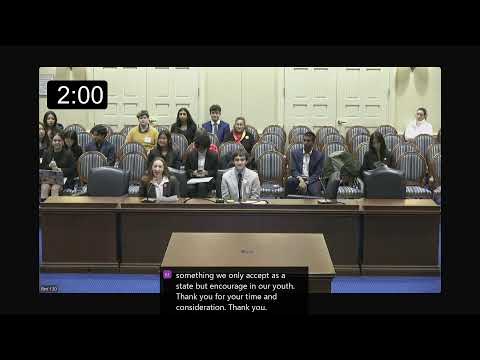
Dozens of student witnesses from multiple counties described how civic engagement opportunities — from student government to voter‑registration drives and career readiness programs — changed their paths and urged the committee to pass HB 72. Students said recognition would incentivize peers to participate and would help schools prioritize civics in curricula.
Supporters emphasized the program's voluntary nature and local control; the student‑heavy testimony emphasized long‑term benefits for democracy and the workforce. No opposition appeared at the hearing and MSDE said it could administer the program within existing resources.
Ending: The committee closed the hearing with multiple student endorsements and agency backing; no formal vote was taken at the hearing.