Get Full Government Meeting Transcripts, Videos, & Alerts Forever!
Get email alerts on the School Safety topic
No spam. Unsubscribe anytime.
Students, doctors and officials press committee to curb cell‑phone use in classrooms
Summary
Multiple bills (including HB 57 and HB 192) drew extensive testimony from students, parents, educators and physicians who described classroom disruption, increased bullying and fights recorded on phones; proponents urged district‑level bans during instruction, while students and others raised safety and implementation concerns.
Committee members heard several related bills and testimony arguing for limits on student cell‑phone use during the school day. Supporters framed the issue as a classroom‑management and child‑safety concern; opponents and students emphasized the role phones can play in emergencies and for legitimate academic or accessibility needs.
Delegate Nina Mangione presented HB 192 and Delegate David Frasier Hidalgo presented HB 57; both bills would require local boards to adopt policies restricting student phone use during instructional time. A third related bill (referred to in testimony as having been introduced elsewhere) would set similar state standards.
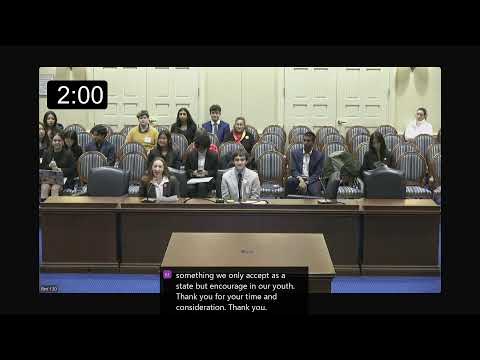
Students provided on‑the‑record testimony both for and against restrictions. Peter Boiko, a junior and student‑advocate from Montgomery County, said an instructional‑time restriction with exceptions for emergencies "would be supported" and suggested restricting use to non‑instructional windows. A group of Montgomery County students and medical experts urged stronger measures. Dr. Jim York, a physician and past president of MedChi, testified in support of a ban during instructional time and cited research that bans in other jurisdictions improved test scores and reduced disciplinary issues.
Several witnesses described how phones are used to record fights and amplify bullying. One parent and lawmaker described multiple school fights that were filmed from different angles using student phones, which then circulated online. Proponents argued that widespread phone filming encourages fighting and perpetuates harm.
Opponents raised safety and access concerns. Student testifier Jeriann Martinez said technology supports classroom research and provides crucial emergency communication; she warned that placing phones in lockers would impede a student's ability to contact family during urgent incidents. Students and delegates also noted enforcement challenges and the need for clear exceptions for medical needs and Individualized Education Program (IEP) accommodations.
Testimony also noted local variation: some districts already have strict policies ("no phone bell‑to‑bell") while others do not. Speakers urged the committee to craft language that allows local boards to adopt policies tailored to their communities and to include explicit carve‑outs for health and safety.
Ending: The committee heard broad testimony and no vote was taken. Several legislators said they will coordinate among bills to create a workable statewide framework, balancing classroom focus and safety exceptions.