Get Full Government Meeting Transcripts, Videos, & Alerts Forever!
Get email alerts on the Housing Evictions topic
No spam. Unsubscribe anytime.
Committee hears bill to speed landlord returns when active-duty military must reclaim primary residence
Summary
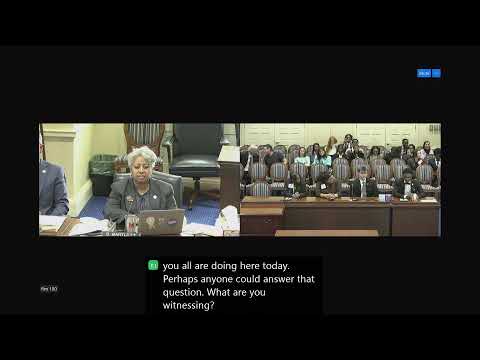
Delegate April Chisholm introduced House Bill 229 to the House Judiciary Committee on Jan. 29, 2025, saying the bill would shorten the time military members and their spouses wait to regain their primary residence after being sent home on military orders.
Delegate April Chisholm introduced House Bill 229 to the House Judiciary Committee on Jan. 29, 2025, saying the bill would shorten the time military members and their spouses wait to regain their primary residence after being sent home on military orders.
The bill applies only to “holdover” leases — cases where a tenant remains past a lease term — and would require that a military member or spouse planning to occupy the property as a primary residence do so within 30 days of returning. HB 229 would require a hearing be held within 45 days after filing, and it would permit a private process server to complete service if the sheriff cannot meet the existing 10‑day service window specified in current statute.
Supporters described frequent, disruptive moves and the family burdens of military life. “Moving that often is hard. It's the mental, emotional, physical, financial and logistical challenges that are a burden,” said Shannon Ledbetter, who testified as the spouse of a retired Marine. Ledbetter said school enrollment and proof-of-residency rules can harm military children when a dwelling is not vacated in time.
Bill Castelli, representing the Maryland Realtors, said the measure is “very targeted” and applies only to holding-over actions. Delegate Chisholm noted the bill previously passed the House unanimously in an earlier session but did not advance in the Senate, and said Senator Dawn Gao had cross-filed the measure in the Senate this year.
Opponents and cautious witnesses flagged the proposal’s provision allowing private process servers if sheriffs miss the 10‑day service window. Matt Hill, an attorney with the Public Justice Center, said Maryland’s “nail-and-mail” process — posting a copy of the complaint on the door and mailing it by first-class mail — has traditionally been performed by sheriffs and that private servers present a conflict of interest. “We worry that if you're gonna start allowing ... private process servers ... ultimately it's a slippery slope,” Hill said, urging the committee to remove the private‑process‑server language.
During questioning, Delegate Grammer asked whether the bill applies to primary residences only; Chisholm and witnesses confirmed that it does. Chisholm said she could not provide exact statewide counts of affected households but estimated the problem could be “maybe 25 to 50 per year,” while Hill later suggested there may be many more holding‑over filings statewide, saying he believed “at least 5,000 tenant holding over complaints filed in the state of Maryland” in fiscal year 2025 (a figure he identified as an estimate).
Other details discussed included a sponsor-supplied proposal to let a landlord use a private process server only after the sheriff had been unable to effect service within the statutory 10 days and testimony that the Anne Arundel County sheriff’s office reported difficulty keeping up with citation service volume.
The committee did not take a vote; the chair closed testimony and moved on to subsequent bills.
Ending: The committee concluded HB 229 testimony and proceeded to the next agenda item; no formal committee action on the bill was recorded during the hearing.