Get Full Government Meeting Transcripts, Videos, & Alerts Forever!
Get email alerts on the Food Forests Foraging topic
No spam. Unsubscribe anytime.
Bill would allow foraging and create fee-based foraging permits on DNR land; sponsors say permits fund education and food forests
Summary
Delegate Lori Charcuti’s bill would authorize the Department of Natural Resources to designate cultivated food forests and other sites for regulated foraging on state lands and to issue foraging permits; DNR and community groups said permits would be designed to be low-cost and could include waivers for low-income residents.
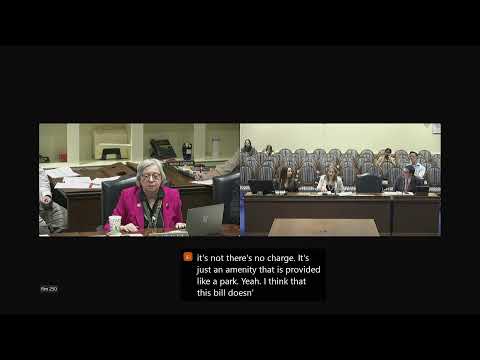
House Bill 257 would let the Maryland Department of Natural Resources designate cultivated food forests on state lands and authorize regulated foraging in specified areas with a foraging-permit system. Sponsor Delegate Lori Charcuti said the proposal aims to expand community access to edible plants and to encourage planting of food forests in public spaces.
DNR legislative director Dylan Baylor told the committee the department supports a two-pronged approach: cultivated community food forests that can be intentionally planted and managed, and designation of state-land areas where a foraging permit would allow sustainable harvesting of naturally occurring foods such as pawpaw, persimmon and native berries. Baylor said permit revenue could be used to support program administration and the creation of more community food forests.
Tierney Acosta, who leads a Montgomery College Permaculture Club food-forest project, described a campus food forest that now supplies free produce to students and the community and urged the committee to support accessible, regenerative foraging. Lincoln Smith, founder of Forested (a nonprofit that creates food forests), testified in favor and requested that any foraging permit be streamlined and focused on sustainable-harvest practices.
Committee members asked whether existing local food-forest projects would be affected; witnesses said the bill would not remove or replace local efforts and could support expansion. DNR said permits could include fee waivers for low-income residents to preserve access.
Ending — Next steps: DNR and community groups requested a favorable report; committee members expressed interest in site-specific stewardship rules and in ensuring that public access remains free or affordable for food-insecure residents.