Get Full Government Meeting Transcripts, Videos, & Alerts Forever!
Get email alerts on the Education Bias Training topic
No spam. Unsubscribe anytime.
Committee hears push to require anti‑bias training for county school board members
Summary
Supporters told the Ways and Means Committee HB 324 would close a loophole that currently excludes county school board members from anti‑bias training required of school employees; county officials raised questions about content separation and the bill’s fiscal impact.
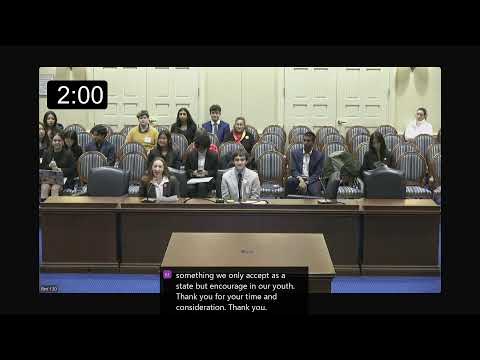
Supporters of House Bill 324 told the Ways and Means Committee on Jan. 29 that the bill closes a gap in existing law by requiring county board of education members to complete the same anti‑bias training already required of school employees.
Advocates said the training would improve cultural awareness and help officials respond to incidents of antisemitism, racism, Islamophobia and other forms of bias in schools.
Delegate (testifier) who introduced the bill said, "this bill just closes that loophole frankly and requires the school board members to go through the same, type of training as we've already told our tens of thousands of, school employees to go through." Abby Snyder of the Baltimore Jewish Council said the training is needed because "school board members are tasked with the general control and oversight of our school systems and educational interests" and should be equipped to address bias incidents. Deborah Miller of the Jewish Community Relations Council emphasized recent spikes in antisemitic incidents and urged a favorable report.
Montgomery County NAACP 2nd Vice President Sherry Branson argued the board members are responsible for curriculum and policies and "should not be excluded from the requirement to receive anti bias training." Parents and legal advocates — including Lauren Pruitt of Free State Justice — said the training helps protect vulnerable students, particularly LGBTQ+ youth and students of color.
Bruce Beriano, testifying on behalf of Washington County, registered an unfavorable position and asked the committee to clarify two items: whether the bill intends the trainings to be conducted physically separate from staff trainings or also distinct in content, and the potential fiscal impact on boards that would have to pay for the additional training. Beriano said, "this is an unfunded mandate on the school boards" and asked fiscal services for county‑by‑county cost information.
Delegate Patterson noted local board associations already run professional development and suggested the committee could consider an amendment or clearer language about the delivery model. Chair Atterberry closed the hearing with no committee action recorded.
Supporters asked for a favorable report; opponents asked for clarifying amendments on content separation and funding. No formal vote took place during the hearing.
Ending: The committee heard detailed public testimony both for and against HB 324 and did not take a vote at the hearing. Committee members raised clarifying questions about training content and fiscal effects; sponsors and advocates urged a favorable report.