Get Full Government Meeting Transcripts, Videos, & Alerts Forever!
Get email alerts on the Dental Insurance Reform topic
No spam. Unsubscribe anytime.
Debate over dental-insurer reforms: providers back network equity and loss-ratio limits, insurers warn of higher costs
Summary
House Bill 1535, which would change contracting and consumer-protection rules for stand-alone dental insurers and establish a minimum dental loss ratio, drew sharply divided testimony from dentists, insurers, brokers and community groups.
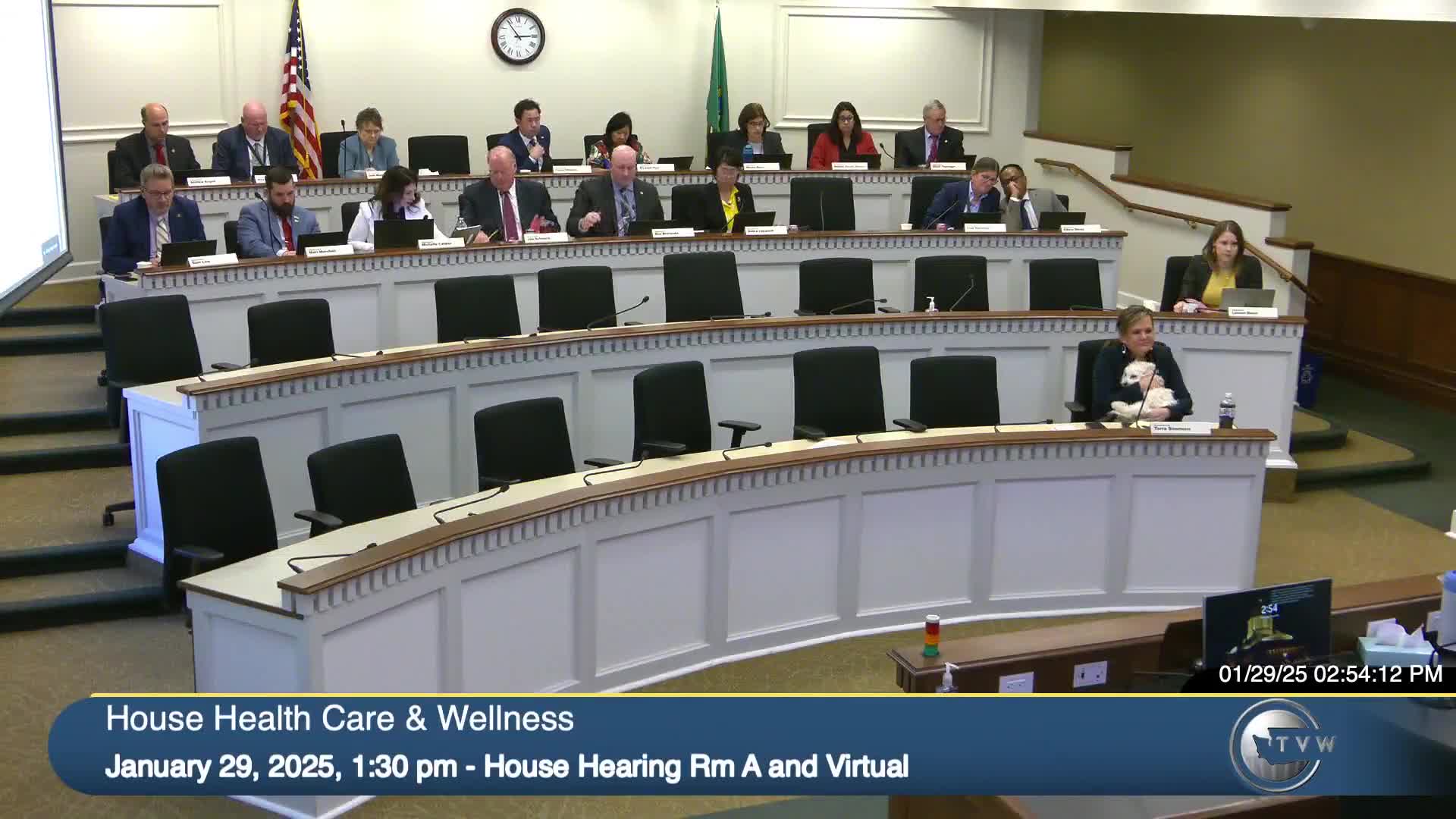
The House Health Care & Wellness Committee heard competing testimony Wednesday on House Bill 1535, which would change several contracting and consumer-protection rules for stand-alone dental insurers, including limits on insurer practices that stakeholders say restrict patient choice, a proposed dental minimum loss ratio of 85 percent, and added rate-review authority.
Sponsor testimony characterized the bill as restoring equity to the dental-insurance market and protecting patients who pay premiums but lose access to long-standing family dentists when a carrier's network rules change. Dentists who testified described being forced into production models or losing long-term patients when they left Delta Dental of Washington; they urged reforms that would prevent carriers from denying coverage for procedures performed the same day or from using contract terms to force unfavorable business models.
The Washington State Dental Association and practicing dentists identified same-day denials (carriers refusing to pay for a covered procedure performed the same day as another covered procedure) and network-termination consequences as examples of practices that harm patients. "There is no medical justification for this restriction. It is simply to allow delay of payout for claims and to hold on to patients' premiums longer," said Dr. Lisa Egbert. Several dentists told the committee they lost a large share of patients after leaving a dominant carrier.
Insurers, brokers and some nonprofit groups opposed the bill. Delta Dental of Washington's CEO and trustees filed testimony opposing key provisions; industry witnesses warned the bill could increase premiums, prompt carriers to exit some markets, reduce network participation by dentists and expose patients to balance billing because dentists could be paid the same whether in network or out of network. Broker and employer representatives said parity between in-network and out-of-network reimbursements would remove the incentive to negotiate network discounts and could drive up cost for consumers and employers.
Nonprofit and community groups likewise raised concerns that increased premiums would fall hardest on low-income residents, exchange enrollees and small employers. The Office of the Insurance Commissioner said it was willing to engage in technical discussions, that some same-day denials warrant review, and that it had met with stakeholders; OIC cautioned that some provisions could increase patient balance-billing risk and asked for more analysis of a proposed loss-ratio standard.
Witnesses urged further stakeholder negotiation; committee staff and the OIC said they planned follow-up meetings. No committee vote or amendments were recorded at the hearing.