Get Full Government Meeting Transcripts, Videos, & Alerts Forever!
Get email alerts on the Mental Health Parity topic
No spam. Unsubscribe anytime.
Committee considers stricter clinical-criteria and parity rules for mental-health coverage
Summary
House Bill 1432, intended to strengthen mental-health parity and require evidence-based clinical-review criteria across health carriers, received wide support from clinicians and patient advocates and technical pushback from insurers at a public hearing.
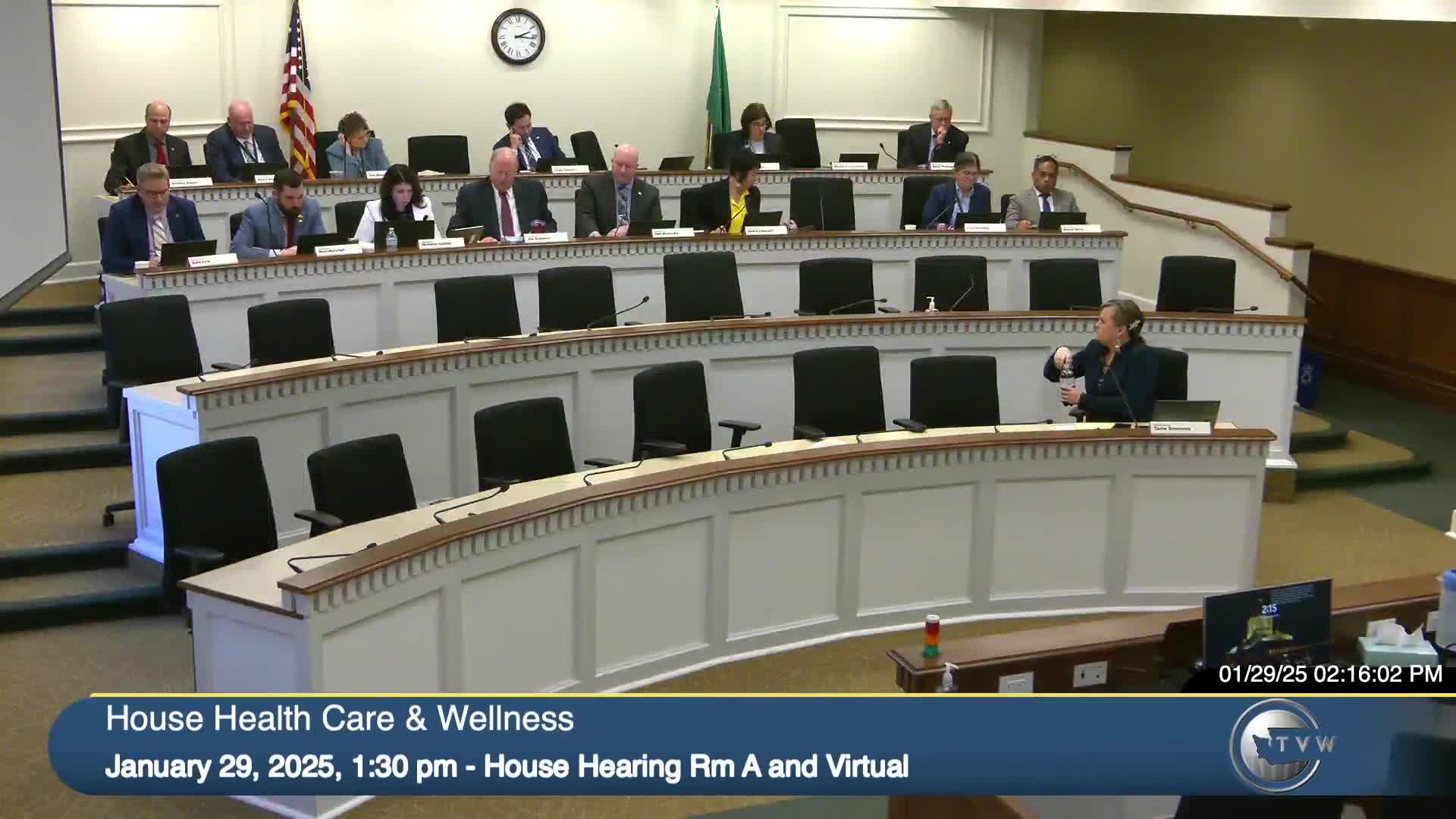
The House Health Care & Wellness Committee opened public hearing on House Bill 1432, a comprehensive rewrite and recodification of the state's mental health parity provisions that would require health carriers to use transparent, evidence-based clinical review criteria when making utilization-management and medical-necessity decisions for mental-health and substance-use disorder services.
Staff summarized the bill as: repealing existing parity language across carrier types and recodifying the rules in a single chapter applicable to all health carriers; expanding definitions for medically necessary clinical review criteria and "generally accepted standards" of care; requiring clinical criteria to be consistent with nonprofit professional association placement criteria (for age-appropriate levels of care); prohibiting prior authorization for a new episode's initial evaluation and up to six consecutive treatment visits; capping the time carriers may seek repayment for mental-health payments at 180 days except for fraud; and authorizing the Insurance Commissioner to assess penalties and to adopt rules implementing parity compliance and network-reimbursement remedies.
Prime sponsor described personal lived experience and framed the bill as correcting opaque insurer medical-necessity criteria that delay or deny care. Supporters, including patient advocates, clinicians and specialty psychiatry organizations, said the bill would replace proprietary, plan-purchased criteria with publicly available, evidence-based standards (witnesses cited LOCUS and similar nonprofit criteria), improve timely access to care and reduce premature service termination.
Clinicians and system leaders described adverse outcomes from denials and delays: a psychologist said a patient in crisis who could not access covered mental-health care later died by suicide; a child-psychiatry witness described families paying thousands out of pocket to obtain needed services. Providers and advocates urged inclusion of more specific diagnostic manuals for young children and stronger data/reporting requirements to measure workforce and access impacts.
Opponents including insurer representatives and plan associations said the bill is complex, raised concerns about implementation alongside federal parity requirements and noted possible consequences for rates and network adequacy; they asked for technical changes and additional time for rulemaking. The Office of the Insurance Commissioner said it supports the intent and offered technical amendments, expressed concern about a near-term effective date, and asked for clarification on provisions that would allow OIC to require rate adjustments tied to network adequacy. No committee vote was taken; the record shows stakeholders and OIC discussing technical edits and an expectation of further negotiation.