Get Full Government Meeting Transcripts, Videos, & Alerts Forever!
Get email alerts on the Developmental Disabilities Waivers topic
No spam. Unsubscribe anytime.
Committee hears bill to prioritize certain groups for developmental-disability waivers
Summary
A hearing on House Bill 1130 drew advocates and family members urging the Developmental Disabilities Administration to prioritize open home-and-community-based waiver slots for older adults, people exiting institutions or hospitals, foster-care alumni and others; no formal action was taken.
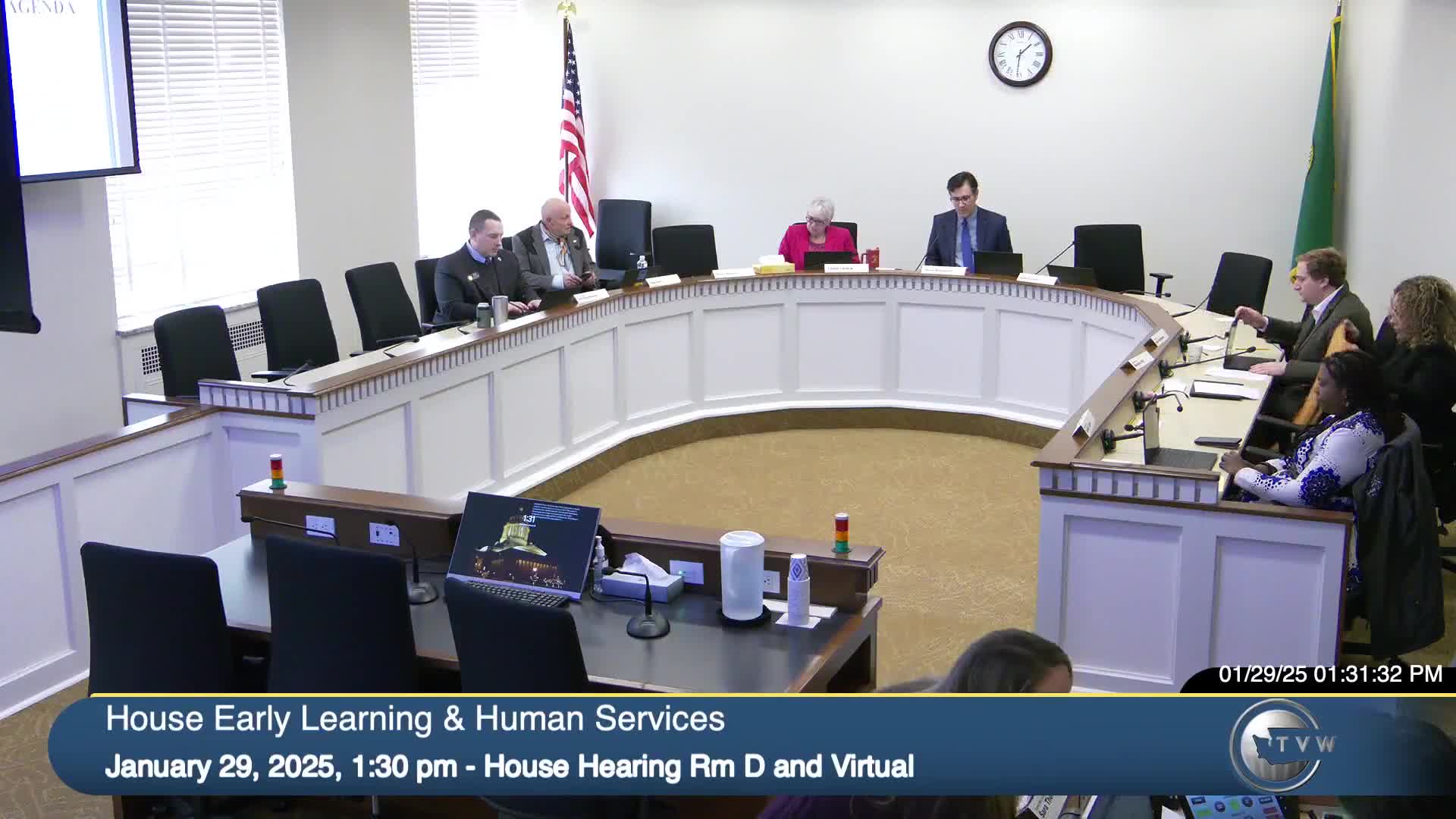
Representative Daria Farvar, sponsor of House Bill 1130, told the Human Services, Youth & Early Learning Committee the bill would place an explicit statutory prioritization on who may be enrolled from open developmental-disability waiver slots.
The bill’s principal aim is to direct the Developmental Disabilities Administration to prioritize enrollment for specific groups, said Representative Daria Farvar, state representative from the 46th Legislative District: "Pleased to bring you house bill 1130." The staff briefing provided earlier in the hearing stated Washington has roughly 27,000 potential waiver slots and that just under 1,700 were not filled in recent data.
Supporters said the statutory prioritization would direct scarce resources to people at elevated risk of institutionalization or crisis. Stacy Dim, executive director of The Arc of Washington State and a family member, said: "It's a pretty simple, easy bill to understand," and highlighted two additions the bill would clarify: members of the Trueblood class who also have developmental disabilities and people age 45 and older whom advocates call "senior families." Advocates argued prioritizing older adults matters because families who currently provide care are themselves aging and may soon be unable to continue.
Opposition from at least one witness focused on timing and emphasis. Linda Hyatt, who said she worked at DDA for years and filed written testimony, said the categories in the bill "already are in practice" and that lawmakers should focus on earlier intervention for children rather than creating statutory prioritization that, in her view, risks reinforcing a reactive, crisis-driven system.
Self-advocate and policy coordinators also testified in favor. Sean Lehi, policy coordinator for Self Advocates in Leadership, said he is 45 and relies on waivers and asked the committee to pass the bill so older adults do not end up "in costly restrictive congregate settings." Noah Seidel of the Office of Developmental and Disability Ombuds said the bill's data-collection provisions are important to understand which waivers are underused and to help people discharge from hospitals or institutions into the community.
No formal committee vote was recorded during the hearing. Testimony largely focused on the bill’s intent to better target limited waiver capacity and on whether statutory language is the right tool to improve early access to services for children.
The record shows the committee took testimony from multiple stakeholders and closed the hearing on House Bill 1130 without action; members may pursue amendments or further information before any vote.