Get Full Government Meeting Transcripts, Videos, & Alerts Forever!
Get email alerts on the Early Learning Budget topic
No spam. Unsubscribe anytime.
Appropriations staff outline early learning budget: ECAP slots, federal stimulus tail‑off and working connections expansion drive costs
Summary
Nonpartisan staff presented a detailed overview of the Department of Children, Youth, and Families early learning budget, highlighting growth to nearly $1.3 billion in fiscal 2025, ECAP slot expansions, the end of one‑time federal stimulus funding, and provider rate increases tied to market surveys and the Fair Start for Kids Act.
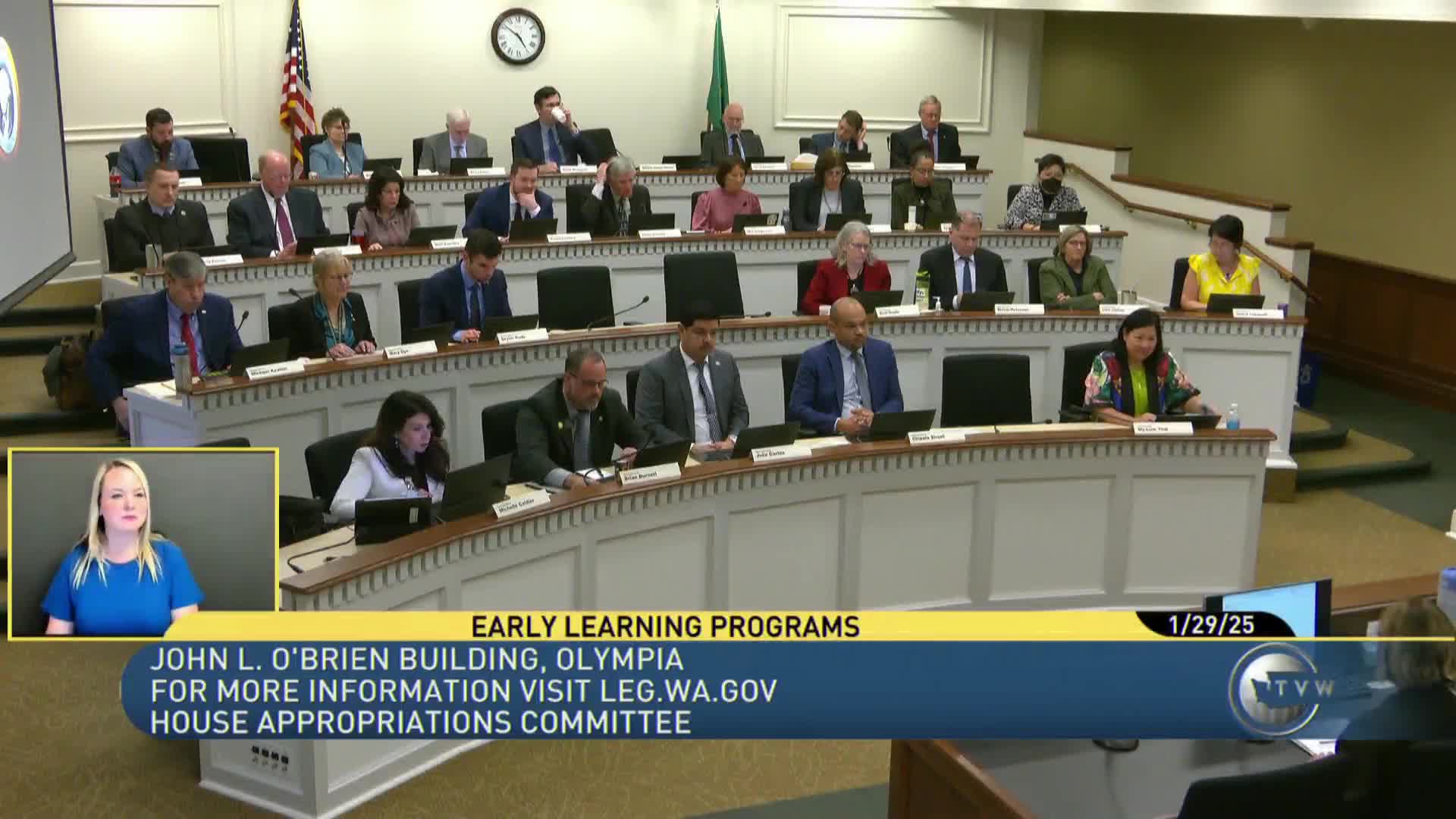
Jordan Clark, staff to the committee, presented a comprehensive briefing on the early learning budget managed by the Department of Children, Youth, and Families (DCYF). Clark summarized program totals, funding sources, major cost drivers and recent policy changes affecting ECAP, Working Connections Child Care (subsidy), Early Support for Infants and Toddlers (ESIT), and home visiting.
Clark said DCYF’s early learning total budget grew from about $285 million in 2016 to nearly $1.3 billion in fiscal 2025. Federal stimulus funds provided large, temporary increases during the pandemic; Clark said Washington received about $865 million in one‑time federal pandemic funding for child care activities and that the last of that funding was spent in fiscal 2024, so related expenditures will revert to state funds in later biennia.
Key program highlights presented: ECAP (the state’s 100%‑state‑funded preschool) had a 2023‑25 appropriation of about $510 million for 17,278 modeled slots; ECAP entitlement to a larger eligible population is scheduled for the 2026‑27 school year (eligibility changes under Fair Start for Kids Act), creating a projected need for about 6,400 additional slots by entitlement. Clark noted part‑day, school‑day and working‑day slot definitions and corresponding per‑slot funding rates.
Working Connections Child Care (the subsidy) had allotments of over $1.3 billion in 2023‑25, with eligibility having expanded under the Fair Start act. Clark described tiered reimbursement associated with the Early Achievers quality rating system and noted provider rates are set at the 85th percentile of private market rates from the triannual market rate survey. He said the 2024 market rate survey results would likely push rates higher (DCYF estimated average rate increases of roughly 27–28% moving to 2024 rates), and the governor’s budget estimated about $1 billion over a four‑year outlook to implement market rate updates.
Clark summarized ESIT caseload impacts (pandemic related drop and gradual recovery) and home visiting program scale (about 3,300 home visiting slots and roughly 33,000 visits in a recent year). He also described policy and labor‑contract items that affect costs, such as a cost‑of‑care enhancement for licensed family homes (additional monthly payments projected at roughly $75 million in FY2025 covering about 3,000 providers).
Committee members asked clarifying questions; Clark offered to check specific regional rate anomalies and to provide charts in OPR style following the briefing. The session concluded with no committee action recorded on the presentation itself.