Get Full Government Meeting Transcripts, Videos, & Alerts Forever!
Get email alerts on the Distance Education Regulation topic
No spam. Unsubscribe anytime.
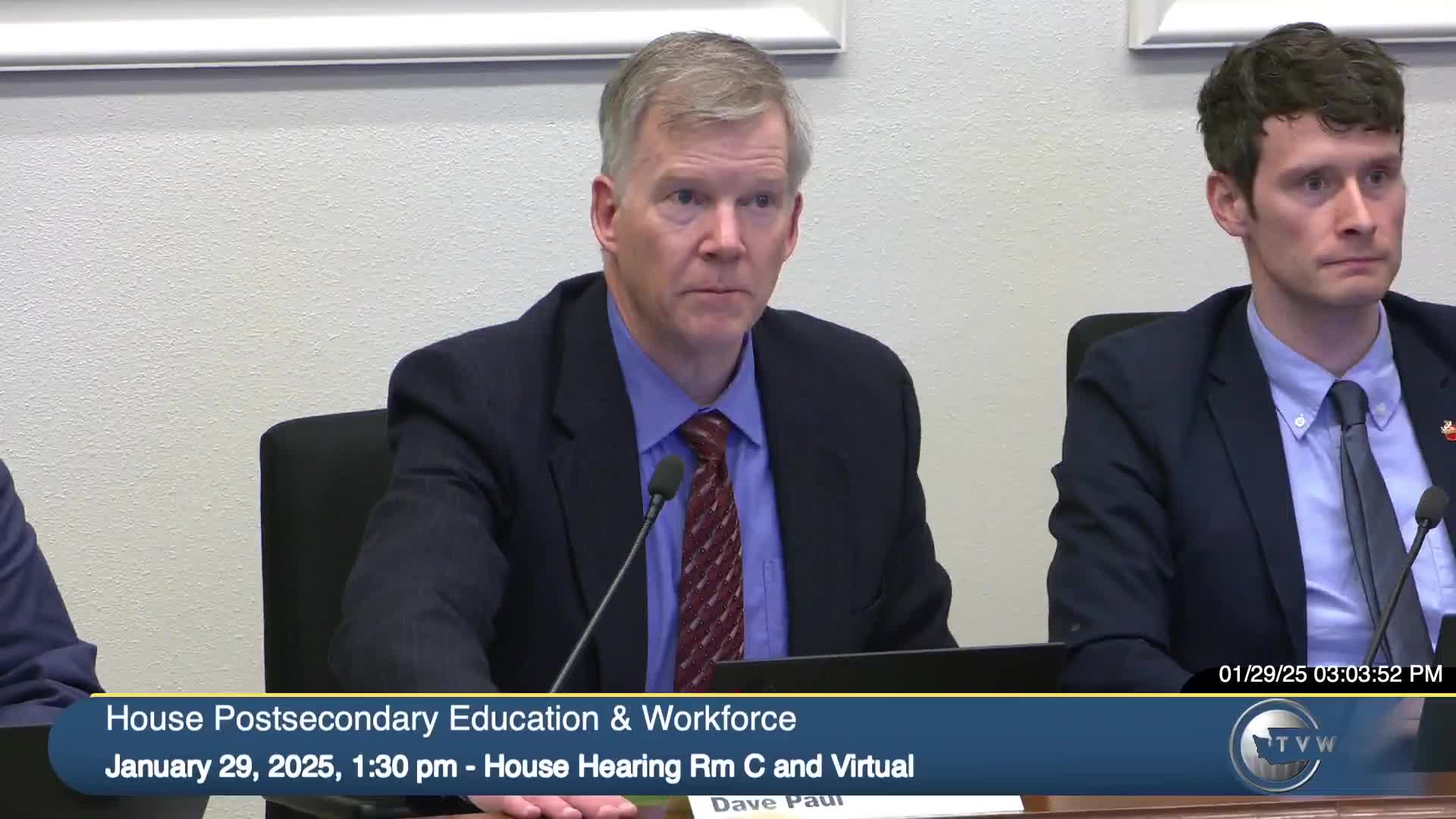
Legislators move to preserve state oversight of out‑of‑state online colleges under SARA reciprocity
Summary
House Bill 1279 would ensure the Washington Student Achievement Council retains authority to enforce student consumer protections for out‑of‑state institutions offering distance education under interstate reciprocity agreements (SARA); sponsor said the change responds to concerns the national agreement limits state enforcement.
House Bill 1279 (referred to in the hearing as the bill on interstate reciprocity) would require that any interstate authorization agreements for distance education not suspend or reduce the Washington Student Achievement Council’s authority to enforce student consumer protections.
Committee staff Elizabeth Allison summarized the current framework and the bill’s intent: the state participates in an interstate compact (SARA) to simplify distance‑education authorization, but the council must retain investigative and enforcement authority, ensure surety bond and disclosure requirements are not reduced, and maintain access for Washington students to file complaints about misleading claims or financial instability.
Representative Gerry Pollet, who brought the measure back after prior session work, told the committee the bill responds to criticism of the national SARA framework. Pollet said the state attorney general and 24 other attorneys general had expressed concern that SARA policies limiting member states’ enforcement could “undermine our offices and other state agencies’ ability to protect students.” The bill would require the Student Achievement Council to preserve minimum standards and not delegate enforcement to other states.
Melissa Beard of the Council of Presidents testified in support after language changes: with the Student Achievement Council acting as the state portal for interstate agreements, systems did not have to negotiate reciprocity directly with each state. The change transferred the operational obligation to the council while preserving consumer protections.
Where things stand: the committee heard pro testimony and no formal vote was taken that day. The sponsor and staff said the revised text reflects work with the Student Achievement Council to ensure reciprocity is compatible with Washington consumer protections and financial security provisions for students.
Why it matters: the bill tries to reconcile two aims—simplifying cross‑state delivery of online programs and preserving state authority to investigate complaints and require surety bonds—so Washington students have the same protections whether a provider is based inside or outside the state.