Get Full Government Meeting Transcripts, Videos, & Alerts Forever!
Get email alerts on the Veterans Services topic
No spam. Unsubscribe anytime.
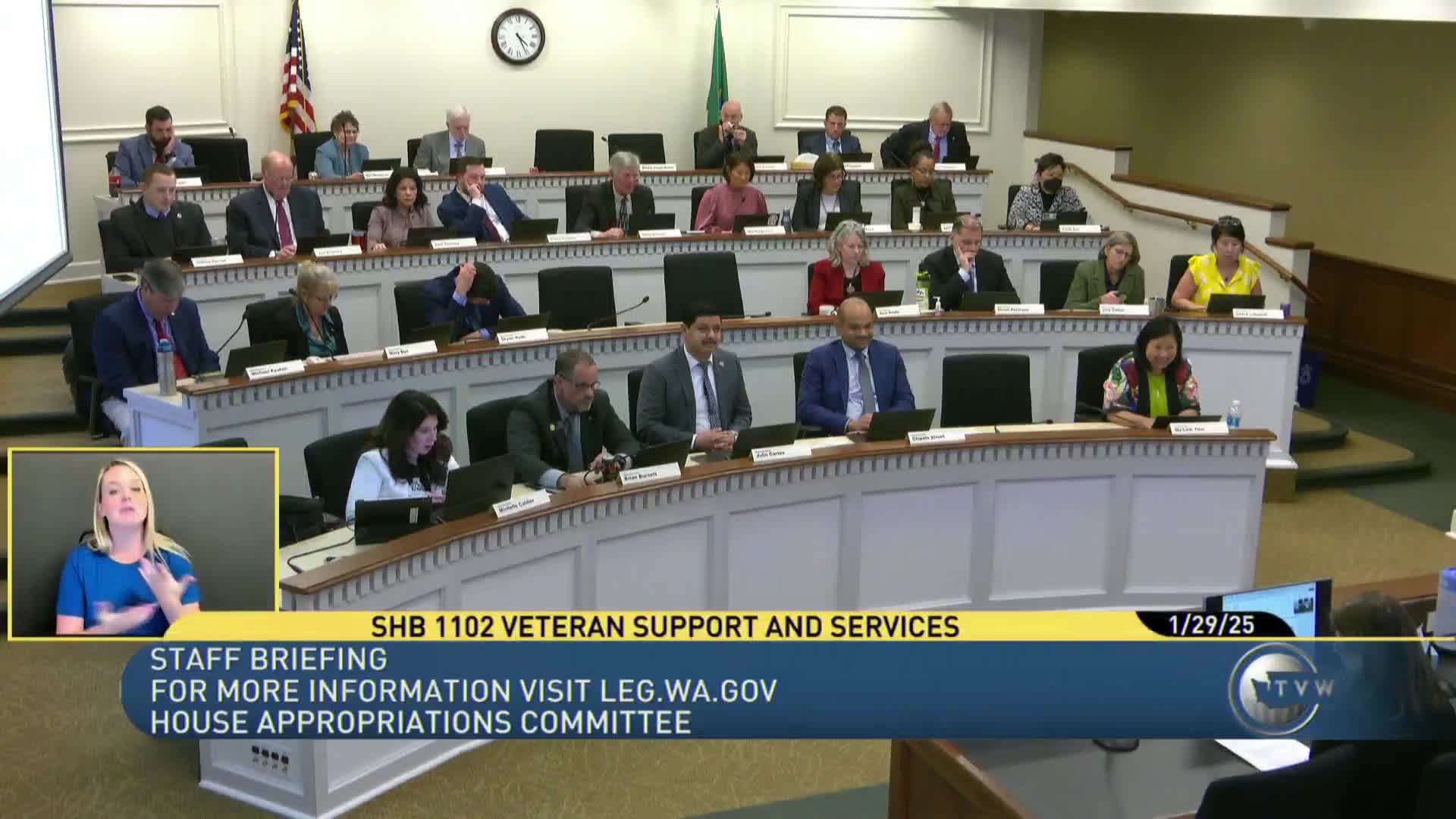
Substitute HB 1102 would expand veteran service officer program; staff estimate staffing and IT costs
Summary
Staff briefed Substitute HB 1102 to expand and prioritize veteran service officers, change county eligibility rules and require outreach and biennial reporting; witnesses from rural counties urged expansion while asking to preserve existing rural coverage.
Committee staff briefed Substitute House Bill 1102, which proposes changes to the veteran service officer (VSO) program administered by the Washington Department of Veterans Affairs (WDVA). The bill would require WDVA to provide outreach to veterans, post county‑specific resource information online, expand and prioritize funding for VSO positions, change eligibility criteria for which counties receive officers, and require biennial reporting beginning December 2026.
Martha Whaling, committee staff, said the program originally funded one VSO in eligible counties through WDVA and has supported six officers since creation; a WDVA September 2024 report indicated roughly 30% of veterans in the state receive federal benefits, with county rates varying from 15% to 44%. Brian Waystaff provided the fiscal overview: WDVA estimated $20,000 per year for mailings to veterans, a one‑time $386,000 IT contractor cost in fiscal 2026 for website work, and $163,000 per year to manage county data online. Waystaff summarized a total fiscal impact estimate of $768,000 (GF‑SO) in the 2023‑25 biennium and $1,094,000 over four years.
Public testimony came primarily from rural veterans and county officials who supported expanding VSO access while urging preservation of existing rural coverage. Mark Hodgson, a Navy veteran from Clallam County, asked that the bill expand access to underserved counties while maintaining services for geographically isolated rural communities such as Clallam and Jefferson counties. Commissioner Randy Johnson described strong local use of the VSO after a grant award, noting hundreds of veterans engaged with the service. Ed Bowen emphasized the needs of “highly rural” veterans who lack mechanisms to utilize earned benefits and urged careful distribution of funds to reach isolated populations. Levi Douglas, Clallam County veteran program coordinator, said his county currently has one accredited service officer through WDVA grant funding and reiterated the need for continued staffing.
The committee did not take an action recorded in the transcript. Testimony focused on ensuring the bill's implementation preserves and expands services in rural and highly rural counties and addresses administrative costs for outreach and data management.