Get Full Government Meeting Transcripts, Videos, & Alerts Forever!
Get email alerts on the Prison Education topic
No spam. Unsubscribe anytime.
Committee hears bill to expand digital education access for incarcerated students
Summary
Lawmakers and witnesses debated House Bill 1166, which would allow incarcerated people to buy and keep laptops, expand distance education and require DOC to speed access to educational websites; DOC officials raised security and fiscal concerns and the sponsor said a pilot amendment is coming.
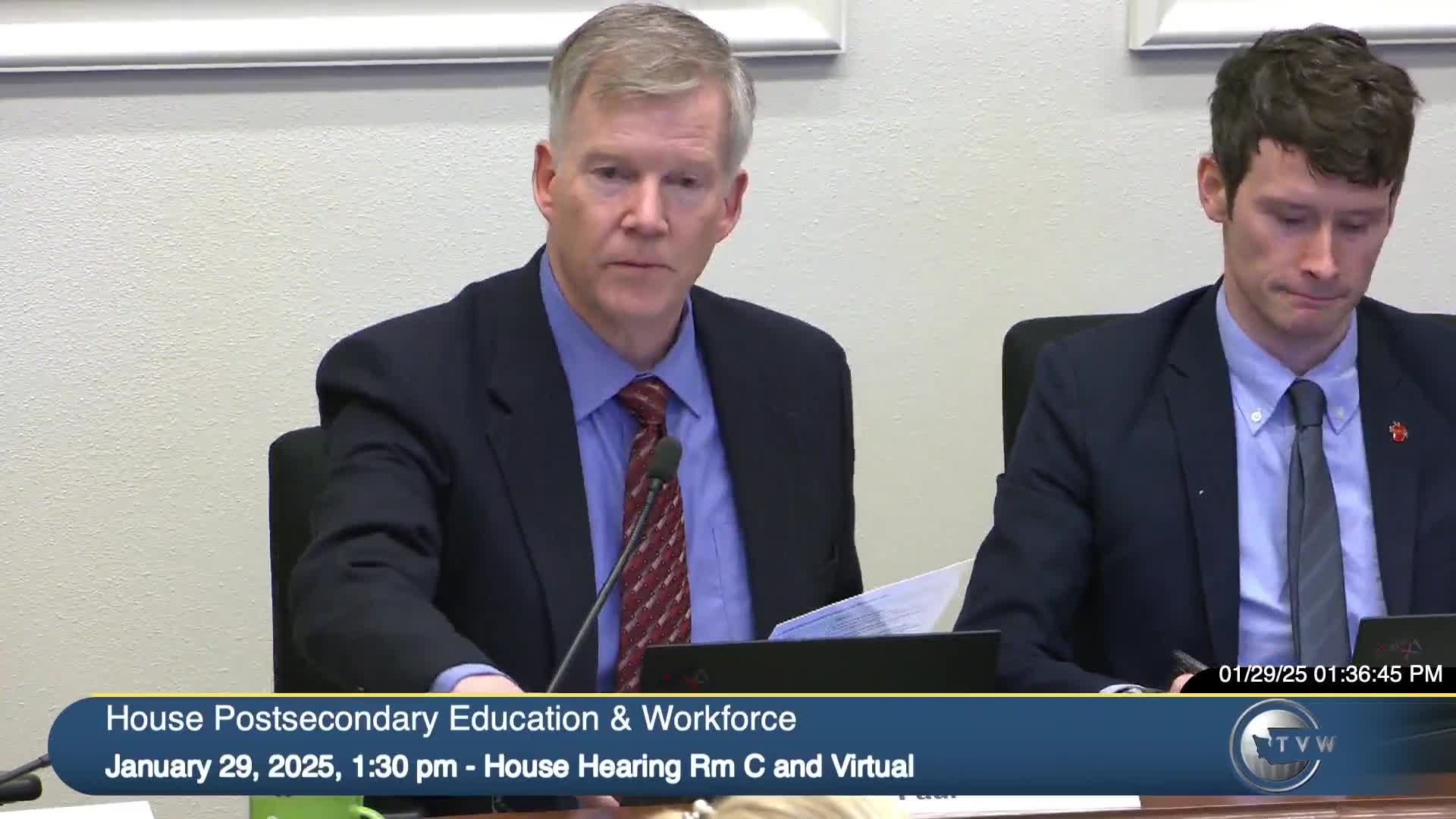
House Bill 1166, which would require the Department of Corrections (DOC) to permit incarcerated people to purchase and retain laptops and expand distance education options, was the subject of a lengthy staff briefing and public hearing on Jan. 29 before the Postsecondary Education & Workforce Committee.
Staff counsel Saranda Ross told the committee, “Before you is House Bill 1166, creating the providing effective education for reentry success act within the department of corrections.” The bill would allow inmates to buy and keep laptops as personal property, require DOC to provide Wi‑Fi access to those with laptops when funding allows, and require DOC to make requested educational websites available within two weeks of a request.
The bill’s prime sponsor, Representative Clyde Shavers, 10th Legislative District, framed the proposal as a rehabilitation measure. “This bill makes critical advancements by ensuring that those who are incarcerated have access to digital literacy, online learning, and personal educational devices,” Shavers said, and he told the committee an amendment is forthcoming that would narrow the proposal into a pilot and address fiscal concerns.
Why it matters: supporters and student‑advocates said digital access and peer‑led programming can materially improve educational attainment behind bars and lower recidivism. Brian Glatt, a formerly incarcerated man who earned an associate degree while inside, said current offerings are “a buffet of infotainment” and that more rigorous degree paths and peer‑led programs are needed. Marcus Reed, who identified himself as an incarcerated student leader, described barriers to peer‑led programs and urged legislative remedies to hold institutions accountable.
Department officials acknowledged ongoing education programs but warned of security, operational and fiscal tradeoffs. Kristen Morgan, senior administrator in DOC’s reentry division, said DOC embeds community college partners in institutions and currently operates a secured off‑state network but that HB 1166 would change the model by broadening the scope of online community classes and personal device ownership. Jason Bennett, DOC senior director of correctional operations, testified that broader internet access “could compromise the facility’s security measures,” and listed potential risks ranging from manipulation of infrastructure to inappropriate outside communications. Kellett Serre, Assistant Secretary for Budget Strategy and Technology, estimated significant IT and infrastructure costs and noted the bill does not specify who must ensure purchased equipment meets DOC security standards.
Committee members pressed both sides on fiscal and safety specifics. Representative Schmidt asked about the high fiscal note; Representative Shavers said the sponsor plans a pilot to reduce cost. Representative Graham asked how devices would be monitored; DOC witnesses stressed continued institutional control and the need for security investments. DOC staff provided specific cost context: the education laptops used today and owned by college partners cost about $850 each, and some correspondence bachelor programs cited by witnesses can cost an incarcerated student roughly $32,000, according to DOC testimony.
Public testimony reflected a mix of lived experience and programmatic perspective. Heather Kelly of the League of Women Voters said the bill is meant to “complement, not impede the work already underway,” and advocated a pilot approach. Jeremiah Bourgeois, a law clerk who served almost 30 years and said he was transformed by education, urged access to online learning that continues after degree completion. Dozens of current and former incarcerated students described limits in course availability, transfers that interrupt studies, constrained property rules and the value of peer support and community tutoring in raising completion rates.
The committee heard sign‑in counts and public input numbers: staff reported 1,227 total sign‑ins on HB 1166 (670 pro, 557 con) and 18 people registered to testify in‑person or online for the bill at that hearing.
Where things stand: no formal committee vote occurred. Representative Shavers told members he will offer an amendment to create a time‑limited pilot and to include DCYF (Department of Children, Youth & Families) where appropriate; DOC requested continued negotiations on security, device standards and fiscal estimates. The hearing closed with the committee taking no immediate action on final passage.
Context and next steps: the bill would interact with federal financial aid eligibility for correspondence courses and with House Bill 1044’s earlier changes to DOC’s off‑state network. If amended to a pilot, the committee and sponsor indicated they expect further fiscal analysis and operational planning with DOC and higher education partners.